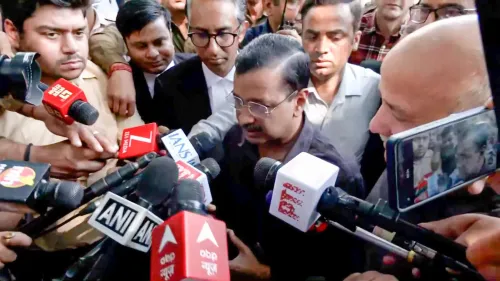
Delhi High Court's Ruling Poses Challenges for Kejriwal: Ashish Sood
Synopsis
In a recent statement, Delhi Education Minister Ashish Sood highlighted the implications of the Delhi High Court's stay on departmental action against a CBI officer, calling it a significant setback for Arvind Kejriwal and the AAP amidst ongoing corruption investigations.
Key Takeaways
Delhi High Court's interim stay affects CBI officer's case.
Ashish Sood criticizes AAP's anti-corruption claims.
Corruption allegations involve the destruction of evidence.
CAG reports significant financial losses due to liquor policy.
Political accountability in question as investigations proceed.
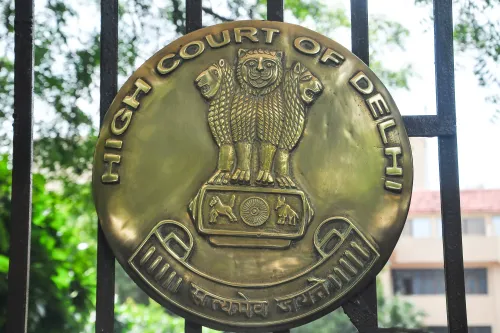
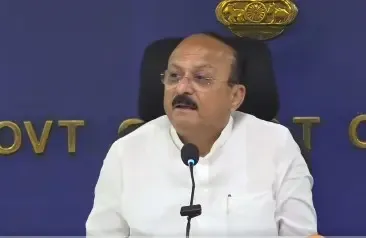
New Delhi, March 9 (NationPress) Describing it as a blow to Arvind Kejriwal and the Aam Aadmi Party (AAP), Delhi Education Minister Ashish Sood announced on Monday that the Delhi High Court has issued an interim stay on a lower court's directive for departmental action against a CBI officer connected to the investigation of the now-repealed Delhi Excise Policy case.
During the court's proceedings, the High Court suspended the contentious order and halted all further actions for the moment.
Sood launched a scathing critique of the AAP and its leaders regarding the alleged liquor policy fraud and the recent judicial events surrounding it.
The Minister asserted that the AAP had initiated its political journey under the banner of anti-corruption, yet neither during its brief 49-day rule nor thereafter were any substantial measures taken to combat corruption.
He highlighted that in a discussion at the India Islamic Centre in February 2014, AAP's leadership had sidestepped the corruption issue.
According to Sood, the pathway to investigate a significant corruption case involving public funds in Delhi has now been cleared, and he anticipates that the investigating agencies along with the courts will soon reach their conclusions.
The Minister insisted that the AAP and its leaders owe the people of Delhi an apology.
He further noted that the High Court has recently suspended certain remarks made by the lower court.
Using a cricket analogy, he remarked that celebrating too soon in a match is often termed as “celebrating too early,” drawing a parallel to how AAP prematurely labeled itself as “Kattar Imaandar.”
Following the CBI's appeal to the High Court, the court has also stayed the comments directed at the officials of the investigative agency.
He accused AAP leaders of attempting to obliterate critical evidence to hide corruption in the case, revealing that 170 mobile phones and 43 SIM cards were destroyed to eliminate evidence related to the liquor policy scandal.
The Minister also referred to the Comptroller and Auditor General (CAG) of India’s report, which cites a potential loss of approximately Rs 2,202.68 crore to the government on Page 99.
Sood explained that under the previous liquor policy, the government generated about Rs 329.90 in revenue per bottle, while under the new policy, this plummeted to approximately Rs 8.32 per bottle. Meanwhile, the retailers’ profit margin surged from Rs 33.35 to Rs 363.27, significantly impacting government revenue.
He stated that these factors necessitated the withdrawal of the policy, yet AAP continued to assert that no corruption existed within it.
According to Sood, the High Court’s observations on Monday underscore that the law will prevail, and the investigation will proceed.
He added that while AAP has continually portrayed itself as “Kattar Imaandar,” the reality is gradually surfacing.
Sood mentioned that investigative agencies have interrogated hundreds of individuals linked to the case and documented numerous statements.
He claimed that AAP has persistently attempted to politicize the situation and played the “victim card.”
The Minister urged AAP to clarify to the people of Delhi why mobile phones and SIM cards were destroyed, why the liquor policy was revoked, and why there has been such a significant drop in government revenue.
He concluded that Monday stands as a pivotal day in Delhi’s political arena, as the court proceedings unveil the truth behind AAP’s assertions.
Point of View
Particularly how judicial interventions can influence ongoing investigations and political narratives. The allegations against AAP cast a shadow over their anti-corruption stance, raising questions about governance and transparency.
NationPress
29 Sept 2026
Frequently Asked Questions
What was the recent ruling by the Delhi High Court?
The Delhi High Court granted an interim stay on a lower court order that mandated departmental action against a CBI officer involved in the Delhi Excise Policy case.
Why does Ashish Sood believe this is a setback for AAP?
Sood claims that this ruling complicates AAP's position amidst corruption allegations and undermines their anti-corruption narrative.
What are the allegations against AAP related to the liquor policy?
The allegations indicate that AAP leaders attempted to destroy evidence related to corruption in the liquor policy case.
What financial loss was reported by the CAG?
The report mentions a potential loss of approximately Rs 2,202.68 crore to the government due to issues related to the liquor policy.
What did Sood say about AAP's revenue from the liquor policy?
Sood stated that under the old policy, revenue was approximately Rs 329.90 per bottle, which drastically fell to about Rs 8.32 per bottle under the new policy.