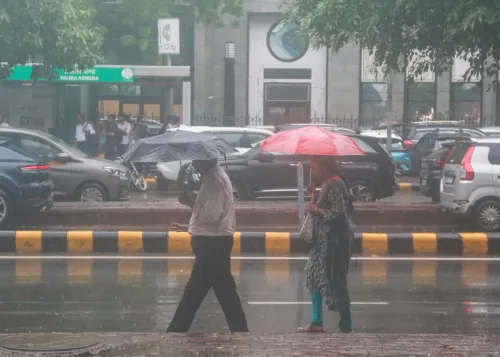
Delhi-NCR waterlogging, traffic chaos persist after 2 days of heavy rain

Synopsis
Two days of relentless rain have turned Delhi-NCR into a gridlock of flooded roads and stranded commuters. With the Yamuna rising, NDRF teams deployed, and an IMD Orange Alert still active, the crisis is exposing the same drainage failures that have plagued the region for years — and the weekend offers little relief.
Key Takeaways
Delhi-NCR continued to face severe waterlogging and traffic disruption on Saturday, 8 August after two days of heavy rainfall.
The IMD issued a two-day Orange Alert for Delhi, warning of continued heavy rain.
NDRF teams were deployed at Kalindi Kunj Bhola Ghat as the Yamuna River water level rose.
A Delhi Jal Board pipeline reportedly burst on Delhi-Karnal Road , worsening flooding near the Red Fort .
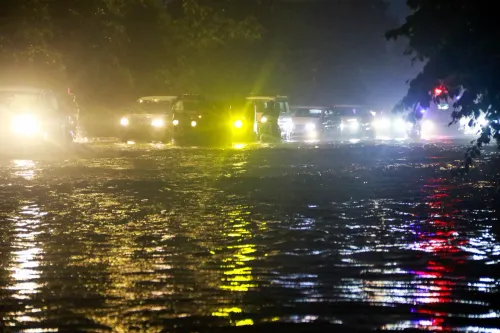
Noida's Mahamaya Flyover area and multiple sectors saw vehicles submerged; a commuter's usual 20-minute trip took 1 hour 45 minutes .
Safdarjung recorded 27.5°C on Friday — 6.7 degrees below normal — as the rain brought a sharp temperature drop.
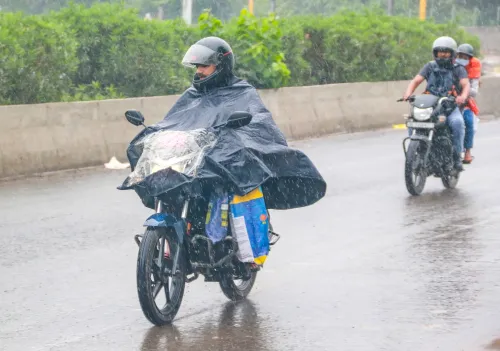
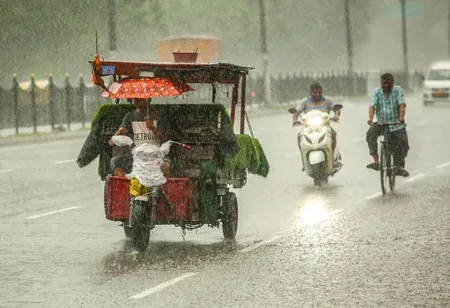
Severe waterlogging and traffic gridlock continued to paralyse large parts of Delhi-NCR on Saturday, 8 August, following two consecutive days of heavy rainfall across Delhi, Noida, and Haryana. The India Meteorological Department (IMD) issued a two-day Orange Alert for the national capital, warning of continued heavy rainfall and urging residents to exercise caution.
Waterlogging Hotspots Across Delhi
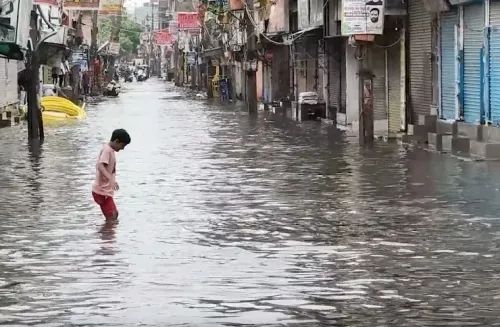
Inundation was reported across multiple Delhi localities including Vasant Kunj, Okhla Mod, Kalindi Kunj, and Delhi-Karnal Road. At Okhla Mod, between one and two feet of water remained on stretches of road even after Friday's downpour, with traffic movement only partially restored as water levels receded. Rain resumed in several parts of Delhi on Saturday afternoon, compounding the difficulties for commuters.
On Delhi-Karnal Road (Mahatma Gandhi Marg) near the Red Fort, a Delhi Jal Board pipeline reportedly burst, causing localised flooding. Water pumps were deployed to drain the accumulation while Delhi Traffic Police personnel managed diversions and congestion in the area.
NDRF Deployed as Yamuna Levels Rise
Teams of the National Disaster Response Force (NDRF) were deployed at Kalindi Kunj Bhola Ghat to monitor the rising water level in the Yamuna River and undertake preventive measures. The river has been swelling steadily due to persistent rainfall across the catchment area, raising concerns about low-lying settlements along its banks.
Noida and Haryana Hit Hard
Neighbouring Noida reported severe waterlogging in Sector 16, Sector 18, Sector 3, Sector 4, and under the Mahamaya Flyover in Sector 95, where several vehicles broke down after getting submerged. A commuter, Naeem, said: 'I was travelling from Kalindi Kunj to Kashmere Gate. There is heavy waterlogging under the Mahamaya Flyover. My bike broke down, and many other people's bikes have also broken down. Because of this, we are not even able to reach our workplaces.'
Another commuter described a journey from Film City to Sector 4 that took 1 hour and 45 minutes — a trip that normally takes around 20 minutes — due to flooding across multiple sectors. In Haryana, parts of Bhiwani witnessed flooded roads, while Charkhi Dadri faced severe water accumulation, once again exposing longstanding gaps in drainage infrastructure and storm drain maintenance.
Faridabad Corridor Choked for Hours
Heavy traffic snarls were reported on Shooting Range Road connecting Delhi to Faridabad. Commuters remained stranded for hours on Friday night as waterlogging triggered long vehicle queues from Tughlakabad towards Surajkund and Faridabad, with congestion reportedly persisting until midnight. Several offices and institutions allowed employees to work from home on Saturday as the disruption continued.
Weather Outlook and Temperature Drop
Despite the chaos, the rainfall brought a notable respite from the heat. Safdarjung recorded a maximum temperature of 27.5 degrees Celsius on Friday — 6.7 degrees below normal. The IMD forecast a generally cloudy sky for Saturday, with light to moderate rainfall likely at several places. Maximum temperatures are expected to remain between 30 and 32 degrees Celsius, with minimums ranging between 22 and 24 degrees Celsius. Light to moderate winds of 10–20 kmph are also anticipated across the region.
Point of View
Delhi-NCR cycles through the same crisis: heavy rain, overwhelmed drains, stranded commuters, and official statements about pump deployment. The Charkhi Dadri and Bhiwani situations in Haryana, and the Mahamaya Flyover flooding in Noida, are not outliers — they are the predictable output of drainage infrastructure that has not kept pace with urban expansion. The Yamuna's rising level adds a second layer of risk that authorities are monitoring but have historically been slow to pre-empt. Until stormwater drain capacity is treated as a year-round infrastructure priority rather than a post-monsoon audit item, these disruptions will recur with the same headlines and the same helplessness.
NationPress
8 Aug 2026
Frequently Asked Questions
Which areas of Delhi-NCR are most affected by waterlogging on 8 August?
Waterlogging was reported across Vasant Kunj, Okhla Mod, Kalindi Kunj, and Delhi-Karnal Road in Delhi, along with Sector 16, 18, 3, 4, and the Mahamaya Flyover area in Noida. Parts of Bhiwani and Charkhi Dadri in Haryana were also severely affected.
What is the IMD Orange Alert for Delhi and what does it mean?
The India Meteorological Department issued a two-day Orange Alert for Delhi on 8 August, warning of heavy to very heavy rainfall. An Orange Alert advises authorities and residents to stay prepared and exercise caution, as significant disruption is likely.
Why was the NDRF deployed at Kalindi Kunj Bhola Ghat?
The National Disaster Response Force was deployed at Kalindi Kunj Bhola Ghat to monitor the rising water level in the Yamuna River and carry out preventive measures. Persistent rainfall across the region has caused the river to swell, raising concerns about flooding in low-lying areas.
How did the rain affect temperatures in Delhi?
The heavy rainfall brought a sharp drop in temperatures. Safdarjung recorded a maximum of 27.5 degrees Celsius on Friday, which was 6.7 degrees below normal. Temperatures on Saturday are expected to stay between 30 and 32 degrees Celsius.
What caused the flooding on Delhi-Karnal Road near the Red Fort?
A Delhi Jal Board pipeline reportedly burst on Delhi-Karnal Road (Mahatma Gandhi Marg) behind the Red Fort, causing localised flooding. Water pumps were deployed to drain the water, and Delhi Traffic Police managed diversions in the area.