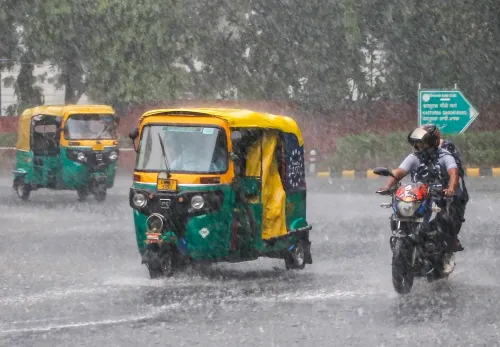
IMD yellow alert: Delhi-NCR to get rain, thunderstorms relief from heatwave

Synopsis
After days of 45–46°C heat, Delhi-NCR finally has a weather break in sight. The IMD's yellow alert for 28 May brings thunderstorms and gusty winds of up to 60 kmph, with a 5–7 degree temperature drop forecast after 29 May — but the southwest monsoon itself is delayed, with Delhi's arrival pushed to around 27 June.
Key Takeaways
The IMD issued a yellow alert for thunderstorms and rain across Delhi-NCR on 28 May .
Wind speeds are expected to reach 50–60 kmph , with light to moderate rainfall during afternoon and evening hours.
The Safdarjung station recorded a maximum of 44.3°C ; a drop of 5–7°C is forecast after 29 May .
The southwest monsoon is delayed, now expected in Kerala between 28 May and 3 June and in Delhi around 27 June .
Delhi's air quality remained 'poor' , with Anand Vihar recording the highest AQI at 284 .
The India Meteorological Department (IMD) on Thursday, 28 May issued a yellow alert for thunderstorms and rain across Delhi-NCR, offering the prospect of relief from a sustained heatwave that has pushed maximum temperatures to between 45 and 46 degrees Celsius over recent days. The alert marks the first significant weather intervention for the capital region after a prolonged spell of scorching conditions.
What the IMD Alert Says
According to the IMD, Delhi-NCR is expected to witness thunderstorms accompanied by light to moderate rainfall on 28 May, with wind speeds likely reaching up to 50 kmph. Reports indicate that very light to light rainfall could occur during the afternoon, alongside thundersqualls and gusty winds of 50–60 kmph. Similar weather activity has been forecast for the evening hours as well.
The department has advised residents to stay alert and monitor changing weather conditions, noting that comparable alerts have been issued for neighbouring states. The IMD cautioned that intense wind and rain episodes could disrupt normal life during this period.
Current Temperatures and Forecast
The Safdarjung weather station — Delhi's primary reference point — recorded a maximum temperature of 44.3 degrees Celsius, with the minimum hovering around 26 degrees Celsius. No immediate large-scale temperature drop is expected on 28 May itself, but the IMD has forecast a decline of 5 to 7 degrees Celsius after 29 May, which is projected to bring considerable relief to residents enduring the prolonged heat.
Monsoon Arrival Delayed
This comes amid reports of a delay in the onset of the southwest monsoon. The monsoon is now expected to reach Kerala between 28 May and 3 June, while its arrival in Delhi is projected around 27 June. The delayed onset could continue to influence weather patterns in the coming weeks, prolonging heat stress across northern India before the seasonal rains provide sustained relief.
Notably, Delhi has seen repeated heatwave spells this pre-monsoon season, making the forecast drop of 5–7 degrees post-29 May particularly significant for public health and daily life.
Air Quality Remains Poor
Delhi's air quality index remained in the 'poor' category on Wednesday. Among the worst-affected monitoring stations, Anand Vihar recorded an AQI of 284, Wazirpur logged 263, Narela recorded 254, and Rohini stood at 251. Other stations including Bawana (228), Pusa (216), North Campus (191), IGI Airport T3 (183), IIT Delhi (184), DTU (117), JNU (146), and Aya Nagar (156) also remained elevated.
The combination of poor air quality and extreme heat underscores the compounded stress on Delhi residents, and the anticipated rain may offer temporary improvement on both fronts. All eyes are now on whether the pre-monsoon activity translates into a sustained cool-down ahead of the monsoon's eventual arrival.
Point of View
But the bigger story is structural: Delhi's pre-monsoon heat stress is intensifying year on year, and a delayed southwest monsoon means the window of compounded heat-and-poor-air-quality is stretching longer. A 5–7 degree drop after 29 May is meaningful but temporary — without the monsoon's arrival, northern India remains exposed to further heatwave cycles through June. The AQI data also tells a story that weather forecasts alone don't: even on a day with a rain alert active, over a dozen Delhi stations sit in the 'poor' or near-'very poor' range, pointing to a chronic pollution baseline that heat and stagnant air only worsen.
NationPress
16 Sept 2026
Frequently Asked Questions
What does the IMD yellow alert for Delhi-NCR on 28 May mean?
A yellow alert from the IMD signals that residents should 'be aware' of potentially disruptive weather. In this case, it covers thunderstorms, light to moderate rainfall, and gusty winds of 50–60 kmph across Delhi-NCR on 28 May, with similar conditions expected into the evening.
When will Delhi get relief from the heatwave?
The IMD has forecast a temperature drop of 5 to 7 degrees Celsius after 29 May, which is expected to provide significant relief from the current heatwave. Temperatures have been hovering between 45 and 46 degrees Celsius in recent days.
When will the southwest monsoon reach Delhi in 2025?
According to the IMD, the southwest monsoon's arrival in Delhi is projected around 27 June, following a delayed onset. The monsoon is expected to reach Kerala between 28 May and 3 June before progressing northward.
How bad is Delhi's air quality during the heatwave?
Delhi's air quality remained in the 'poor' category on Wednesday. Anand Vihar recorded the highest AQI at 284, followed by Wazirpur at 263 and Narela at 254. Multiple stations across the city reported elevated pollution levels.
Which areas in Delhi are most affected by the heatwave and poor air quality?
The heatwave has affected the entire Delhi-NCR region, with the Safdarjung station recording 44.3°C. On the air quality front, Anand Vihar, Wazirpur, Narela, Rohini, and Bawana recorded the worst AQI readings, all above 220.