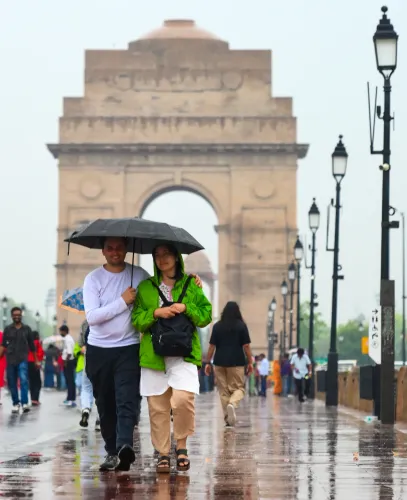
IMD yellow alert Delhi: Heatwave to push temps to 46°C till May 27

Synopsis
Delhi is staring down a three-day heatwave with the mercury threatening to touch 46°C, even as poor air quality compounds the health risk. The IMD's yellow alert through May 27 — backed by red alerts in UP, MP and Maharashtra — signals this is no isolated spike but a broad, multi-state heat emergency with relief still days away.
Key Takeaways
IMD has issued a yellow alert for Delhi from 25 to 27 May , forecasting daytime temperatures of 44–46°C .
Maximum temperatures may rise by a further 1–2°C in the next 24 hours ; a drop of 6–8°C is expected only after 27 May .
Severe heatwave conditions flagged for isolated areas of Punjab , Haryana , and Delhi from 25–27 May .
Red alerts issued for parts of Uttar Pradesh , Madhya Pradesh , and Maharashtra ; orange alerts cover 10 additional states .
Delhi's air quality remains in the 'poor' category, with Anand Vihar recording the worst AQI at 293 .
Light showers and thunderstorms expected between 28–30 May are forecast to bring sustained relief.
The India Meteorological Department (IMD) has issued a yellow alert for New Delhi from 25 May through 27 May, warning of heatwave conditions with daytime temperatures forecast to range between 44 and 46 degrees Celsius. The alert comes after a brief respite of cloudy skies and marginally cooler temperatures offered residents temporary relief from an already punishing summer.
What the IMD Forecast Says
According to the weather department, maximum temperatures are likely to climb by a further 1 to 2 degrees Celsius within the next 24 hours, remaining elevated through 27 May. Minimum temperatures are also expected to rise by 2 to 3 degrees Celsius over the same period before easing gradually toward month-end. A meaningful drop of 6 to 8 degrees Celsius is anticipated only after 27 May.
Humidity in the capital stood at 37 per cent on Sunday morning, compounding the heat stress for residents. The IMD has, however, forecast the possibility of light rainfall in isolated pockets of the city by Sunday evening — offering a narrow window of relief before the heat reasserts itself.
Severe Heatwave in Punjab, Haryana and Delhi
The IMD has flagged severe heatwave conditions in isolated areas of Punjab, Haryana, and Delhi during 25–27 May, with heatwave warnings expected to persist until 28 May. Authorities have urged residents to stay indoors during peak afternoon hours, stay hydrated, and take precautions against heat-related illnesses such as heat stroke and dehydration.
Multi-State Red and Orange Alerts
Delhi is not alone in facing extreme heat. The IMD has issued red alerts — indicating severe heatwave conditions — for parts of Uttar Pradesh, Madhya Pradesh, and Maharashtra. Orange alerts are in effect across Telangana, Rajasthan, Punjab, Haryana, Chhattisgarh, Odisha, Jharkhand, Assam, Arunachal Pradesh, and Karnataka, signalling that a broad swath of the country is in the grip of an early-season heat emergency.
Delhi Air Quality Compounds the Crisis
Adding to residents' woes, Delhi's air quality continued to languish in the 'poor' category on Sunday. Station-wise Air Quality Index (AQI) readings were: Anand Vihar 293, Narela 246, Sonia Vihar 231, Ashok Vihar 229, IIT Delhi 217, R K Puram 212, Aya Nagar 180, Chandni Chowk 157, JNU 154, and DTU 130. The combination of extreme heat and degraded air quality poses compounded health risks, particularly for the elderly, children, and those with respiratory conditions.
When Will Relief Arrive
Sustained relief is expected between 28 and 30 May, when the IMD forecasts light showers, thunderstorms, and gusty winds that should bring temperatures down across the Delhi-NCR region. Until then, health authorities and the IMD have advised caution, especially for outdoor workers and vulnerable populations.
Point of View
Yet the forecast range of 44–46°C puts Delhi squarely in dangerous territory — and the simultaneous red alerts across UP, MP and Maharashtra confirm this is a systemic heat event, not a localised anomaly. What makes this cycle particularly concerning is the compounding factor: poor air quality across Delhi stations means residents are simultaneously breathing degraded air and absorbing dangerous heat loads. The forecast relief window of 28–30 May is narrow, and if pre-monsoon showers underdeliver — as they often do in late May — the heat stress could extend further. India's urban heat emergency is increasingly a public health emergency, and city-level preparedness plans remain patchy at best.
NationPress
9 Oct 2026
Frequently Asked Questions
What does the IMD yellow alert for Delhi mean?
A yellow alert from the IMD signals that heatwave conditions are likely and residents should remain cautious. For Delhi, the alert is active from 25 to 27 May, with daytime temperatures forecast between 44 and 46 degrees Celsius.
When will Delhi get relief from the heatwave?
Sustained relief is expected between 28 and 30 May, when the IMD forecasts light showers, thunderstorms, and gusty winds. Until then, temperatures are likely to remain elevated, with a significant drop of 6–8 degrees Celsius anticipated only after 27 May.
Which other states are under heatwave alerts?
Red alerts for severe heatwave conditions have been issued for parts of Uttar Pradesh, Madhya Pradesh, and Maharashtra. Orange alerts cover Telangana, Rajasthan, Punjab, Haryana, Chhattisgarh, Odisha, Jharkhand, Assam, Arunachal Pradesh, and Karnataka.
What is Delhi's air quality like during this heatwave?
Delhi's air quality is in the 'poor' category, with Anand Vihar recording the highest AQI at 293 and DTU the lowest among monitored stations at 130. The combination of extreme heat and poor air quality poses heightened health risks for vulnerable groups.
What precautions should Delhi residents take during the heatwave?
The IMD and health authorities advise staying indoors during peak afternoon hours, drinking plenty of water, avoiding direct sun exposure, and watching for symptoms of heat stroke or dehydration. Outdoor workers and the elderly face the highest risk during this period.