Ya Devi Sarvabhuteshu: Delhi Art Show Celebrates Divine Feminine Power
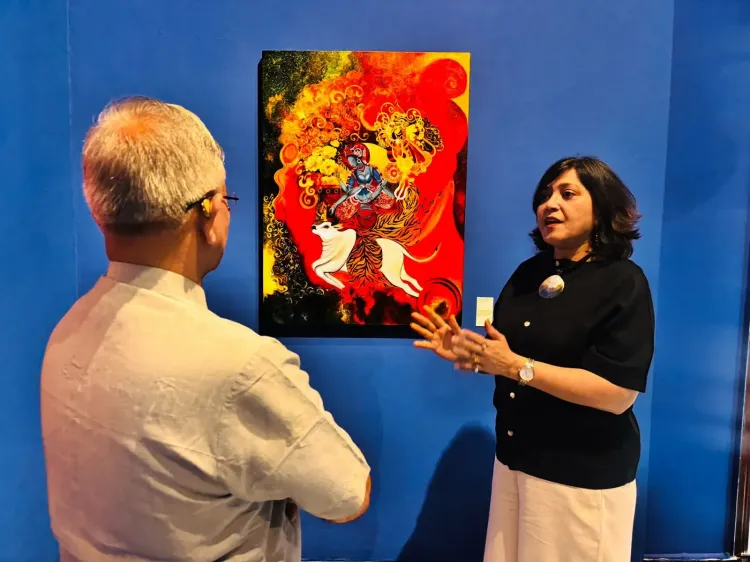
Synopsis
Artist and AWWA Northern Command President Shiny Sharma's exhibition 'Ya Devi Sarvabhuteshu' at Delhi's Kalamkar Gallery transforms the lived resilience of Army wives and Veer Naris into a powerful visual celebration of Nari Shakti — proving that the most authentic art is forged not in studios, but in the fires of real human experience.
Key Takeaways
The "Ya Devi Sarvabhuteshu" art exhibition is on display at Kalamkar Gallery, Bikaner House, New Delhi , until April 26, 2025 .
The exhibition is curated by artist Shiny Sharma , who also serves as President of the Army Wives Welfare Association (AWWA), Northern Army Command .
Each painting in the collection depicts a distinct manifestation of Shakti , rooted in the ancient Sanskrit hymn from the Devi Mahatmyam .
Sharma draws creative inspiration from the resilience of Army wives and Veer Naris (war widows) she works with through AWWA.
She uses diverse materials including acrylic, oil, soil, wood, and Alpana rice paste in her multimedia works.
Sharma has introduced art clubs in Army hostels under Sadbhavana schools to support the holistic development of children from Army families.
New Delhi, April 25: The Kalamkar Gallery at Bikaner House, New Delhi, is currently hosting a thought-provoking contemporary art exhibition titled "Ya Devi Sarvabhuteshu" — drawn from a revered Sanskrit hymn that pays homage to the omnipresent Goddess. Running until April 26, 2025, the showcase celebrates Nari Shakti (woman power) by weaving together ancient scriptural philosophy and modern visual storytelling through the works of artist Shiny Sharma.
An Exhibition Rooted in Spiritual Philosophy
The title "Ya Devi Sarvabhuteshu" is derived from the Devi Mahatmyam, one of Hinduism's most sacred texts, which extols the Goddess as the all-pervading energy in every living being. The exhibition is designed to bridge this ancient wisdom with contemporary artistic expression, making it deeply relevant in today's cultural discourse around women's empowerment and spiritual identity.
Each painting in the collection represents a distinct manifestation of Shakti — the divine feminine energy. Together, the works form a cohesive narrative about the spiritual and cultural strength that women carry across generations, communities, and circumstances.
Artist Shiny Sharma: The Vision Behind the Canvas
Speaking to IANS, Shiny Sharma explained that the exhibition is not centred on a single theme but is rather the culmination of her long-held perception of Nari Shakti and the universal energy inherent in all living beings. This vision gradually took shape into the collection now displayed at Bikaner House.
Sharma described the Goddess not as a singular deity but as "Chit Shakti" — the vital, animating force that flows through all creatures. She referenced the core tenet of Indian philosophy that without Shakti, even Lord Shiva remains inert, underscoring how feminine energy is foundational to existence itself.
Her artistic techniques span acrylic and oil on canvas, but she also integrates multimedia and organic materials such as soil, wood, and traditional rice paste used in Alpana floor art — a folk tradition practised across eastern and northern India. For Sharma, nature itself is a canvas, and the materials it offers are as meaningful as the subjects she paints.
Army Welfare Work: Art Shaped by Real Lives
Beyond her artistic identity, Shiny Sharma serves as the President of the Army Wives Welfare Association (AWWA) for the Northern Army Command. In this role, she works closely with Army families, war widows — known as Veer Naris — and their children, providing welfare support and community development.
Sharma noted that her responsibilities deeply inform her creativity. She believes art is not born in isolation but is shaped by the people, environment, and society one engages with. The resilience she witnesses daily — of Army wives managing households alone while their husbands guard the nation's borders — directly feeds into the strength and spirit she portrays on canvas.
She spoke with particular admiration for the Veer Naris, women who have lost their husbands in service to the nation yet demonstrate extraordinary courage in rebuilding their lives. Their stories of quiet strength and forward momentum are central to her understanding of Nari Shakti.
Nurturing the Next Generation Through Art
Sharma also highlighted the work being done for children growing up in difficult circumstances through Sadbhavana schools and hostels operated by the Indian Army. The AWWA works to create nurturing, holistic environments for these children, focusing not just on academics but on emotional and creative development.
As part of this initiative, Sharma has introduced dedicated art clubs in Army hostels, believing that music and art are essential channels through which children can process emotions, build confidence, and develop their personalities. This grassroots effort to democratise artistic expression reflects the same philosophy that drives her exhibition — that creativity is not a luxury but a life force.
Broader Cultural Significance
The "Ya Devi Sarvabhuteshu" exhibition arrives at a time when conversations around women's empowerment, cultural heritage, and the role of art in social commentary are gaining renewed momentum across India. Exhibitions like this one at Bikaner House — a heritage venue that has become one of Delhi's most vibrant cultural hubs — signal a growing appetite for art that is both spiritually grounded and socially conscious.
The show serves as a reminder that Nari Shakti is not merely a political slogan but a living philosophy rooted in centuries of Indian thought, one that finds its most authentic expression not in speeches but in the lived experiences of women across every stratum of society.
With the exhibition concluding on April 26, 2025, art enthusiasts and cultural observers in Delhi have a final opportunity to experience this powerful tribute to the Divine Feminine before it closes.
Point of View
Shiny Sharma's exhibition does something rare — it grounds the concept in lived reality. By drawing on the daily courage of Army wives and Veer Naris, she reminds us that the most powerful art is not created in comfortable studios but in the crucible of sacrifice and service. The deeper irony worth noting: while grand policy announcements about women's empowerment dominate headlines, it is quiet initiatives like art clubs in Army hostels that actually build resilience from the ground up. NationPress salutes both the artist and the women who inspire her.
NationPress
23 Sept 2026
Frequently Asked Questions
What is the 'Ya Devi Sarvabhuteshu' exhibition in Delhi?
'Ya Devi Sarvabhuteshu' is a contemporary art exhibition by artist Shiny Sharma, currently on display at the Kalamkar Gallery, Bikaner House, New Delhi, until April 26, 2025. The show celebrates Nari Shakti and the Divine Feminine through paintings depicting various manifestations of Shakti, or divine energy.
Who is artist Shiny Sharma?
Shiny Sharma is a contemporary Indian artist and the President of the Army Wives Welfare Association (AWWA) for the Northern Army Command. Her art is deeply influenced by her work with Army families, Veer Naris (war widows), and children in Army welfare institutions.
Where is the Ya Devi Sarvabhuteshu art exhibition being held?
The exhibition is being held at the Kalamkar Gallery inside Bikaner House, New Delhi. It is open until April 26, 2025.
What is the meaning of 'Ya Devi Sarvabhuteshu'?
'Ya Devi Sarvabhuteshu' is a line from the Devi Mahatmyam, a sacred Hindu scripture, meaning 'O Goddess who resides in all beings.' It is a hymn that celebrates the omnipresence of the Divine Feminine energy, known as Shakti or Chit Shakti.
What materials does Shiny Sharma use in her artwork?
Shiny Sharma primarily works with acrylic and oil on canvas but also incorporates multimedia elements and natural materials such as soil, wood, and traditional rice paste used in Alpana floor art. She views nature itself as her canvas.