CM Bhajan Lal flags off Nari Shakti Rally in Udaipur
Synopsis
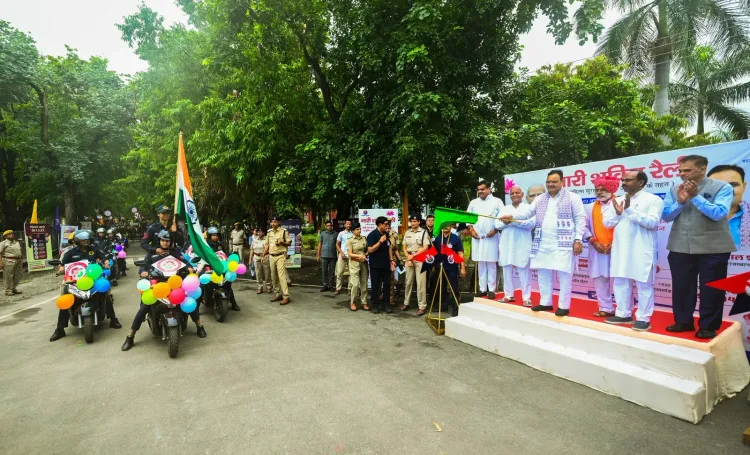
Rajasthan CM Bhajan Lal Sharma flagged off the Nari Shakti Rally from Udaipur's Rajasthan Agricultural College on 2 August 2026, with women police, athletes and NSS volunteers marching to champion women's security, dignity and empowerment under the state's 'double engine government' framework.
Key Takeaways
CM Bhajan Lal Sharma flagged off the Nari Shakti Rally from Rajasthan Agricultural College, Udaipur on 2 August 2026 .
The Kalika Patrolling Unit , women constables, mounted police, female athletes, Girl Guides and NSS volunteers all participated in the march.
The rally's core message centred on women's safety, self-respect and empowerment, framed as a public-participation initiative.
CM Sharma invoked the 'double engine government' framework, linking state action to national BJP policy on women's welfare.
The event connects to the national Beti Bachao Beti Padhao scheme (launched 2015 ) and Rajasthan's women's policy updates of 2021-22 .
Policy watchers will track whether the rally leads to expanded Kalika Unit operations or new legislative measures on women's safety.
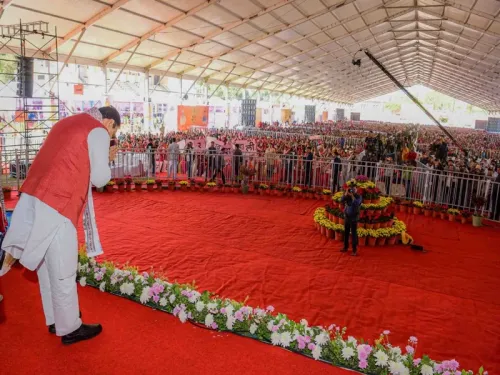
From the grounds of Rajasthan Agricultural College in Udaipur, a column of mounted police officers, women constables, athletes, and student volunteers moved out on Sunday, 2 August 2026 — carrying a single, unified message: women's security and dignity are non-negotiable. Rajasthan Chief Minister Bhajan Lal Sharma flagged off the Nari Shakti Rally, turning a college ground into the launchpad for one of the state's most visible public outreach drives on gender empowerment.
Kalika Patrolling Unit leads the march through Udaipur
The rally's opening image said everything about its intent. The Kalika Patrolling Unit — Rajasthan Police's women-specific patrolling formation — rode alongside mounted cavalry and women constables in uniform, projecting institutional muscle behind the campaign's message. Alongside them moved tableaux built around women's empowerment themes, female athletes, Girl Guides, and NSS volunteers, together forming what the Chief Minister described as a broad expression of matrishakti (the collective strength of women).
CM Sharma, addressing the gathering, said the rally was 'an inspiring initiative to strengthen public participation in women's safety, dignity and social awareness.' The event drew participation from across civic and uniformed spheres, signalling a deliberate effort to make the drive visible beyond government offices.
The 'double engine' frame and what it means for Rajasthan women
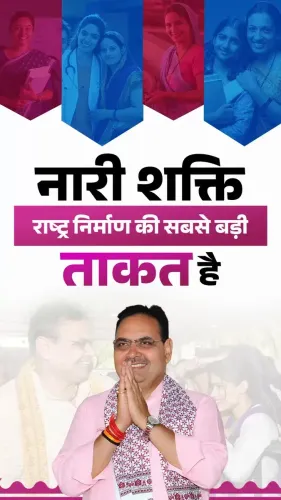
The Chief Minister invoked the BJP's signature 'double engine government' phrase — shorthand for coordinated action between the state government in Jaipur and the central government in New Delhi — to situate the rally within a larger national framework. Sharma stated the government is working 'with full commitment for the honour, security, self-reliance and all-round empowerment of matrishakti.'
That framing connects Saturday's street-level rally to a longer policy lineage: the national Beti Bachao Beti Padhao scheme, launched in 2015, and Rajasthan's own women's policy updates in 2021-22 that prioritised self-defence training, dedicated helplines, and increased female police recruitment. The Nari Shakti Rally is, in effect, the public-facing, high-visibility arm of that administrative architecture.
Rajasthan's women-in-uniform push takes centre stage
The composition of the rally — uniformed women front and centre, not just as participants but as the lead contingent — reflects a deliberate policy choice by the Rajasthan BJP government since it took office in December 2023. Putting the Kalika Patrolling Unit and mounted women officers at the head of a public procession is a visual argument: that women's safety is enforced by women, not just promised to them.
Analysts watching Rajasthan's gender policy will now track whether the rally translates into concrete announcements — expansion of the Kalika Unit's operational footprint, new skill or livelihood schemes in the state budget, or fresh legislative proposals on women's safety in the assembly session ahead.
A rally that started at an agricultural college in Udaipur carries a question all the way to the state assembly: when the march ends, what does the policy look like on paper?
Point of View
Symbolically loaded public events that simultaneously serve as governance signals and political communication. By placing uniformed women — specifically the Kalika Patrolling Unit — at the front of the march, the Sharma government is making a visual policy argument that female security is operationally, not just rhetorically, prioritised. The 'double engine' invocation is equally deliberate: it ties a state-level event to the national BJP brand, reinforcing vertical alignment ahead of future electoral cycles. The real test will be whether this rally momentum converts into measurable outcomes — budget allocations, unit expansions, or legislative action — rather than remaining a recurring ceremonial marker on the gender-policy calendar.
NationPress
16 Sept 2026
Frequently Asked Questions
What is the Nari Shakti Rally in Rajasthan?
The Nari Shakti Rally is a public march organised to promote women's security, dignity and empowerment, featuring women police personnel, athletes, NSS volunteers and civilian participants. CM Bhajan Lal Sharma flagged off the latest edition from Rajasthan Agricultural College in Udaipur on 2 August 2026.
What is the Kalika Patrolling Unit in Rajasthan?
The Kalika Patrolling Unit is a women-specific patrolling formation of Rajasthan Police deployed for safety and public awareness duties. It led the Nari Shakti Rally procession in Udaipur alongside mounted police and women constables.
What did CM Bhajan Lal Sharma say at the Nari Shakti Rally?
CM Sharma described the rally as 'an inspiring initiative to strengthen public participation in women's safety, dignity and social awareness,' and reaffirmed that the 'double engine government' is working with full commitment for the honour, security, self-reliance and all-round empowerment of women.
Where was the Nari Shakti Rally held in August 2026?
The rally was held at and flagged off from Rajasthan Agricultural College in Udaipur, an institution under Maharana Pratap University of Agriculture and Technology.
What is the 'double engine government' phrase used by BJP leaders?
'Double engine government' is a BJP phrase referring to coordinated governance between a BJP-led state government and the BJP-led central government, implying aligned policy delivery. CM Sharma used it to connect the Nari Shakti Rally to national women's welfare schemes like Beti Bachao Beti Padhao.