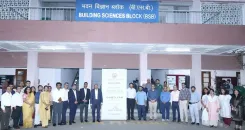
Delhi Speaker Vijender Gupta urges youth to ask bolder intellectual questions
Synopsis
Delhi Assembly Speaker Vijender Gupta used a university auditorium inauguration to make a pointed case: India's ancient knowledge systems deserve active research, not reverent archiving. The occasion — the launch of a book linking Vedic language to DNA-RNA science — framed a ceremonial event as a challenge to academia to ask harder questions about civilisational heritage.
Key Takeaways
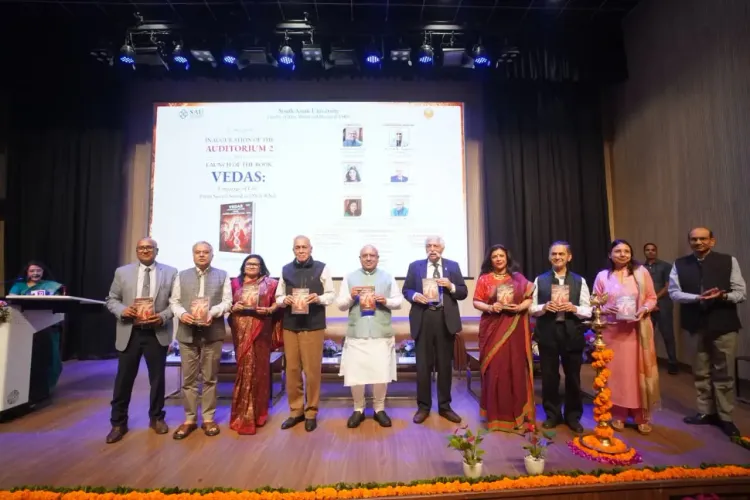
Delhi Assembly Speaker Vijender Gupta inaugurated Auditorium 2 at South Asian University , New Delhi, on 2 November 2026 .
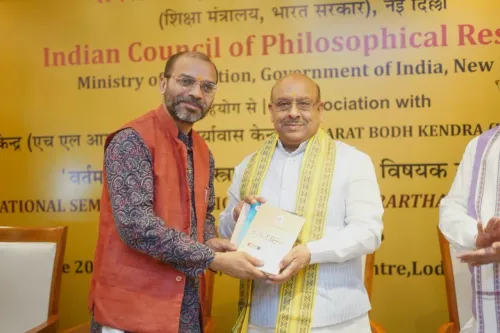
He launched the book 'Vedas: Language of Life – From Sacred Sound to DNA-RNA' by Major General (Dr.) G.
Bakshi (Retd), SM, VSM .
Gupta argued that India's ancient knowledge traditions must be actively researched rather than preserved as mere heritage.
The book explores links between Vedic language and modern scientific concepts including DNA, RNA , and mathematical language.
Major General Bakshi served 37 years in the Indian Army, including during the 1971 war .
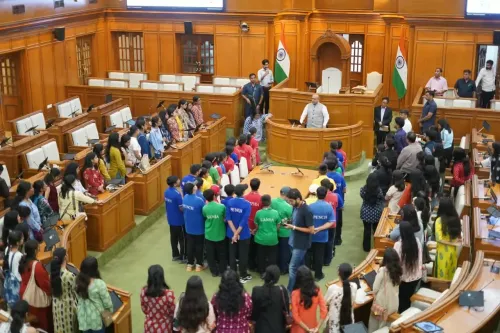
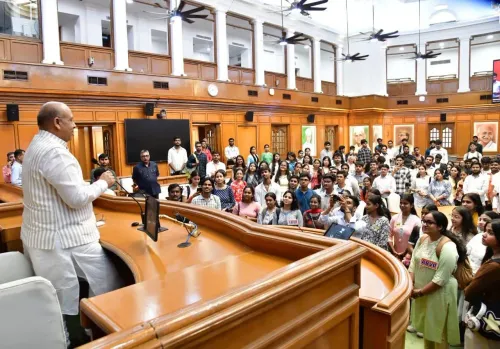
Delhi Assembly Speaker Vijender Gupta on Monday, 2 November 2026, declared that the future of civilisation's intellectual heritage rests on the quality of questions the younger generation is prepared to raise — a remark that framed an otherwise ceremonial occasion as a call to deeper academic purpose.
The Occasion
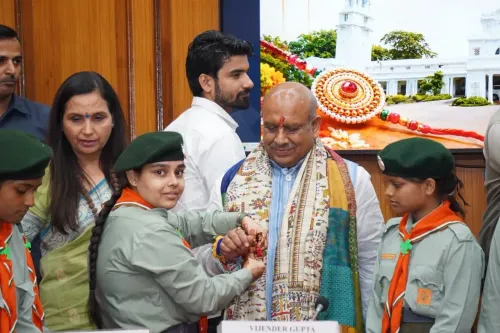
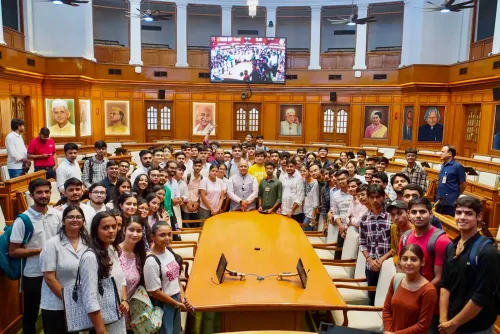
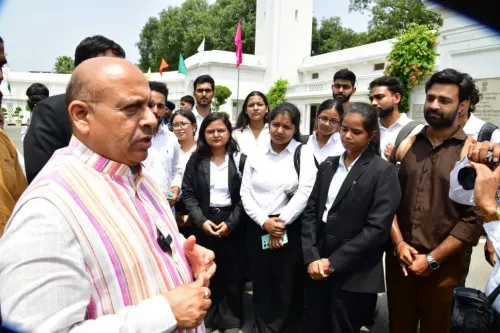
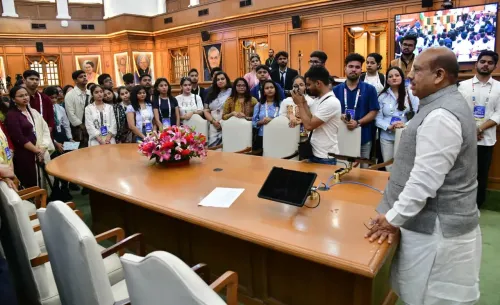
Gupta was speaking at South Asian University in New Delhi, where he inaugurated Auditorium 2 and formally launched the book 'Vedas: Language of Life – From Sacred Sound to DNA-RNA', authored by Major General (Dr.) G. D. Bakshi (Retd), SM, VSM. The event brought together scholars, faculty members, students, and a cross-section of government officials.
Among those present were K. K. Aggarwal, President of South Asian University; Ramesh Chandra Gaur, Dean of the Faculty of Arts, Media and Design; Rajiv Malhotra, author and founder of the Infinity Foundation; Rashmi Singh, Secretary of the Department of Women and Child Development, Government of Delhi; Arvind Kumar, Joint Secretary, Ministry of Culture, Government of India; and Shobha Vijender, President of Sampurna Foundation.
What the Speaker Said
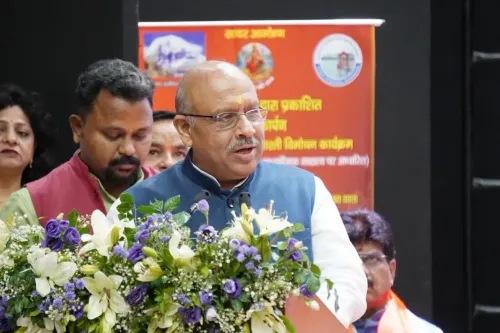
Addressing the gathering, Gupta stressed that India's ancient knowledge traditions should not be treated as a static inheritance. He argued they must instead be actively explored, researched, and reinterpreted through fresh perspectives. He described universities not as repositories of existing knowledge but as dynamic spaces where knowledge is continuously renewed and advanced.
On the newly inaugurated auditorium, he observed that such a facility was more than a physical structure — it was a venue where ideas find genuine expression. He expressed hope that it would become a vibrant centre for intellectual exchange, cultural activities, artistic expression, and academic discourse.
The Book and Its Themes
Gupta described the Vedas as an invaluable part of India's civilisational heritage, encompassing philosophy, language, poetry, mathematics, cosmology, and fundamental questions about life. He characterised Major General Bakshi's work as an attempt to trace connections between Vedic language and contemporary scientific concepts — bridging subjects as varied as DNA and RNA, mathematical language, information theory, biological development, and Vedic poetry.
He said the book offered readers an opportunity to reflect on possible links between ancient knowledge systems and modern scientific thought, rather than treating the two as irreconcilable domains.
Recognising the Author
Gupta acknowledged Major General Bakshi's 37 years of service in the Indian Army, including his participation in the 1971 war. He also referenced the author's association with his spiritual guide, Swami Pranavananda Saraswati, noting how meditation and spiritual reflection had opened new intellectual and introspective avenues in Bakshi's life and work.
The inauguration and book launch signal a growing institutional interest in examining ancient Indian knowledge systems through a scientific lens — a conversation that is likely to intensify as universities seek to bridge classical scholarship and contemporary research.
Point of View
But it points to a real tension in how Indian institutions treat classical scholarship. The Vedas-to-DNA bridging exercise is intellectually ambitious and will attract both serious researchers and credulous enthusiasts; without rigorous peer review, such synthesis risks conflating metaphor with mechanism. The broader pattern — senior political figures lending institutional weight to ancient-knowledge-meets-modern-science projects — is accelerating, and universities will need to decide whether they are curating cultural pride or advancing falsifiable science.
NationPress
2 Nov 2026
Frequently Asked Questions
What did Delhi Assembly Speaker Vijender Gupta say at South Asian University?
Vijender Gupta said the future of civilisation's intellectual heritage depends on the quality of questions the younger generation is prepared to ask. He urged that India's ancient knowledge traditions be actively researched rather than treated as a static legacy.
What is the book 'Vedas: Language of Life – From Sacred Sound to DNA-RNA' about?
The book, authored by Major General (Dr.) G. D. Bakshi (Retd), explores potential connections between Vedic language and contemporary scientific concepts including DNA, RNA, mathematical language, and information theory. It attempts to bridge ancient Indian knowledge systems and modern science.
Where was the book launched and what else was inaugurated at the event?
The book was launched at South Asian University in New Delhi on 2 November 2026. The event also included the inauguration of Auditorium 2 at the university's Faculty of Arts, Media and Design.
Who attended the South Asian University event?
The event was attended by K. K. Aggarwal (President, South Asian University), author and Infinity Foundation founder Rajiv Malhotra, Rashmi Singh (Secretary, Dept of Women and Child Development, Delhi), Arvind Kumar (Joint Secretary, Ministry of Culture), and Shobha Vijender (President, Sampurna Foundation), among others.
What is Major General G. D. Bakshi's background?
Major General (Dr.) G. D. Bakshi (Retd) served 37 years in the Indian Army, including during the 1971 war. His later work has been shaped by his association with spiritual guide Swami Pranavananda Saraswati, which he credits with opening new avenues of intellectual and spiritual reflection.