Delhi L-G, CM review Urban Flood Mitigation Plan; waterlogging sites drop to 34

Synopsis
Delhi's waterlogging sites have plunged from 194 in 2024 to just 34 in 2026 — but L-G T.S. Sandhu isn't satisfied. At a high-stakes DDMA review, he warned officials of personal accountability, while CM Rekha Gupta pushed for simultaneous silt disposal and proactive removal of storm-vulnerable trees before the monsoon peaks.
Key Takeaways
Sandhu and CM Rekha Gupta chaired a DDMA monsoon preparedness review on 20 July 2026 .
Waterlogging-prone sites in Delhi have fallen from 194 in 2024 to 169 in 2025 to 34 in 2026 so far.
The L-G warned officials they will be held personally accountable for any failure to prevent waterlogging.
CM Gupta directed that silt be disposed of simultaneously with removal, and that all drains, sewers, and manholes be kept covered.
Authorities were told to proactively identify and remove dangerous trees before storms, not after fatalities.
Progress on establishing the State Disaster Response Force (SDRF) in Delhi was also reviewed at the meeting.
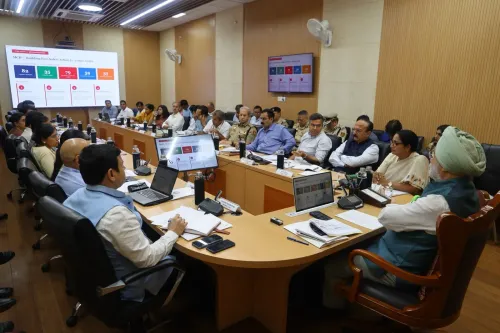
Delhi Lieutenant Governor T.S. Sandhu and Chief Minister Rekha Gupta on Monday, 20 July 2026, jointly reviewed the city's monsoon preparedness and the progress of the Urban Flood Mitigation Plan at a high-level meeting of the Delhi Disaster Management Authority (DDMA). The L-G warned officials they would be held personally accountable for any failure to prevent waterlogging.
Sharp Drop in Waterlogging Sites
Officials at the meeting reported a dramatic reduction in waterlogging-prone locations across the capital. According to the official statement, the number of such sites stood at 194 in 2024, fell to 169 in 2025, and has come down further to 34 so far in 2026 — a reduction of over 82% in two years. The L-G acknowledged the improvement but noted that further progress was still needed, particularly given meteorological predictions of sudden, intense rainfall spells this season.
What the L-G and CM Directed
Sandhu stressed that flooding remains a legacy infrastructure challenge for Delhi, but directed officials to enforce all available short-term measures while the long-term Drainage Master Plan continues to be implemented. He made clear that adherence to instructions was non-negotiable and that accountability would follow any lapses.
Chief Minister Gupta expressed satisfaction with de-siltation work completed so far, while directing that removed silt be disposed of simultaneously — not left on roadsides or near drains. She also ordered that no drain, sewer line, or manhole be left uncovered, and that potholes and ditches be levelled without delay.
Dangerous Trees: A Proactive Approach
The meeting also took up the issue of storm-vulnerable trees that frequently fall during heavy rain, causing casualties and property damage. The Chief Minister raised serious concern over the matter and directed authorities to identify and remove dangerous trees on a priority basis — proactively, rather than waiting for an accident to trigger action. Officials were told that preventive removal must replace the reactive approach that has characterised past monsoon seasons.
SDRF Progress and Senior Officials Present
The meeting additionally reviewed progress in establishing the State Disaster Response Force (SDRF) in the capital. Senior officials in attendance included Ministers Parvesh Sahib Singh and Ashish Sood, the Chief Secretary, the Special Commissioner of Police (Traffic), the Additional Chief Secretary (I&FC), the MCD Commissioner, the Vice-Chairman of DDA, the Divisional Commissioner, and heads of the PWD, Home, Transport, and Fire departments.
What Comes Next
With the peak monsoon weeks still ahead, the DDMA is expected to conduct follow-up reviews to track compliance with the directives issued on Monday. The city's ability to sustain the gains made — particularly the sharp fall in waterlogging sites — will depend on round-the-clock drain maintenance, timely silt disposal, and swift removal of hazardous trees before the next heavy rainfall event.
Point of View
But the framing of accountability — warning officials rather than publishing a compliance dashboard — reflects a top-down approach that has historically produced short-term results and long-term drift. Delhi's drainage crisis is structural: the Drainage Master Plan has been 'under implementation' across multiple governments for years. The real test of Monday's review is not what was said in the meeting room but whether silt disposal, manhole covers, and tree removal are tracked and publicly reported through the monsoon. Without that, the 34-site figure risks being this season's headline rather than a durable baseline.
NationPress
20 Oct 2026
Frequently Asked Questions
What was decided at the Delhi DDMA meeting on 20 July 2026?
The Delhi Disaster Management Authority meeting, chaired by L-G T.S. Sandhu and CM Rekha Gupta, reviewed monsoon preparedness and the Urban Flood Mitigation Plan. Officials were directed to ensure simultaneous silt disposal, keep all drains and manholes covered, level potholes promptly, and proactively remove storm-vulnerable trees.
How much have Delhi's waterlogging sites reduced?
Waterlogging-prone sites in Delhi have dropped from 194 in 2024 to 169 in 2025 and further to 34 so far in 2026, according to the official statement from the DDMA meeting — a reduction of over 82% in two years.
What did L-G T.S. Sandhu say about official accountability?
L-G Sandhu warned that officials would be held personally accountable if they failed to follow instructions aimed at preventing waterlogging. He stressed that while flooding is a legacy issue, all short-term measures must be enforced even as the long-term Drainage Master Plan is implemented.
Why did CM Rekha Gupta raise the issue of dangerous trees?
CM Gupta expressed serious concern over trees that frequently fall during storms and heavy rain, causing casualties. She directed authorities to identify and remove such trees on a priority basis — proactively — rather than waiting for a tragic accident to prompt action.
What is the State Disaster Response Force (SDRF) and why was it discussed?
The SDRF is a dedicated disaster response unit being established in Delhi. Its progress was reviewed at the 20 July DDMA meeting as part of the capital's broader effort to build institutional capacity for flood and disaster management ahead of peak monsoon weeks.