Opposition writes to CJI over SIR, demands immediate suspension of voter verification
Synopsis
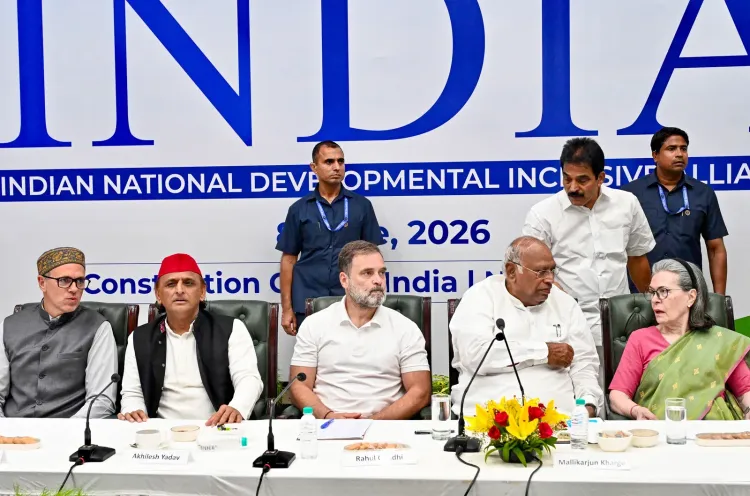
Twenty-three opposition leaders — from Kharge and Rahul Gandhi to Mamata Banerjee and Akhilesh Yadav — have taken the extraordinary step of writing directly to the CJI, citing a tribunal finding that 96% of voter deletions in West Bengal were wrongful. The letter frames India's electoral machinery itself as suspect, and puts the Supreme Court at the centre of a deepening constitutional confrontation.
Key Takeaways
23 opposition leaders jointly wrote to CJI Justice Surya Kant on 28 June 2025 , demanding suspension of the Special Intensive Revision (SIR) .
Signatories include Congress president Mallikarjun Kharge , Rahul Gandhi , Mamata Banerjee , Akhilesh Yadav , and Tejashwi Yadav , among others.
The letter alleges 27 lakh voters were wrongly deleted from rolls during the West Bengal Assembly polls .
A judicial tribunal headed by Justice T.S.
Sivagnanam reportedly found 96% of 1,777 contested deletions were wrongful.
The opposition also raised concerns over EVMs and alleged misuse of CBI , ED , and NIA against opposition figures.
The Supreme Court has not yet publicly responded to the letter.
A coalition of 23 opposition leaders, including Congress president Mallikarjun Kharge and Leader of Opposition in the Lok Sabha Rahul Gandhi, jointly wrote to Chief Justice of India (CJI) Justice Surya Kant and other judges on 28 June 2025, demanding the immediate suspension of the Election Commission of India's Special Intensive Revision (SIR) process and raising grave concerns over the alleged manipulation of India's electoral process. The letter, made public on 3 July, marks one of the most coordinated judicial interventions by the opposition in recent memory.
What the Letter Demands
The opposition bloc — spanning the INDIA alliance and several other parties — has urged the Supreme Court to step in as the 'ultimate custodian of the Constitution,' arguing that all other administrative mechanisms have failed to provide redress. Their central demand is the immediate suspension of the SIR, which they describe as 'inherently exclusionary and politically motivated.'
The signatories allege the voter roll sanitisation exercise has disenfranchised lakhs of genuine voters, particularly among the poor, uneducated, Dalits, Adivasis, and religious minorities — groups that reportedly lack the documentation required to comply with the verification process.
The West Bengal Data Point
The letter draws heavily on evidence from the West Bengal Assembly polls, where, according to the opposition, an unprecedented 27 lakh people were stripped of their right to vote under deletions categorised as 'logical discrepancies.' The leaders cited findings from judicial tribunals established to review these deletions.
'One of the 19 Tribunals hearing the appeals headed by Justice T.S. Sivagnanam, found that of the 1,777 names deleted for which appeals were heard by him, 1,717 were wrongly deleted. This means 96 per cent of the names were wrongly deleted,' the letter stated. The opposition argues this constitutes clear evidence of administrative overreach by the Election Commission of India (ECI).
Broader Allegations: EVMs and Central Agencies
Beyond the voter rolls, the signatories raised concerns about electronic voting machines (EVMs), calling for a wider public discussion on potentially restoring paper ballots to rebuild complete public trust in the electoral system. They also alleged that central investigative agencies — the Central Bureau of Investigation (CBI), Enforcement Directorate (ED), and National Investigation Agency (NIA) — are being systematically deployed to target opposition figures and distort election dynamics. These are allegations that the government has consistently denied in the past.
Who Signed the Letter
The letter carries signatures from across the political spectrum of the opposition. Among the prominent signatories are All India Trinamool Congress (TMC) supremo Mamata Banerjee, Samajwadi Party chief Akhilesh Yadav, Dravida Munnetra Kazhagam (DMK)'s Tiruchi Siva, Rashtriya Janata Dal (RJD) leader Tejashwi Yadav, Nationalist Congress Party (Sharadchandra Pawar) MP Supriya Sule, National Conference president Farooq Abdullah, Communist Party of India (CPI) general secretary D. Raja, and Communist Party of India (Marxist) MP John Brittas.
Also among the signatories: Aam Aadmi Party (AAP) MP Sanjay Singh, Jharkhand Mukti Morcha's Sarfaraz Ahmad, CPI(ML) general secretary Dipankar Bhattacharya, Indian Union Muslim League (IUML) leader Syed Sadiq Ali Shihab Thangal, People's Democratic Party (PDP) president Mehbooba Mufti, MDMK chief Vaiko, VCK leader Thol. Thirumavalavan, and Revolutionary Socialist Party MP N.K. Premachandran.
What Comes Next
The Supreme Court has not yet publicly responded to the letter. The opposition's decision to approach the CJI directly — bypassing conventional political channels — signals an escalation in the standoff over electoral integrity ahead of upcoming state elections. Whether the apex court takes cognisance of the letter or directs the ECI to respond will be closely watched by all stakeholders in India's democratic process.
Point of View
If verified at scale, is not a statistical anomaly; it is a systemic indictment. Yet the letter's credibility is complicated by its own framing: it is signed exclusively by parties 'firmly opposed to the BJP,' which allows the ruling dispensation to dismiss it as political theatre rather than a constitutional alarm. The Supreme Court's response — or silence — will itself be a verdict on the health of India's institutional checks.
NationPress
3 Jul 2026
Frequently Asked Questions
Why did the opposition write to the Chief Justice of India?
The opposition wrote to CJI Justice Surya Kant on 28 June 2025 because they allege that the Election Commission's Special Intensive Revision (SIR) process is manipulating voter rolls and disenfranchising lakhs of genuine voters. They turned to the judiciary after arguing that all other administrative mechanisms had failed to provide redress.
What is the Special Intensive Revision (SIR) that the opposition wants suspended?
The Special Intensive Revision (SIR) is a voter roll sanitisation exercise launched by the Election Commission of India (ECI) to verify and clean up electoral registers. The opposition contends it is 'inherently exclusionary and politically motivated,' disproportionately affecting poor, Dalit, Adivasi, and minority voters who lack the required documentation.
What evidence does the opposition cite regarding wrongful voter deletions?
The opposition letter cites findings from judicial tribunals set up to review voter deletions in West Bengal, where 27 lakh people were reportedly removed from rolls. One tribunal, headed by Justice T.S. Sivagnanam, found that 1,717 of 1,777 contested deletions — 96% — were wrongful, which the opposition says demonstrates administrative overreach.
Who are the key signatories of the letter to the CJI?
The letter was signed by 23 leaders including Congress president Mallikarjun Kharge, Leader of Opposition Rahul Gandhi, TMC's Mamata Banerjee, SP chief Akhilesh Yadav, RJD's Tejashwi Yadav, NCP (SP) MP Supriya Sule, National Conference president Farooq Abdullah, and AAP MP Sanjay Singh, among others.
What has the Supreme Court said in response to the opposition letter?
As of 3 July 2025, the Supreme Court has not publicly responded to the letter. Whether the apex court takes cognisance of the petition or directs the Election Commission to respond remains to be seen.