CM Rekha Gupta: Delhi to build 32,000 EV charging points

Synopsis
Delhi Chief Minister Rekha Gupta announced on 3 July 2026 that the capital already has over 9,000 EV charging points operational, with a coordinated plan involving the Centre, Delhi Government and MCD to scale the network to 32,000 — positioning Delhi as home to one of India's largest EV charging grids.
Key Takeaways
Delhi currently has over 9,000 EV charging points operational as of July 2026 .
The government has a roadmap to expand the network to 32,000 charging points .
The rollout involves coordinated action between the Centre , Delhi Government , MCD and allied agencies.
Land for new stations has already been identified and responsibilities assigned, according to CM Rekha Gupta .
The push aligns with Delhi's EV Policy (2020) and the national FAME-II framework for public charging infrastructure.
The initiative is framed within Delhi's broader Smart Cities and urban development agenda.
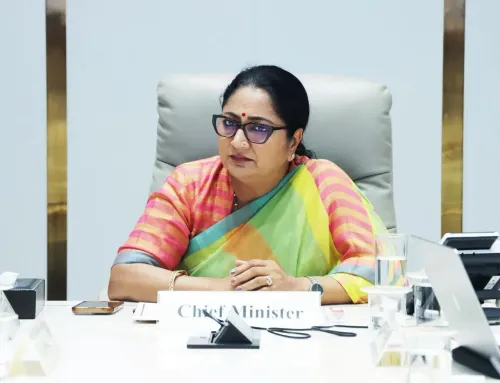
Delhi Chief Minister Rekha Gupta on Friday, 3 July 2026 announced that the capital is on course to build one of India's largest electric vehicle charging networks, with over 9,000 charging points already operational and a roadmap to scale that number to 32,000. The Chief Minister credited coordinated action between the Centre, the Delhi Government, the Municipal Corporation of Delhi (MCD) and allied agencies for the progress, saying land has been identified and responsibilities assigned.
Context
In her post, Rekha Gupta stated that the expansion is the result of 'seamless coordination' among multiple bodies, with implementation described as 'meticulously planned.' The announcement comes as Delhi continues to grapple with severe air pollution and rising vehicular emissions, making the shift to electric mobility a civic and environmental priority. The hashtags #SmartDelhi and #ViksitDelhi signal the government's intent to frame the rollout within a broader urban-development narrative.
Policy Backdrop
Delhi's Electric Vehicle Policy, notified in 2020, set out targets for EV penetration and the buildout of public charging infrastructure across the city. At the national level, the FAME India scheme — launched in 2015 and expanded under FAME-II guidelines issued in 2019 — has channelled central funding toward public charging stations in high-pollution metros, with Delhi among the priority cities. India's broader net-zero commitment by 2070 and urban clean-air plans have kept EV infrastructure high on the policy agenda. The current drive mirrors similar multi-agency efforts seen under the Smart Cities Mission in other large Indian cities.
Stakeholders and Impact
The most direct beneficiaries are Delhi's existing and prospective EV owners, who have long cited sparse public charging as a barrier to adoption. Daily commuters across the capital's dense residential and commercial corridors stand to gain from a denser charging grid, reducing range anxiety. The MCD and allied civic agencies carry the operational weight of land allocation and station maintenance, making their coordination with state and central bodies critical to meeting the 32,000-point target.
What's Next
Attention will now turn to tender outcomes for the additional charging stations and the pace at which identified land parcels are converted into operational infrastructure. Any revision to central EV incentives in the next Union Budget session could further accelerate — or complicate — the financing of the expanded network. Rekha Gupta's government will likely face scrutiny on timelines and on whether the 32,000 target comes with a firm deadline and auditable milestones. A credible, publicly accessible implementation tracker would be the clearest signal that the roadmap is more than an aspiration.
Point of View
A space previously associated with her predecessor's tenure. By foregrounding multi-agency coordination — Centre, state and MCD — the messaging is designed to demonstrate administrative cohesion after years of inter-governmental friction in the capital. The 32,000-point target is ambitious by any Indian city's standard, and its credibility will hinge on whether verifiable milestones and tender timelines are published. More broadly, the move reflects a national pattern where state governments are competing to lead on EV infrastructure as a proxy for modern governance credentials ahead of electoral cycles.
NationPress
3 Jul 2026
Frequently Asked Questions
How many EV charging points does Delhi have in 2026?
According to Delhi Chief Minister Rekha Gupta, over 9,000 EV charging points are already operational in Delhi as of July 2026, with a plan to expand the network to 32,000.
What is Delhi's EV charging network expansion plan?
Delhi's government has a roadmap to scale its public EV charging network from over 9,000 operational points to 32,000, with land already identified and responsibilities assigned across the Centre, Delhi Government and MCD.
Which agencies are involved in Delhi's EV charging rollout?
The rollout involves coordinated action between the Central Government, the Delhi Government, the Municipal Corporation of Delhi (MCD) and other allied agencies.
What is the FAME India scheme and how does it relate to Delhi's EV plans?
The FAME India scheme, launched in 2015 and expanded under FAME-II in 2019, provides central funding for public EV charging stations in major cities including Delhi, forming part of the policy backbone for the capital's charging network expansion.
What is Delhi's Electric Vehicle Policy?
Delhi's Electric Vehicle Policy was notified in 2020 and sets targets for EV adoption and the development of public charging infrastructure across the city, forming the state-level framework for the ongoing expansion.