CM Dhami launches Operation Kalanemi against fake saints in Uttarakhand

Synopsis
Uttarakhand CM Pushkar Singh Dhami declared on 1 August 2026 that Operation Kalanemi is actively targeting impostors who disguise themselves as saints to exploit pilgrims' faith in Devbhoomi, promising the strictest possible action.
Key Takeaways
Operation Kalanemi is an active state-government crackdown in Uttarakhand targeting individuals who pose as saints to exploit devotees' faith.
Chief Minister Pushkar Singh Dhami announced the operation on 1 August 2026 , pledging the 'strictest possible action' against offenders.
The operation's name references the demon Kalanemi from Hindu scripture — a figure who disguised himself as a sage — directly signalling its focus on religious impostors.
Uttarakhand , home to the Char Dham Yatra , draws millions of pilgrims annually, making it a high-stakes environment for such fraud.
The state has maintained a legal framework for religious protection since the Freedom of Religion Act, 2018 .
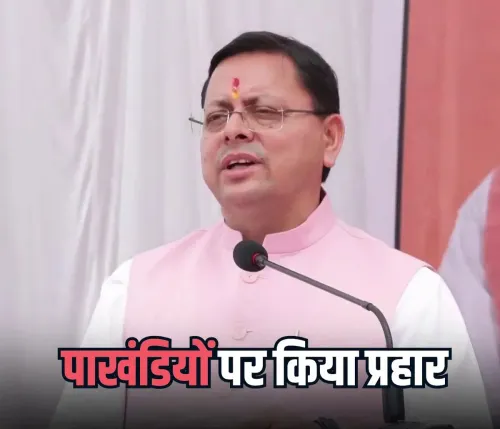
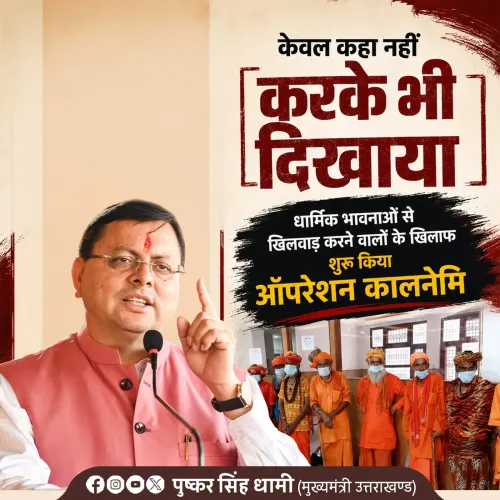
In the land of temples and pilgrimages, Uttarakhand Chief Minister Pushkar Singh Dhami has drawn a hard line: no one will be permitted to toy with the faith of devotees in Devbhoomi. On Saturday, 1 August 2026, Dhami announced that the state is carrying out its toughest crackdown yet on individuals who disguise themselves as saints to exploit the religious sentiments of the public — an operation the government has named Operation Kalanemi.
Posting in Hindi, the Chief Minister stated: 'Devbhoomi mein Sanatan Sanskriti ke saath kisi bhi prakar ka khilwaad sweekar nahi kiya jaayega' — 'No tampering of any kind with Sanatan culture will be tolerated in Devbhoomi.' He added that under Operation Kalanemi, the 'strictest possible action' is being taken against those who adopt false disguises under the cover of Sanatan Dharma and meddle with people's faith.
What Operation Kalanemi is targeting
The name 'Kalanemi' is a direct cultural reference — in Hindu scripture, Kalanemi is a demon who disguises himself as a sage to deceive. The choice of name signals precisely what the operation is aimed at: impostors who wear the garb of saints to manipulate or defraud pilgrims. Uttarakhand, known as Devbhoomi ('Land of the Gods'), draws millions of pilgrims annually for the Char Dham Yatra — Kedarnath, Badrinath, Gangotri, and Yamunotri — making it a region where such exploitation carries outsized harm.
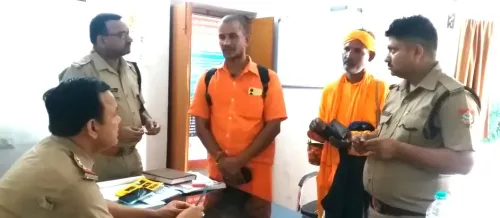
The state's police and administration are conducting the crackdown, with the Chief Minister's post confirming that action is already underway. No specific arrest figures or operational details were disclosed in the post.
Devbhoomi's existing legal shield for religious practice
This operation does not emerge from a vacuum. Uttarakhand enacted the Freedom of Religion Act in 2018 to regulate religious conversions and protect local religious traditions — one of the earlier such laws among BJP-governed states. The Dhami government has consistently positioned the protection of Hindu pilgrimage culture as a governance priority, and Operation Kalanemi extends that posture into active enforcement against internal fraud rather than external conversion.
The distinction matters: the target here is not a rival religion but criminals exploiting Hinduism's own iconography to deceive its own followers. That framing — protecting devotees from predators within the pilgrimage ecosystem — gives the operation broad public appeal across the political spectrum in a state where religious tourism is also a significant economic pillar.
Whether the crackdown produces verifiable arrests and prosecutions — or remains a statement of intent — will determine its real weight. Uttarakhand's assembly and its pilgrimage administration will be the places to watch for follow-through.
Point of View
Where visible action against exploitation of pilgrims translates directly into public approval. The real test is institutional follow-through: documented arrests, prosecutions, and court outcomes that distinguish a genuine enforcement drive from a high-profile announcement.
NationPress
16 Sept 2026
Frequently Asked Questions
What is Operation Kalanemi in Uttarakhand?
Operation Kalanemi is a crackdown launched by the Uttarakhand government targeting individuals who disguise themselves as saints or religious figures to exploit the faith of pilgrims and devotees in Devbhoomi. Chief Minister Pushkar Singh Dhami announced it on 1 August 2026.
Why is the operation called Kalanemi?
Kalanemi is a demon from Hindu scripture who disguised himself as a sage to deceive. The Uttarakhand government chose the name to directly describe the operation's targets: impostors who wear the appearance of saints to manipulate devotees.
What did CM Dhami say about Operation Kalanemi?
Dhami stated that no tampering with Sanatan culture will be tolerated in Devbhoomi, and that the strictest possible action is being taken against those who adopt false disguises under the cover of Sanatan Dharma to interfere with people's faith.
What is Devbhoomi and why is it significant?
Devbhoomi, meaning 'Land of the Gods', is the popular name for Uttarakhand. The state is home to the Char Dham Yatra — Kedarnath, Badrinath, Gangotri, and Yamunotri — and attracts millions of Hindu pilgrims every year, making it a sensitive zone for religious fraud.
Does Uttarakhand have existing laws to protect religious practices?
Yes. Uttarakhand enacted the Freedom of Religion Act in 2018 to regulate conversions and protect local religious traditions. Operation Kalanemi extends the state's enforcement posture into active action against internal religious fraud.