CM Dhami Offers Prayers at Adi Badri Before Gairsain Session
Synopsis
Chief Minister Pushkar Singh Dhami visited Adi Badri Temple in Chamoli on October 26, offering prayers for the state's prosperity before attending the Uttarakhand Vidhan Sabha session at Gairsain, continuing the practice of periodic hill-capital legislative sittings begun in 2014.
Key Takeaways
CM Pushkar Singh Dhami offered prayers at the ancient Adi Badri Vishnu Temple in Chamoli district on October 26, 2026 .
The visit occurred en route to Gairsain (Bharaḍīsaiṇ) for a Uttarakhand Vidhan Sabha session.
Dhami prayed for the state's happiness, prosperity, and peace — sukh-samridhi, shanti evam khushhali .
Adi Badri is one of the five sacred Panch Badri pilgrimage sites in Uttarakhand.
The Gairsain assembly session tradition dates to 2014 , addressing demands for a hill capital in the mountain state.
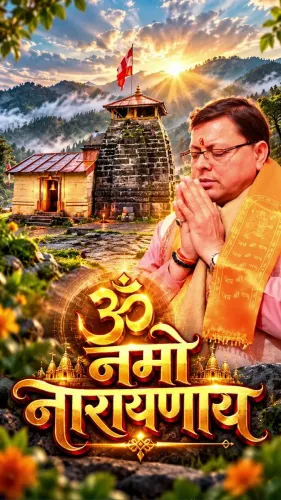
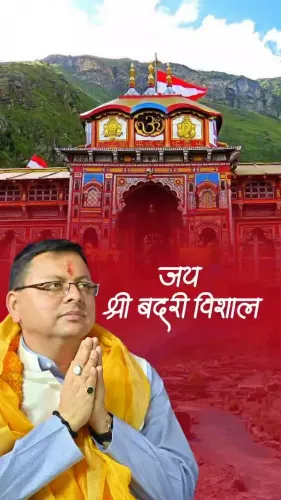
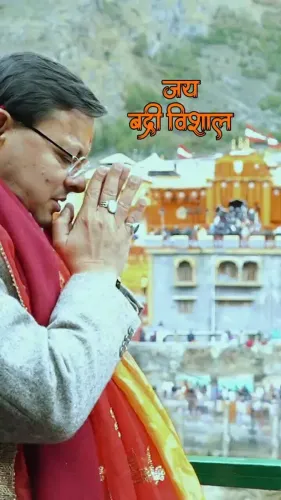
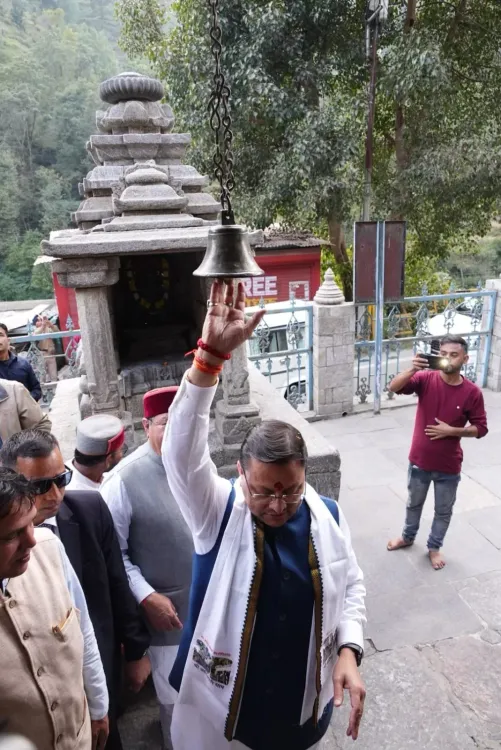
Before heading into the Himalayan hills for a legislative session, Chief Minister Pushkar Singh Dhami paused at one of Uttarakhand's most revered shrines. On his way to Bharaḍīsaiṇ (Gairsain) on Monday, October 26, 2026, Dhami stopped at the Adi Badri Temple in Chamoli district to offer prayers and seek blessings for the state's prosperity, peace, and well-being.
The Chief Minister's Office confirmed the visit on X, sharing images of Dhami at the ancient shrine. In the post, the CMO noted that he performed 'darshan evam pooja-archana' (worship and ritual offerings) and prayed for 'sukh-samridhi, shanti evam khushhali' — happiness, prosperity, peace, and well-being — of the people of Uttarakhand before joining the ongoing Vidhan Sabha session.
Adi Badri: One of Uttarakhand's Panch Badri Shrines
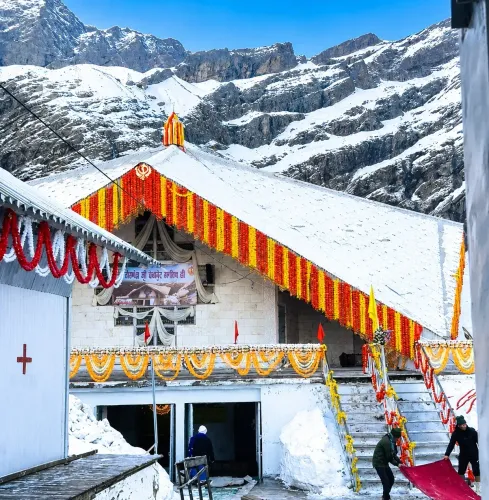
Adi Badri Temple, dedicated to Lord Vishnu, is one of the five sacred Panch Badri pilgrimage sites nestled in the Chamoli district of Uttarakhand. The temple complex, believed to date back centuries, sits along the route that leads deeper into the Himalayas toward the better-known Badrinath. For a Chief Minister travelling from the plains toward Gairsain, the shrine sits naturally along the path — making such a stop both logistically convenient and culturally significant in the Uttarakhand context.
Why the Legislature Meets in Gairsain
Gairsain — officially known as Bharaḍīsaiṇ — has been a recurring venue for Uttarakhand Vidhan Sabha sessions since 2014, a direct response to longstanding public demand for a hill capital. The logic is straightforward: Uttarakhand is a mountain state whose administrative nerve centre, Dehradun, sits at the foothills. Holding periodic assembly sittings at Gairsain, positioned closer to the central Himalayan belt, is intended to bring governance physically closer to hill communities who otherwise face long, difficult journeys to the state capital.
The practice of hosting sessions at Gairsain reflects a broader, unresolved tension in Uttarakhand politics — the state was carved out of Uttar Pradesh in 2000 precisely on the strength of a hill-identity movement, and demands for a permanent hill capital have never fully faded. Each Gairsain session is, in that sense, both a legislative event and a symbolic gesture.
A Routine Ritual With a Familiar Pattern
Dhami's temple visit before a legislative session follows a pattern that is well-established among BJP leaders in Himalayan states, where faith and public duties are frequently and openly intertwined. For Uttarakhand, a state that hosts some of Hinduism's most important shrines — from the Char Dham pilgrimage circuit to the Panch Badri and Panch Kedar clusters — such gestures carry weight among constituents and are standard practice across political events.
Dhami has served as Chief Minister since 2021 and represents the BJP in a state where religious tourism and pilgrimage infrastructure are central to both the economy and political identity. The combination of a sacred stop and a hill-capital session captures, in one morning, two of the defining threads of Uttarakhand's political life.
Point of View
Where religious identity and hill-region governance are the two dominant axes of legitimacy. The Gairsain session keeps alive the symbolic promise of a hill capital without fully resolving the structural demand — a managed ambiguity that successive governments have found politically convenient. For Dhami personally, the public display of faith at a Panch Badri shrine ahead of a legislative sitting reinforces his positioning in a state where the BJP's electoral dominance rests partly on its custodianship of pilgrimage infrastructure and Hindu sentiment.
NationPress
26 Oct 2026
Frequently Asked Questions
Where is Adi Badri Temple located?
Adi Badri Temple is located in Chamoli district , Uttarakhand. It is one of the five Panch Badri pilgrimage sites dedicated to Lord Vishnu in the state.
Why does the Uttarakhand assembly meet in Gairsain?
The Uttarakhand Vidhan Sabha has held periodic sessions at Gairsain (Bharaḍīsaiṇ) since 2014 to respond to longstanding public demands for a hill capital that is more accessible to communities in the Himalayan regions of the state.
Who is Pushkar Singh Dhami?
Pushkar Singh Dhami is the Chief Minister of Uttarakhand, representing the BJP . He has served in this role since 2021 .
What are the Panch Badri temples in Uttarakhand?
The Panch Badri are five sacred Vishnu shrines in Uttarakhand: Badrinath, Yogadhyan Badri, Bhavishya Badri, Vridha Badri, and Adi Badri. Together they form one of Uttarakhand's major pilgrimage circuits.
Is Gairsain the permanent capital of Uttarakhand?
Gairsain is not yet the permanent capital of Uttarakhand. Dehradun serves as the state's interim capital, while the demand for Gairsain to be declared a hill capital remains an ongoing political issue.