Joshi hails Dhamtari village as district's first PM Surya Ghar Model Village
Synopsis
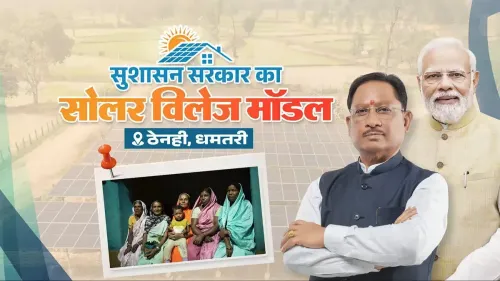
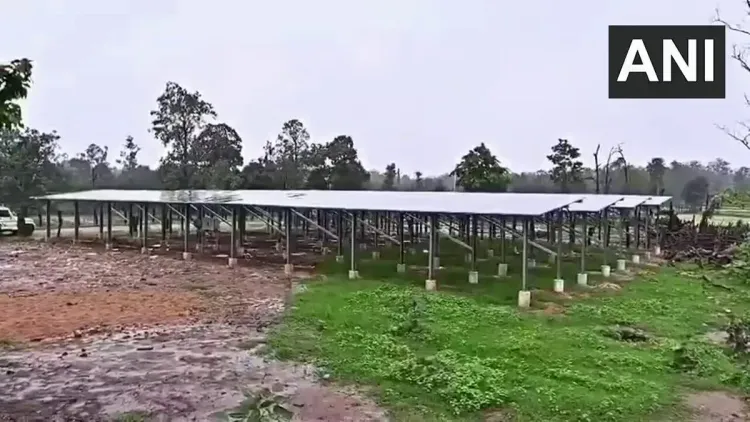
Union Minister Pralhad Joshi on 22 July 2026 hailed Thenhi village in Dhamtari, Chhattisgarh, as the district's first PM Surya Ghar Model Village, powered by a 142 kW community solar plant under the central free-electricity scheme. The milestone reflects India's push for rural solar adoption and energy self-reliance.
Key Takeaways
Thenhi village in Dhamtari, Chhattisgarh has been designated the district's first PM Surya Ghar Model Village .
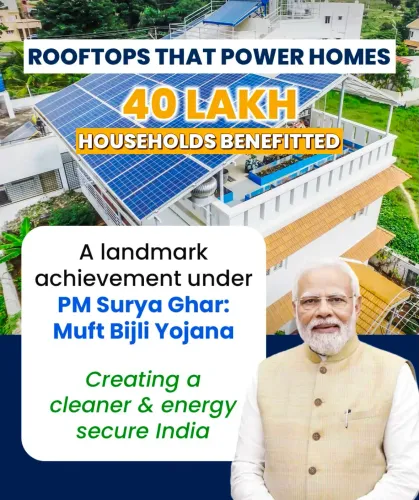
The village is powered by a 142 kW community solar plant installed under PM Surya Ghar: Muft Bijli Yojana .
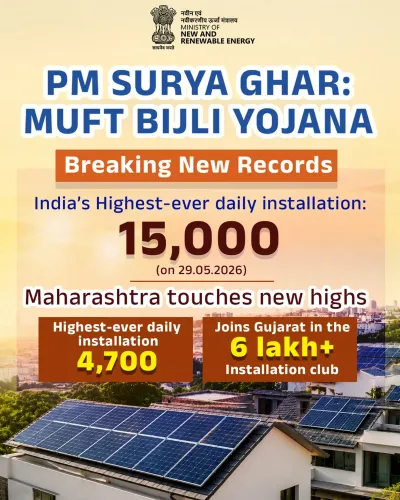
The scheme, launched on 13 February 2024 , aims to provide rooftop solar to one crore households with up to 300 units of free electricity per month .
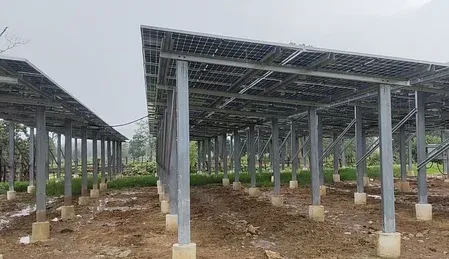
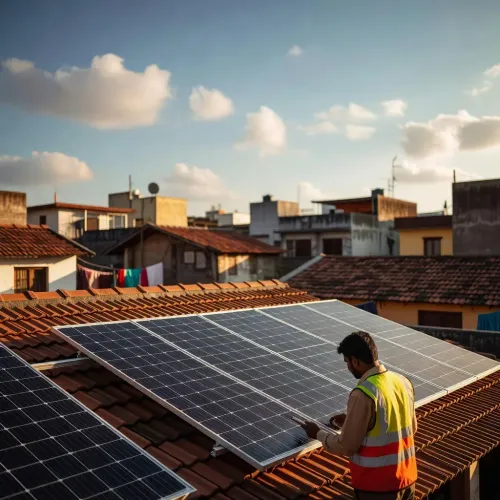
Community-scale plants like Thenhi's are designed for villages where individual household rooftops are unsuitable for solar panels.
India targets 500 GW of non-fossil fuel capacity by 2030 and net-zero emissions by 2070 , with solar central to that roadmap.
Union Minister Pralhad Joshi credited the achievement to PM Modi 's vision for a clean, self-reliant and energy-secure India.
Union Consumer Affairs and New and Renewable Energy Minister Pralhad Joshi on Wednesday, 22 July 2026, congratulated the residents of Thenhi village in Dhamtari, Chhattisgarh, after the hamlet was designated the district's first PM Surya Ghar Model Village, powered by a 142 kW community solar plant installed under the PM Surya Ghar: Muft Bijli Yojana.
Context
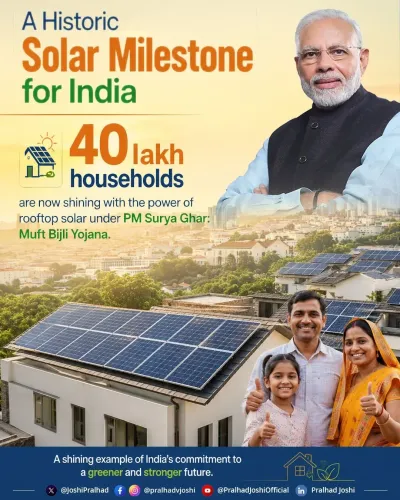
Joshi described the development as 'a shining example of Prime Minister Narendra Modi's vision for a clean, self-reliant and energy-secure India.' The minister noted that the initiative would help households reduce electricity bills, with many moving towards zero electricity bills, while contributing to a cleaner and more sustainable future for the village.
Thenhi's designation marks a milestone for Dhamtari district, making it the first village in the district to achieve Model Village status under the scheme — a recognition tied to community-scale solar adoption rather than individual rooftop installations alone.
Policy Backdrop
PM Surya Ghar: Muft Bijli Yojana was formally launched on 13 February 2024 with the goal of installing rooftop solar systems in one crore households across India, providing eligible beneficiaries up to 300 units of free electricity per month. The scheme was announced in the 2024-25 Union Budget as a flagship initiative under the Atmanirbhar Bharat push for domestic energy self-reliance.
The scheme encourages both individual household rooftop systems and community-scale installations, the latter designed to serve villages where individual rooftops may be structurally unsuitable for solar panels. Thenhi's 142 kW community plant exemplifies this community-first model.
India's broader renewable energy ambition targets 500 GW of non-fossil fuel capacity by 2030 and net-zero emissions by 2070. Solar energy has been central to this push, tracing back to the National Solar Mission launched in 2010.
Stakeholders and Impact
The primary beneficiaries are rural households in Thenhi village who will see reduced or eliminated monthly electricity bills through the community solar arrangement. For low-income families in rural Chhattisgarh, energy cost relief can translate directly into improved household savings and reduced dependence on the conventional grid.
The Model Village designation also carries reputational and administrative significance — villages that achieve this status are expected to serve as demonstration sites, encouraging neighbouring villages and districts to pursue similar solar adoption under the scheme.
What's Next
The government is expected to track and publish state-level progress reports on Model Villages under PM Surya Ghar: Muft Bijli Yojana, with the next round of central financial assistance for rooftop solar installations also under watch. If Thenhi's model proves replicable, other villages in Chhattisgarh and across India could accelerate their own community solar projects, pushing national rooftop solar capacity closer to the scheme's one-crore-household target.
Point of View
Village-level outcomes from PM Surya Ghar ahead of any state or national electoral cycle, particularly in states like Chhattisgarh where rural welfare messaging carries weight. Community solar installations, rather than individual rooftop systems, represent a quiet but significant policy pivot that extends the scheme's reach to poorer rural households who lack suitable roof infrastructure. Joshi's post, amplifying a district-level achievement through a ministerial platform, reflects a deliberate strategy of granular, constituency-level credit-claiming for central schemes. The broader arc points toward India using decentralised solar not merely as an energy tool but as a vehicle for rural economic relief — reducing household expenditure in a segment of the population most sensitive to utility costs.
NationPress
21 Oct 2026
Frequently Asked Questions
What is PM Surya Ghar Muft Bijli Yojana?
PM Surya Ghar: Muft Bijli Yojana is a central government scheme launched on 13 February 2024 to install rooftop solar systems in one crore Indian households, providing eligible beneficiaries up to 300 units of free electricity per month.
What is a PM Surya Ghar Model Village?
A PM Surya Ghar Model Village is a village that achieves significant solar adoption under the PM Surya Ghar scheme, either through individual rooftop systems or community-scale solar plants, and is recognised as a demonstration site for other villages to emulate.
Where is Thenhi village located?
Thenhi village is located in Dhamtari district, Chhattisgarh, India.
How big is the solar plant installed at Thenhi village?
A 142 kW community solar plant has been installed at Thenhi village under PM Surya Ghar: Muft Bijli Yojana, making it Dhamtari district's first PM Surya Ghar Model Village.
What is India's solar energy target by 2030?
India aims to achieve 500 GW of non-fossil fuel energy capacity by 2030 and net-zero emissions by 2070, with solar energy playing a central role in meeting these targets.