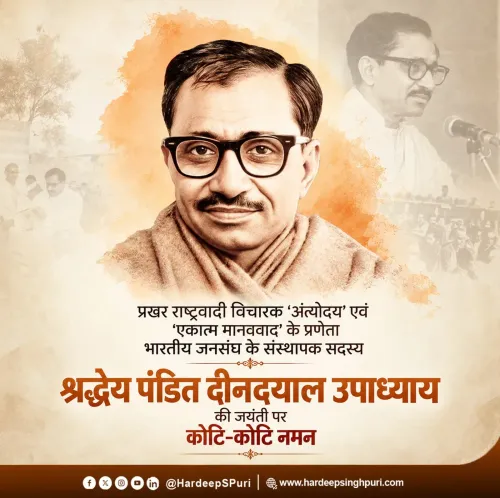
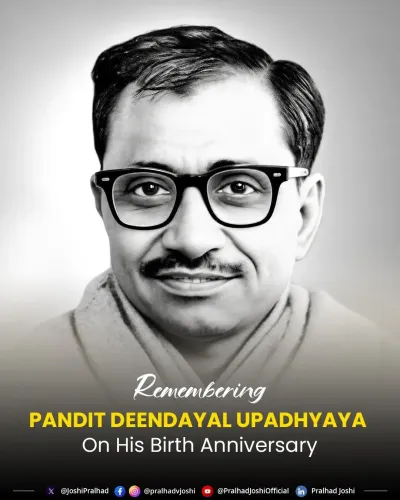
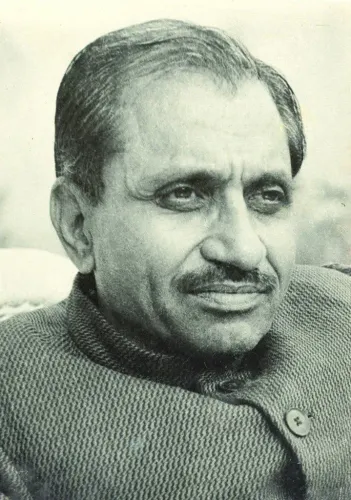
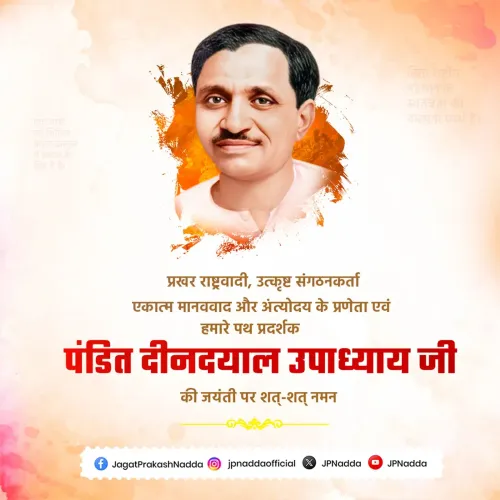
Dharmendra Pradhan pays tribute to Deendayal Upadhyay on birth anniversary
Synopsis
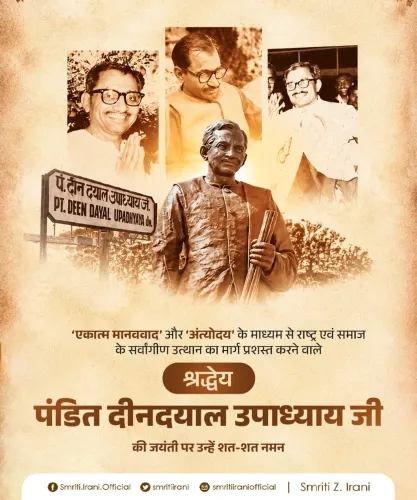
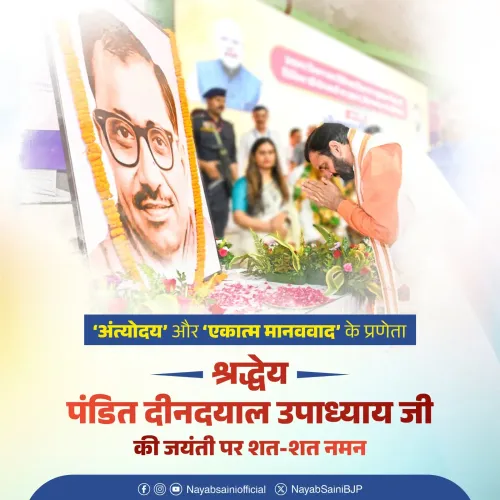
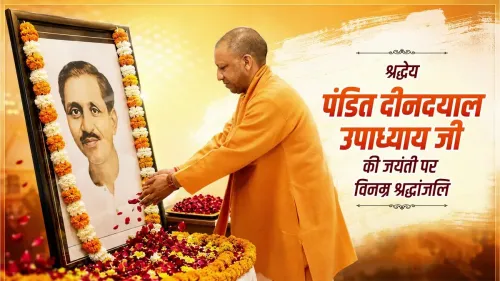
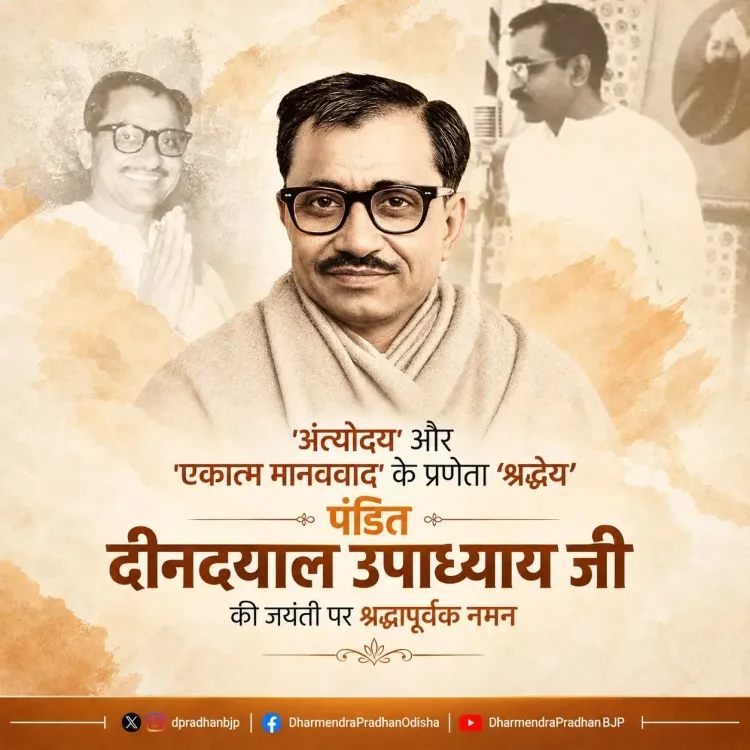
Union Education Minister Dharmendra Pradhan marked Pandit Deendayal Upadhyay's birth anniversary on September 25, honouring the Jana Sangh founder's philosophy of Integral Humanism and Antyodaya — the idea that progress must reach society's last person.
Key Takeaways
Pandit Deendayal Upadhyay's birth anniversary falls on September 25 , observed annually across the BJP as a key ideological marker.
Upadhyay was a founding member of the Bharatiya Jana Sangh (est.
1951 ), the political precursor to today's BJP.
His doctrine of Integral Humanism (Ekatm Manavvad) advocated a distinctly Indian model of development rooted in cultural consciousness.
The Antyodaya principle — that national progress is meaningful only when it reaches the last person — directly inspired the Antyodaya Anna Yojana launched in 2000 .
Pradhan cited four Upadhyay values: simplicity, service, Swadeshi, and human dignity as enduring guides for nation-building.
The tribute reflects the BJP's consistent practice of linking contemporary governance to its pre-1980 ideological lineage .
On the birth anniversary of one of India's most consequential political thinkers, Union Education Minister Dharmendra Pradhan on Friday, September 25, 2026, offered reverent tribute to Pandit Deendayal Upadhyay — the philosopher-organiser whose ideas continue to animate the BJP's governing ideology decades after his passing.
Posting in Hindi, Pradhan described Upadhyay as 'prernasrot' — a source of inspiration — for crores of party workers like himself, and recalled the twin pillars of Upadhyay's legacy: 'Ekatm Manavvad' (Integral Humanism) and 'Antyodaya' — the principle that national progress is only meaningful when its benefits reach the very last person in society.
The man who gave the Jana Sangh its moral compass
Pandit Deendayal Upadhyay was a founding member of the Bharatiya Jana Sangh, established in 1951 as a nationalist political force that would later evolve into today's BJP. Where others built organisations, Upadhyay built an ideology. His doctrine of Integral Humanism — articulated most fully in a series of lectures in 1965 — argued that India's development path must be rooted in its own cultural consciousness, not imported wholesale from Western capitalism or Soviet socialism.
His concept of Antyodaya placed the weakest citizen at the centre of the policy universe. The logic was stark and moral: a nation that measures progress from the top down misses the point entirely. It is a framing that successive BJP-led governments have invoked to justify flagship welfare programmes.
From Upadhyay's lecture halls to welfare scheme letterheads
The most direct policy echo of Antyodaya arrived in 2000 with the launch of the Antyodaya Anna Yojana, a targeted food-subsidy programme designed to deliver subsidised grain to the poorest households — its very name a deliberate invocation of Upadhyay's philosophy. The scheme stands as one of the clearest examples of an ideological idea being converted into a specific, named government intervention.
Pradhan's post underscored the four values he attributed to Upadhyay: simplicity (sadagi), service (seva), self-reliance (swadeshi), and human dignity. These are not merely biographical notes — they map almost exactly onto the rhetorical architecture the BJP uses to frame contemporary schemes from digital inclusion to rural employment.
An annual ritual with enduring ideological stakes
September 25 has become a fixed point in the BJP's political calendar. Each year, tributes from senior leaders serve a dual function: honouring a genuinely revered figure, and publicly reaffirming the party's ideological lineage in the pre-1980 Jana Sangh tradition. For a party that has grown enormously in scale and coalition breadth, these anniversary markers are a form of internal compass-setting.
For Pradhan — a senior organiser who has held portfolios from petroleum to education — the tribute is also personal. His reference to 'mere jaise crore karyakartaon' ('crores of workers like me') is a deliberate positioning: the ideas of Upadhyay are not just archival history but a living operational guide.
As long as Antyodaya and Integral Humanism remain the declared yardstick for inclusive governance, every budget speech and every new welfare scheme will be measured against the standard a philosopher set in 1965 — and renewed, every September, by the leaders he inspired.
Point of View
Reminding both cadre and voters of the pre-RSS, pre-BJP intellectual tradition the party claims as its foundation. By invoking Antyodaya specifically, senior leaders like Pradhan implicitly frame current welfare architecture as a philosophical inheritance, not mere political convenience. The consistency of this messaging across ministerial portfolios — education, petroleum, rural development — suggests a deliberate effort to bind policy delivery to ideological identity. Watch for Antyodaya and Integral Humanism language to surface in upcoming budget framing and new scheme nomenclature as the government seeks to consolidate its inclusive-development narrative.
NationPress
25 Sept 2026
Frequently Asked Questions
Who was Pandit Deendayal Upadhyay?
Pandit Deendayal Upadhyay was a founding member of the Bharatiya Jana Sangh (1951) and the originator of Integral Humanism (Ekatm Manavvad), a philosophy advocating an indigenous Indian model of development centred on human dignity and the welfare of the weakest citizen.
What is the Antyodaya principle?
Antyodaya, articulated by Deendayal Upadhyay, holds that national development is truly meaningful only when its benefits reach the last and most marginalised person in society. It directly inspired the Antyodaya Anna Yojana, a subsidised food-grain scheme launched in 2000.
What is Integral Humanism or Ekatm Manavvad?
Integral Humanism is Upadhyay's political philosophy, outlined in 1965, arguing that India must chart a development path rooted in its own cultural and spiritual consciousness rather than copying Western capitalism or Soviet socialism.
Why do BJP leaders observe September 25 every year?
September 25 is the birth anniversary of Pandit Deendayal Upadhyay. The BJP observes it annually to reaffirm the ideological lineage tracing back to the Jana Sangh, and to publicly connect contemporary governance with Upadhyay's philosophy of inclusive development.
What is the connection between Bharatiya Jana Sangh and the BJP?
The Bharatiya Jana Sangh, founded in 1951 with Deendayal Upadhyay among its key leaders, was dissolved in 1977 to form the Janata Party. The BJP was subsequently founded in 1980 by former Jana Sangh members and considers itself the ideological heir to the Jana Sangh tradition.