Digital India at 11: Modi says initiative redefined governance, empowered citizens
Synopsis
Eleven years after its launch, Digital India has evolved from a connectivity push into a global DPI benchmark — with India Stack now being replicated abroad. Modi's anniversary message signals the next phase: AI, semiconductors, and quantum computing, built on the same citizen-first architecture that scaled UPI to a billion users.
Key Takeaways
PM Narendra Modi marked 11 years of Digital India on 1 July 2025 with a post on X.
Modi called Digital India 'the strong foundation of a developed and self-reliant India,' citing empowerment of the poor and improved Ease of Living.
India has built one of the world's largest Digital Public Infrastructure (DPI) ecosystems over the past decade.
India Stack has been adopted or studied by multiple countries, establishing India as a global DPI exporter.
The initiative has reached Tier 2 and Tier 3 cities and villages, fuelling startups and grassroots innovation.
The government's next focus areas include AI , semiconductors , and quantum computing .
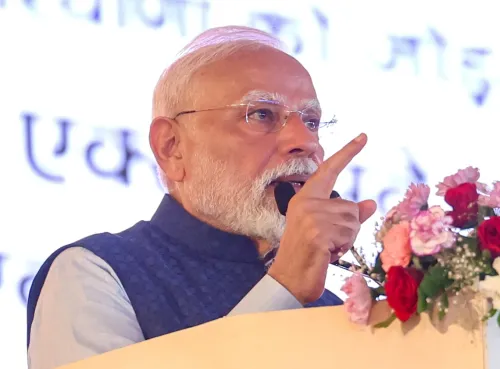
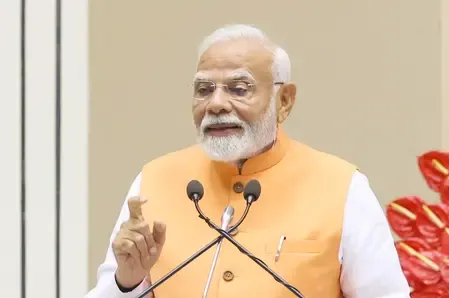
Prime Minister Narendra Modi on Wednesday, 1 July 2025 marked 11 years of the Digital India initiative, declaring that the programme has given India a new identity on the world stage and fundamentally transformed how citizens interact with government. Modi made the remarks in a post on X, calling Digital India 'the strong foundation of a developed and self-reliant India.'
What Modi Said
'Digital India is the strong foundation of a developed and self-reliant India. Over the past 11 years, it has played a crucial role in empowering the poor and deprived, while making the lives of citizens easier,' the Prime Minister wrote. He added: 'When over a billion people embrace technology, the impact is transformative.'
Modi underscored that the initiative has 'redefined governance, empowered citizens, and accelerated all-round development,' touching 'every aspect of life.' He specifically cited seamless digital payments, direct benefit transfers, and the expanding digital public infrastructure as pillars of improved 'Ease of Living.'
Key Achievements Over 11 Years
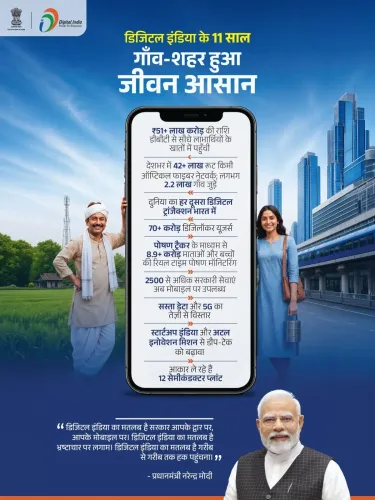
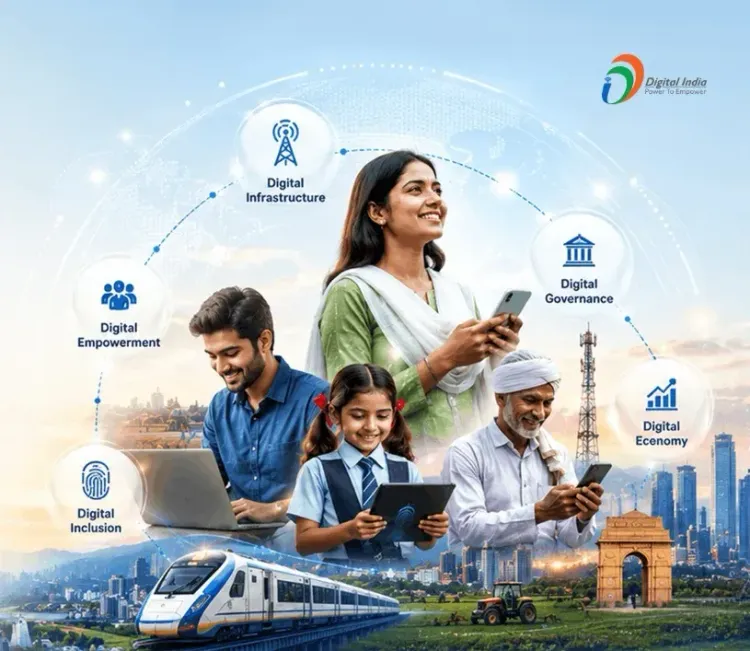
Over the past decade-plus, India has built one of the world's largest Digital Public Infrastructure (DPI) ecosystems. The expansion of optical fibre networks, the scale of digital transactions, and the reach of platforms into rural and underserved regions have drawn global attention. Digital platforms now span healthcare, education, skilling, agriculture, and welfare delivery.
India has also emerged as a global leader in digital payments and governance innovation. India Stack — the underlying DPI architecture — has been adopted or studied by multiple countries, positioning India as an exporter of governance technology.
Innovation Beyond Metro Cities
Modi highlighted that Digital India has carried the 'wave of innovation' to Tier 2 and Tier 3 cities and villages. Young entrepreneurs, startups, and innovators from across the country are, according to the Prime Minister, developing solutions to challenges that extend beyond India's borders. This decentralisation of the digital economy is one of the programme's less-discussed but consequential outcomes.
The Road Ahead: AI, Semiconductors, Quantum
Looking forward, Modi stated that India's digital strides are enabling 'rapid progress in emerging technologies such as AI, semiconductors, quantum computing and more.' He said these advances 'will open new avenues for growth and opportunity,' and reaffirmed that the government's focus will remain on 'creating a future where technology serves humanity, empowers every citizen and drives sustainable development.'
As Digital India enters its twelfth year, the government's stated ambition is to deepen this infrastructure further and leverage it for India's positioning in the next wave of global technology leadership.
Point of View
And Digital India's record is genuinely mixed in instructive ways. UPI's scale is indisputable; rural broadband penetration has accelerated; India Stack is a legitimate soft-power asset. Yet the same infrastructure that enables direct benefit transfers also concentrates data and identity architecture in ways that remain under-regulated. Modi's pivot to AI and semiconductors in his anniversary message is notable — it signals that Digital India 2.0 will be less about access and more about industrial capability. Whether the governance frameworks keep pace with that ambition is the question mainstream coverage is not asking.
NationPress
1 Jul 2026
Frequently Asked Questions
What is the Digital India initiative and when was it launched?
Digital India is a flagship programme of the Government of India launched on 1 July 2015 to transform India into a digitally empowered society and knowledge economy. It focuses on digital infrastructure, digital services delivery, and digital literacy across the country.
What has Digital India achieved in 11 years?
Over 11 years , India has built one of the world's largest Digital Public Infrastructure ecosystems, become a global leader in digital payments, and expanded services in healthcare, education, agriculture, and welfare delivery — especially in rural and underserved areas. India Stack has also been adopted or studied by multiple countries.
What did PM Modi say about Digital India on its anniversary?
Prime Minister Narendra Modi said in a post on X that Digital India has 'redefined governance, empowered citizens, and accelerated all-round development.' He called it 'the strong foundation of a developed and self-reliant India' and credited it with empowering the poor through direct benefit transfers and digital payments.
What are India's next digital priorities according to PM Modi?
Modi stated that India is making rapid progress in AI , semiconductors , and quantum computing , and that these emerging technologies will open new avenues for growth. The government's focus, he said, will remain on technology that serves humanity and drives sustainable development.
How has Digital India impacted smaller cities and rural areas?
According to Prime Minister Modi, Digital India has taken innovation to Tier 2 and Tier 3 cities and villages, enabling young entrepreneurs, startups, and innovators from every part of the country to build solutions to pressing challenges — a significant shift from the initiative's early urban-centric rollout.