Is the Division Over Vande Mataram Really Not Created by Muslims? DMK's A Raja References Nehru-Bose Correspondence
Synopsis
A. Raja's recent address in Parliament raises crucial questions about the historical context of Vande Mataram. Drawing from Nehru's letters, he argues that the opposition to the song is rooted in deeper historical grievances, challenging the narrative of division based on communal lines. This conversation reflects ongoing ideological struggles within Indian politics.
Key Takeaways
Raja emphasizes historical context in the debate over Vande Mataram .
The song's opposition is rooted in both colonial and communal histories.
Discussions on national symbols need to be fact-based, not politically motivated.
Understanding past grievances can help address present sensitivities.
The legacy of Vande Mataram continues to incite strong emotions in politics.
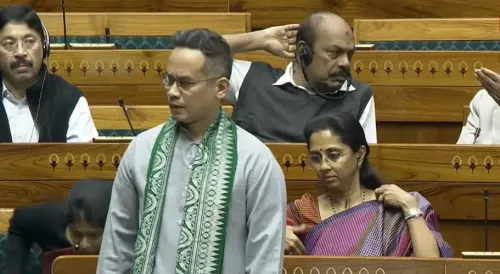
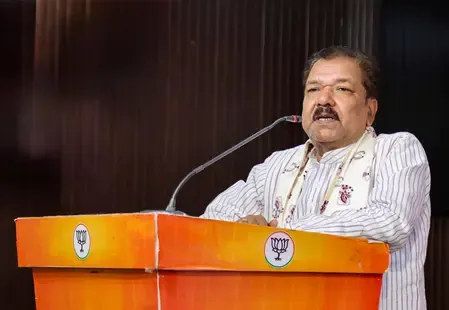
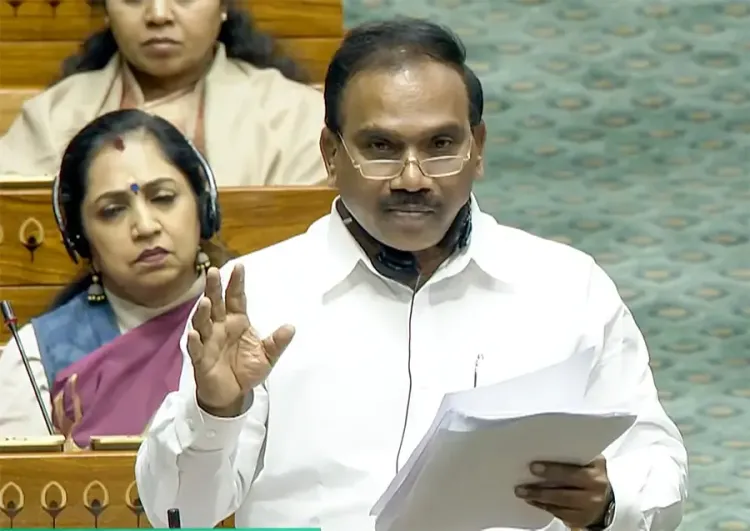
Chennai, Dec 8 (NationPress) A significant political and historical discussion took place in Parliament on Monday where DMK MP A. Raja challenged the legacy and interpretation of Vande Mataram. Citing a correspondence from Jawaharlal Nehru to Subhas Chandra Bose, he argued that the dissent against the national anthem has roots that are historically deeper than commonly recognized.
In a debate concerning the national song, Raja noted that Nehru remarked in his communication to Bose that the public uproar against Vande Mataram was “fabricated by communalists,” while also acknowledging “some substance” in the grievances voiced by certain groups.
He contended that these concerns, especially among religiously sensitive communities, have a historical background that cannot simply be dismissed as anti-national.
Furthermore, Raja asserted that there exists substantial historical evidence indicating that Vande Mataram was not only aimed at British colonial powers but also had implications that were perceived as exclusive towards Muslims during the struggle for freedom.
He stated that such perceptions contributed to the discomfort surrounding the song even prior to India’s independence.
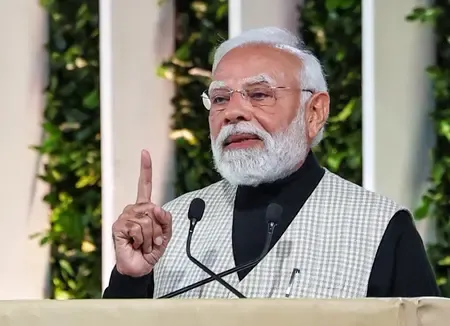
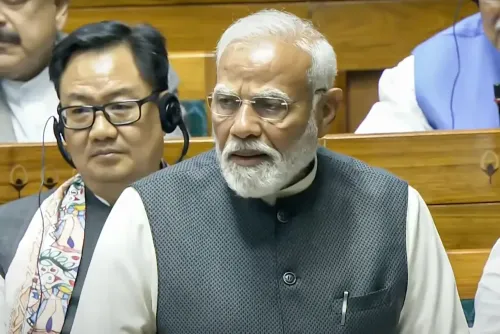
In response to earlier comments by Prime Minister Narendra Modi regarding national unity and division, Raja accused the BJP of politicizing this matter.
“The discord surrounding Vande Mataram was not instigated by Muslims, but by your ancestors,” he asserted, directly addressing the ruling party, which elicited strong reactions from members of the treasury benches.
Raja also challenged the Prime Minister’s claims about current divisions in the country. He questioned whether the national song had any influence on the Partition of India and what the “original vision” of Vande Mataram truly embodied.
While recognizing the song's deep ties to the freedom movement and its reputation as a unifying symbol, the DMK leader emphasized that neglecting historical disagreements will not aid in addressing contemporary sensitivities.
Throughout his address, Raja maintained that discussions surrounding national symbols ought to be grounded in historical realities rather than political narratives.
He reiterated that his intention was not to diminish the freedom struggle but to point out that differing interpretations existed even among the leaders of the independence movement.
This speech incited strong reactions across party lines, highlighting how the legacy of Vande Mataram continues to elicit intense emotions and ideological divides in present-day Indian politics.
Point of View
It is essential to approach discussions on national symbols like Vande Mataram with a balanced view. The history of our independence movement is complex, and understanding differing interpretations can foster dialogue rather than division. The past should inform our present without overshadowing the unity we strive for as a nation.
NationPress
30 Aug 2026
Frequently Asked Questions
What was the main argument presented by A. Raja?
A. Raja argued that the division over Vande Mataram is rooted in historical grievances and is not solely a product of communalism.
How did Nehru's letter contribute to this discussion?
Nehru's letter to Bose highlighted the manufactured public outcry against Vande Mataram and acknowledged some legitimate concerns from certain communities.
What does Raja say about the implications of Vande Mataram?
Raja indicated that Vande Mataram was not just a call against colonialism but had connotations that were perceived as exclusionary by Muslims during the freedom struggle.
What was Raja's response to PM Modi's comments?
Raja accused the BJP of politicizing the issue and claimed that the divisions over Vande Mataram were not created by Muslims, but by historical actions of the past.
Why is the discussion around Vande Mataram relevant today?
The discussion is relevant as it reflects ongoing ideological divides in Indian politics and the need for a nuanced understanding of national symbols.