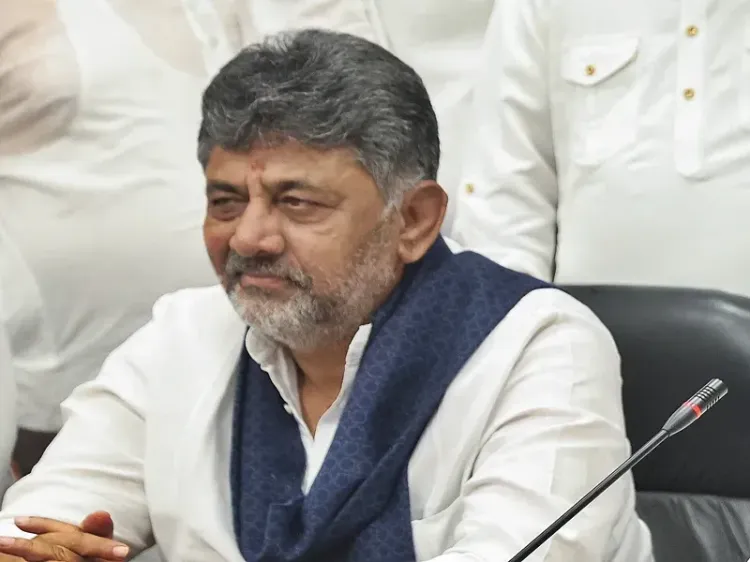
DK Shivakumar: Karnataka's Congress strongman set to become Chief Minister
Synopsis
DK Shivakumar's ascent to Karnataka's top job is not a sudden elevation — it is the product of four decades of organisational grind, a 50-day stint in Tihar Jail, and a 2023 election campaign he is credited with engineering. The question now is whether the Congress's most durable crisis manager can govern as effectively as he campaigns.
Key Takeaways
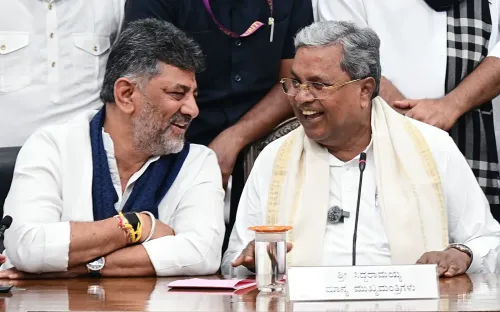
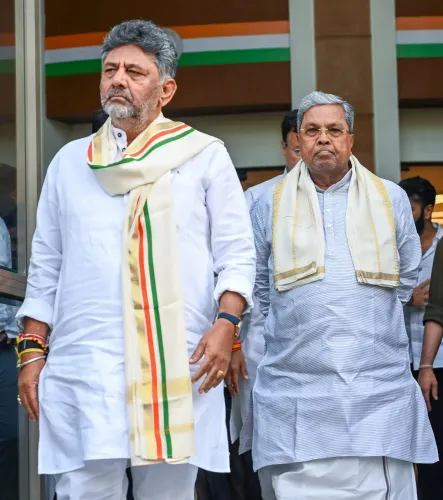
Shivakumar is set to become Chief Minister of Karnataka following the resignation of CM Siddaramaiah .
An eight-time MLA from Kanakapura , Shivakumar entered politics through the NSUI in the early 1980s.
He spent 50 days in Tihar Jail in 2019 after arrest by the ED on money laundering charges, emerging to become KPCC President in 2020 .
As Energy Minister (2014–2018) , he oversaw Karnataka crossing 6,000 MW of solar capacity and the development of the Pavagada Solar Park .
As Deputy CM , he completed Cauvery Phase V (adding 775 MLD to Bengaluru), digitised 25 lakh property records, and oversaw ₹1.5 lakh crore in infrastructure announcements.
The Congress government's Five Guarantee schemes are claimed to have benefited more than seven crore people in Karnataka.
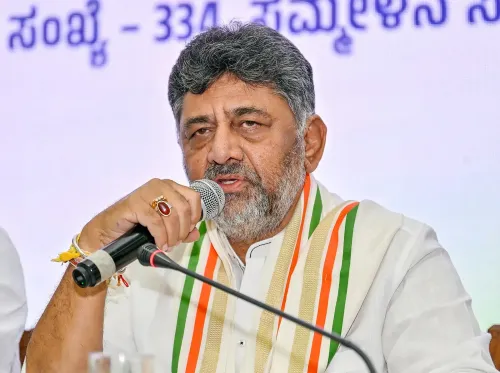
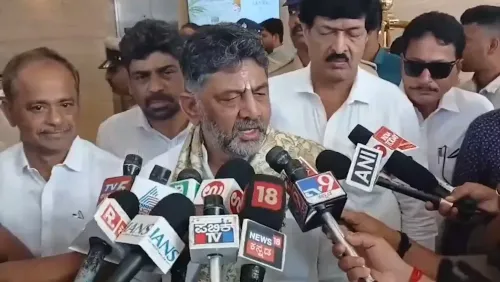
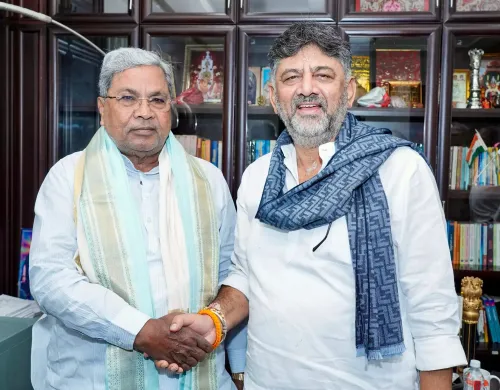
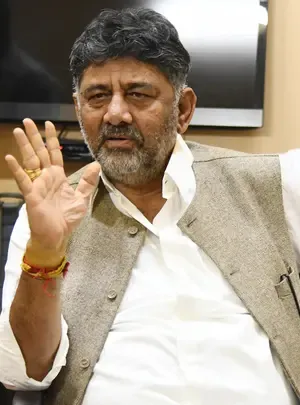
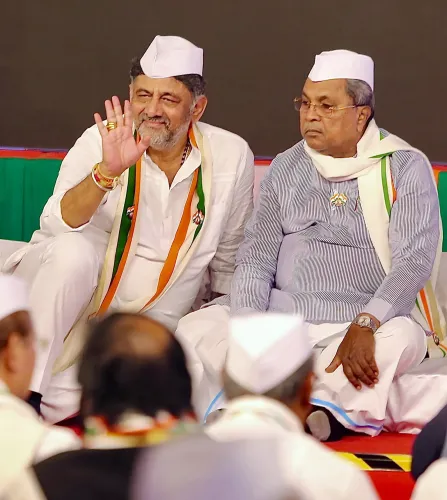
Karnataka Deputy Chief Minister and Karnataka Pradesh Congress Committee (KPCC) President D.K. Shivakumar is set to assume the post of Chief Minister of Karnataka following the resignation of Chief Minister Siddaramaiah, capping a political journey of more than four decades that has taken him from student activism in Kanakapura to the highest office in the state. His rise is widely regarded within the Congress as one of the most consequential organisational stories in Karnataka's modern political history.
From Student Politics to State Power
Shivakumar entered politics in the early 1980s through the National Students' Union of India (NSUI) while pursuing his undergraduate education. Congress leaders recall that his early political ambitions were encouraged by former Prime Minister Rajiv Gandhi. He first contested elections in 1985 from the Sathanur constituency, facing former Prime Minister H.D. Deve Gowda — a contest he lost. Four years later, in 1989, he won his maiden Assembly seat from the same constituency, launching what would become an eight-term legislative career as an eight-time MLA.
The Tihar Test and Political Consolidation
One of the most defining episodes of Shivakumar's career came in 2019, when he was arrested by the Enforcement Directorate (ED) on money laundering charges and spent 50 days in Tihar Jail. He has maintained that he was given two choices — either join the Bharatiya Janata Party (BJP) or face imprisonment — and that he chose the latter. Congress leader Sonia Gandhi personally visited him in Tihar, and upon his release he received a grand welcome from party workers. He was subsequently elevated to the post of KPCC President in 2020, consolidating his standing as the party's principal crisis manager in the state.
Key Ministerial Contributions
Across multiple terms in government, Shivakumar held portfolios spanning prisons, urban development, energy, irrigation, and medical education. His tenure as Energy Minister between 2014 and 2018 stands out: Karnataka crossed 6,000 MW of solar power generation during this period, and the Pavagada Solar Park — developed under his watch — emerged as one of the world's largest solar installations. His Surya Raitha programme, which enabled farmers to generate and utilise solar energy, drew attention as a farmer-centric renewable energy initiative.
As Minister for Water Resources in the current government, he oversaw the completion of Cauvery Phase V, adding 775 MLD of drinking water supply to Bengaluru and surrounding areas. He has also championed long-term water security projects including Cauvery Stage VI, Yettinahole, Mekedatu, and Mahadayi. The Yettinahole project, according to the government, is expected to supply drinking water to nearly 7.6 million people in water-scarce regions of the state.
Bengaluru's Urban Transformation Agenda
As Bengaluru City Development Minister, Shivakumar introduced the E-Khata system, digitising more than 25 lakh property records, and streamlined approvals through the Nambike Nakshe initiative. His office has pushed infrastructure plans including a proposed tunnel road network to ease urban congestion and a Bengaluru Sky Deck project. The city has also seen the installation of more than 4,400 EV charging stations under his tenure, as part of efforts to position Bengaluru as India's EV capital. The government has announced infrastructure and urban development projects worth nearly ₹1.5 lakh crore, covering metro expansion, mobility corridors, and expressways.
The Congress Strategist and What Comes Next
Within the Congress, Shivakumar is credited with rebuilding the party organisation across Karnataka and leading the campaign machinery that delivered a decisive victory in the 2023 Karnataka Assembly elections. He has also played organisational roles for the party in Maharashtra, Gujarat, Rajasthan, Madhya Pradesh, Kerala, Assam, and Tamil Nadu during elections and political crises. The Congress government's flagship Five Guarantee schemes, which the government claims have benefited more than seven crore people in Karnataka, have been closely associated with his tenure as Deputy Chief Minister. As he prepares to take the Chief Minister's chair, Shivakumar's ongoing agenda — water security, metro expansion, digital governance, and renewable energy — will define the next phase of Karnataka's political direction.
Point of View
Far from damaging him, arguably strengthened his grip — a reminder that in Karnataka's political culture, demonstrated loyalty under pressure carries more currency than policy credentials. The real test of his Chief Ministership will be whether the infrastructure and water-security ambitions he has championed as Deputy CM survive the transition from announcement to delivery.
NationPress
11 Oct 2026
Frequently Asked Questions
Why is DK Shivakumar becoming Karnataka Chief Minister?
DK Shivakumar is set to become Chief Minister following the resignation of Chief Minister Siddaramaiah. As KPCC President and Deputy Chief Minister, he was widely seen as the Congress's top leader in Karnataka and the natural successor under the party's power-sharing arrangement.
What is DK Shivakumar's political background?
Shivakumar is an eight-time MLA from Kanakapura who entered politics through the NSUI in the early 1980s. He won his first Assembly seat in 1989 and has held ministerial portfolios covering prisons, urban development, energy, irrigation, and medical education across multiple Karnataka governments.
What happened to DK Shivakumar in Tihar Jail in 2019?
Shivakumar was arrested by the Enforcement Directorate on money laundering charges in 2019 and spent 50 days in Tihar Jail. Congress leader Sonia Gandhi visited him in prison; after his release he received a grand welcome from party workers and was subsequently elevated to KPCC President in 2020.
What were DK Shivakumar's achievements as Energy Minister?
As Karnataka's Energy Minister between 2014 and 2018, Shivakumar oversaw the state crossing 6,000 MW of solar power generation. The Pavagada Solar Park, developed during his tenure, became one of the world's largest solar installations, and his Surya Raitha programme enabled farmers to generate and use solar energy.
What infrastructure projects is DK Shivakumar associated with in Bengaluru?
As Bengaluru City Development Minister and Deputy Chief Minister, Shivakumar has been associated with infrastructure announcements worth nearly ₹1.5 lakh crore, including metro expansion, a proposed tunnel road network, and the Bengaluru Sky Deck project. His tenure also saw the installation of more than 4,400 EV charging stations and the digitisation of over 25 lakh property records through the E-Khata system.