NEET abolition demand: DMK's Dayanidhi Maran opposes Exam Bill in Lok Sabha
Synopsis
DMK MP Dayanidhi Maran took the Lok Sabha floor on 28 July to do more than oppose an exam bill — he put NEET itself on trial, citing 93 student suicides and a systemic bias against rural and low-income aspirants. The government's Amendment Bill, meant to curb paper leaks, has instead reopened one of India's sharpest fault lines: who really gets a fair shot at a medical seat.
Key Takeaways
DMK MP Dayanidhi Maran opposed the Public Examinations (Prevention of Unfair Means) Amendment Bill, 2026 in the Lok Sabha on 28 July .
Maran argued the Bill fails to address NEET 's structural inequities, calling instead for the exam's complete abolition.
He cited 107 student suicides linked to competitive exams nationwide, with 93 allegedly connected to NEET and 26 from Tamil Nadu alone.
The Amendment Bill proposes a Special Task Force , time-bound investigations, and Special Fast Track Courts to tackle examination malpractice.
The Union Government defended the Bill as a measure to safeguard examination integrity against paper leaks and fraud.
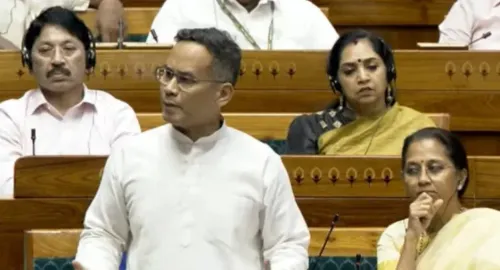
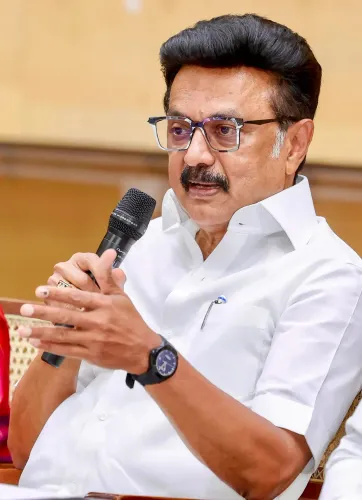
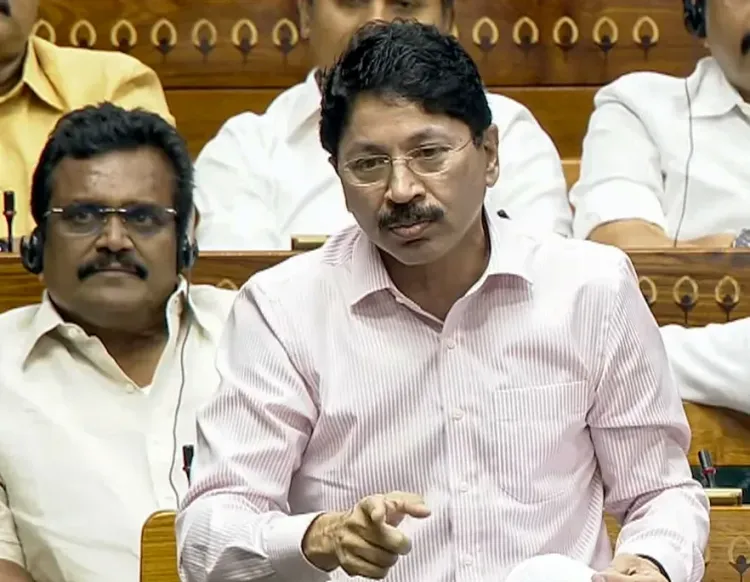
Dravida Munnetra Kazhagam (DMK) Member of Parliament Dayanidhi Maran on Tuesday, 28 July mounted a sharp offensive in the Lok Sabha against the Public Examinations (Prevention of Unfair Means) Amendment Bill, 2026, arguing that the legislation sidestepped the central problem: the National Eligibility-cum-Entrance Test (NEET), which the DMK has long demanded be scrapped entirely.
DMK's Core Argument Against the Bill
Maran, who led the DMK's charge during the parliamentary debate, contended that the Centre was addressing only the symptoms of examination malpractice while leaving intact what he described as the structurally flawed NEET system. He argued that tightening laws against paper leaks was insufficient as long as NEET itself remained in place.
According to Maran, the medical entrance exam has created a deeply unequal environment for students from rural backgrounds, government schools, and economically weaker sections — groups that are often unable to afford the high-cost coaching infrastructure that NEET effectively demands.
Student Suicides and the Human Cost
Maran cited alarming figures on student suicides allegedly linked to competitive examination pressure. He claimed that 107 students across India had died by suicide in connection with such exams, of whom 93 were reportedly linked specifically to NEET. He further stated that Tamil Nadu alone had recorded 26 such NEET-related deaths, underscoring what he called the unbearable psychological burden the examination places on aspiring medical students.
These figures were presented by Maran during the debate; they have not been independently verified by NationPress.
What the Amendment Bill Proposes
The Union Government defended the Amendment Bill, maintaining that it is designed to protect the integrity of public examinations. The proposed legislation introduces several new mechanisms, including the formation of a Special Task Force, mandates for time-bound investigations into malpractice, and the creation of Special Fast Track Courts for expedited disposal of examination fraud cases.
Government representatives argued that these measures would serve as a robust deterrent against paper leaks and other irregularities that have repeatedly undermined public confidence in national-level examinations.
Sharp Exchanges on the Floor
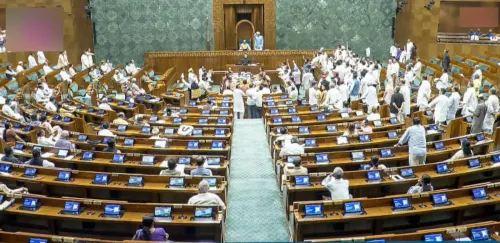
The debate triggered pointed exchanges between Treasury and Opposition benches, with multiple members raising concerns over recurring paper leak incidents, the broader question of examination integrity, and the future of NEET as a national selection mechanism. The DMK reiterated its position that nothing short of the complete abolition of the medical entrance test would be acceptable to the party.
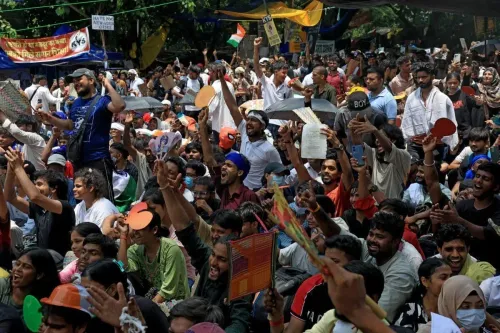
This comes amid sustained political pressure on the Centre from southern states — particularly Tamil Nadu — where opposition to NEET has been a defining electoral issue for years. With the Amendment Bill now under parliamentary scrutiny, the debate over how India selects its future doctors is set to intensify further.
Point of View
The party keeps its core constituency — Tamil Nadu's students and parents — front and centre in national discourse. But the 107-suicide figure Maran cited deserves rigorous scrutiny; if it withstands verification, it is among the most damning indictments of the current examination regime. The Centre's counter — a Special Task Force and fast-track courts — addresses process failures, not the access question. As long as NEET coaching remains a ₹10,000-crore industry serving urban elites, the equity argument against the exam will only grow louder, regardless of how many anti-malpractice laws Parliament passes.
NationPress
27 Oct 2026
Frequently Asked Questions
What is the Public Examinations (Prevention of Unfair Means) Amendment Bill, 2026?
It is a proposed law debated in the Lok Sabha on 28 July 2026 that seeks to strengthen safeguards against paper leaks and examination fraud. Key provisions include a Special Task Force, time-bound investigations, and Special Fast Track Courts for speedy disposal of malpractice cases.
Why did DMK MP Dayanidhi Maran oppose the Exam Amendment Bill?
Maran argued the Bill tackles only the consequences of examination irregularities while ignoring the root problem — NEET itself. The DMK holds that NEET is structurally biased against rural, government-school, and economically weaker students, and has consistently demanded its abolition.
How many student suicides did Maran link to NEET?
Maran claimed that 93 of 107 student suicides across India linked to competitive exams were specifically connected to NEET, with 26 of those from Tamil Nadu. These figures were presented during the parliamentary debate and have not been independently verified.
What is the DMK's long-standing position on NEET?
The DMK has consistently demanded the complete abolition of NEET, arguing it disadvantages students from Tamil Nadu and other states who performed well in their school boards but cannot compete with those who have access to expensive coaching centres.
What does the government say about the Amendment Bill?
The Union Government defended the Bill as a necessary measure to protect the integrity of public examinations, saying the proposed Special Task Force and fast-track courts will serve as strong deterrents against paper leaks and malpractice.