DMRC begins Central Vista Corridor work at Central Secretariat Station
Synopsis
DMRC has broken ground at Central Secretariat for the Central Vista Corridor — a 9.913 km, nine-station underground stretch that will turn one of Delhi's busiest transit nodes into a triple interchange. It is part of a plan to make the Magenta Line, at 89 km, the longest and most interchange-dense corridor in the entire Delhi Metro network.
Key Takeaways
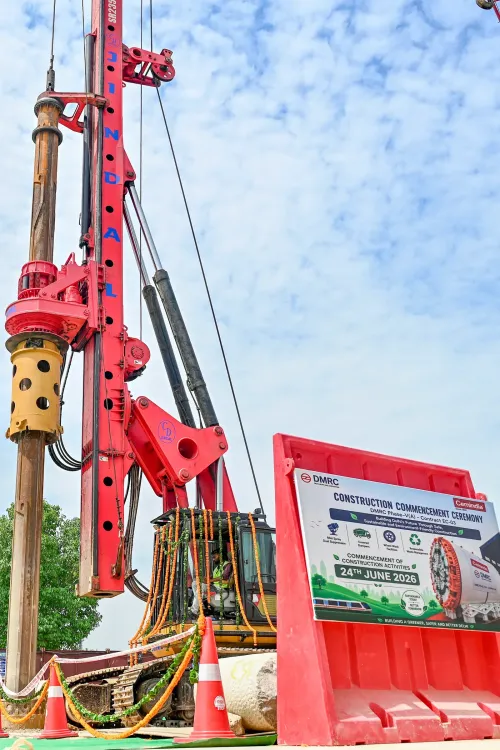
DMRC commenced construction at Central Secretariat Metro Station on 24 June for the Central Vista Corridor .
The corridor covers 9.913 km with nine underground stations under Phase V(A) of the Delhi Metro expansion.
Central Secretariat will become a triple interchange station , connecting the new Magenta Line with the Yellow Line and Violet Line .
The Magenta Line will extend to approximately 89 km with 65 stations — the longest corridor in the Delhi Metro network.
The line will be fully driverless once operational, with 40 of 65 stations underground.
Union Minister Manohar Lal was present at the construction commencement alongside senior DMRC and ministry officials.
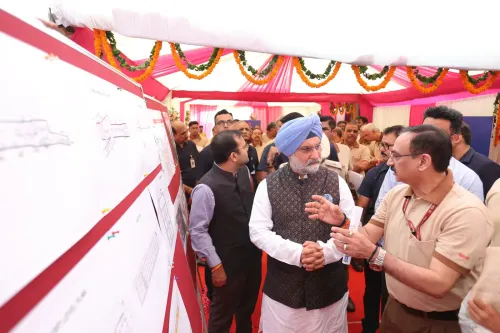
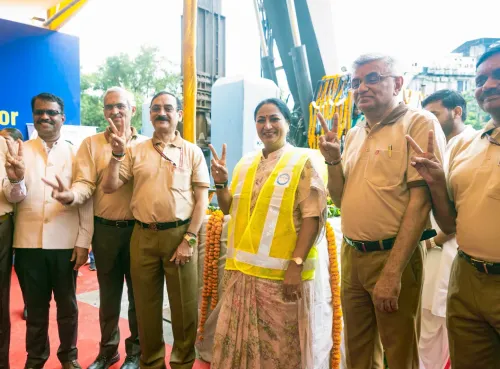
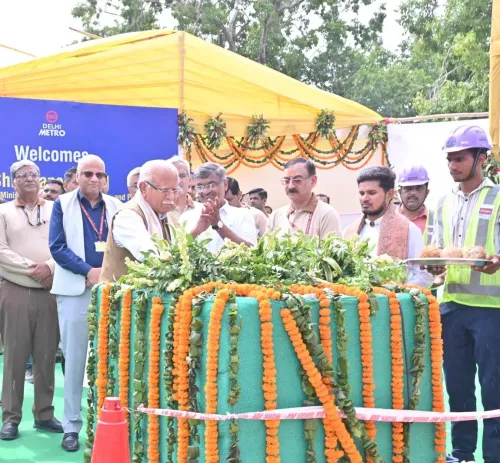
The Delhi Metro Rail Corporation (DMRC) on Wednesday, 24 June commenced construction at Central Secretariat Metro Station for the Central Vista Corridor, marking a milestone in the expansion of metro connectivity at the heart of New Delhi. Union Minister of Housing and Urban Affairs Manohar Lal was present at the occasion alongside senior officials from the ministry and DMRC.
What the Central Vista Corridor Covers
The corridor stretches 9.913 km and includes nine underground stations: Shivaji Stadium, Yuge Yugeen Bharat, Central Secretariat, Kartavya Bhawan, India Gate, War Memorial–High Court, Baroda House, Bharat Mandapam, and Indraprastha. The project falls under Phase V(A), extending the existing Magenta Line from Janakpuri West to RK Ashram Marg.
Central Secretariat to Become a Triple Interchange Station
Central Secretariat will be developed as a triple interchange station, seamlessly linking the new Magenta Line extension with the existing Yellow Line and Violet Line. This is expected to significantly ease commutes for government employees and citizens accessing the Lutyens' Zone and surrounding administrative districts, including major government offices, judicial institutions, national memorials, and convention venues.
Magenta Line Set to Become Delhi Metro's Longest Corridor
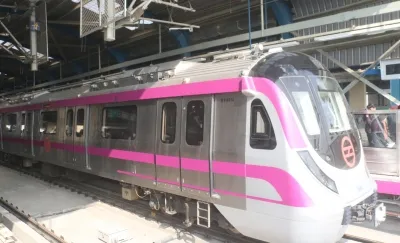
Once fully operational, the Magenta Line (Line-8) — running from Botanical Garden to Inderlok — will span approximately 89 kilometres, making it the longest corridor in the Delhi Metro network. The line will feature 65 stations, of which 40 will be underground, and will operate entirely as a driverless metro corridor. The extensive interchange network is projected to reduce travel time, decongest key corridors, and deliver end-to-end connectivity across the city.
Engineering Landmarks on the Magenta Line
The Magenta Line already hosts two notable engineering achievements within the Delhi Metro system. Haiderpur Badli Mor is the network's highest elevated station, with a rail-level height of approximately 28.362 metres at Pier No. 340, while Hauz Khas is the deepest underground station at roughly 29 metres. These benchmarks underscore the corridor's complex engineering and technological ambition.
What This Means for Commuters
The Central Vista Corridor will provide direct metro access to some of India's most significant civic and administrative landmarks. This comes amid a broader push to decongest road traffic in the New Delhi core zone, where vehicular pressure on Rajpath-adjacent roads has long been a concern. With construction now formally underway, the next key milestones will be civil completion timelines and the commissioning schedule for the Phase V(A) extension.
Point of View
Tying transit investment to the government's flagship capital redesign. The triple interchange at Central Secretariat is genuinely significant: it will be one of the few stations in the network where three lines converge, which can either become a seamless hub or a congestion bottleneck depending on platform design and crowd management. The Magenta Line's 89-km ambition is impressive on paper, but the Delhi Metro has a history of phase delays; the real test is whether the Phase V(A) civil timelines hold. Notably, the driverless corridor commitment is also worth watching — operational reliability on driverless systems requires a level of maintenance discipline that DMRC will need to demonstrate at scale.
NationPress
22 Sept 2026
Frequently Asked Questions
What is the Central Vista Corridor in Delhi Metro?
The Central Vista Corridor is a 9.913 km underground metro extension under DMRC's Phase V(A), comprising nine stations connecting key landmarks in central New Delhi including India Gate, Kartavya Bhawan, and Bharat Mandapam. Construction formally began at Central Secretariat Station on 24 June.
What makes Central Secretariat Metro Station special?
Central Secretariat will be developed as a triple interchange station, linking the new Magenta Line extension with the existing Yellow Line and Violet Line. This will make it one of the most connected transit nodes in the Delhi Metro network, benefiting commuters accessing the Lutyens' Zone and government offices.
Which stations are part of the Central Vista Corridor?
The nine underground stations on the Central Vista Corridor are Shivaji Stadium, Yuge Yugeen Bharat, Central Secretariat, Kartavya Bhawan, India Gate, War Memorial–High Court, Baroda House, Bharat Mandapam, and Indraprastha.
How long will the Magenta Line be once fully completed?
The Magenta Line (Line-8) will span approximately 89 kilometres from Botanical Garden to Inderlok, making it the longest corridor in the Delhi Metro network. It will have 65 stations, 40 of which will be underground, and will operate as a fully driverless corridor.
What are the engineering highlights of the Magenta Line?
The Magenta Line hosts two engineering landmarks: Haiderpur Badli Mor is the highest elevated station in the Delhi Metro at approximately 28.362 metres rail-level height, while Hauz Khas is the deepest underground station at about 29 metres.