NSA Doval to Muslim Leaders: 'India Is One Ship, We Sink or Sail Together'
Synopsis
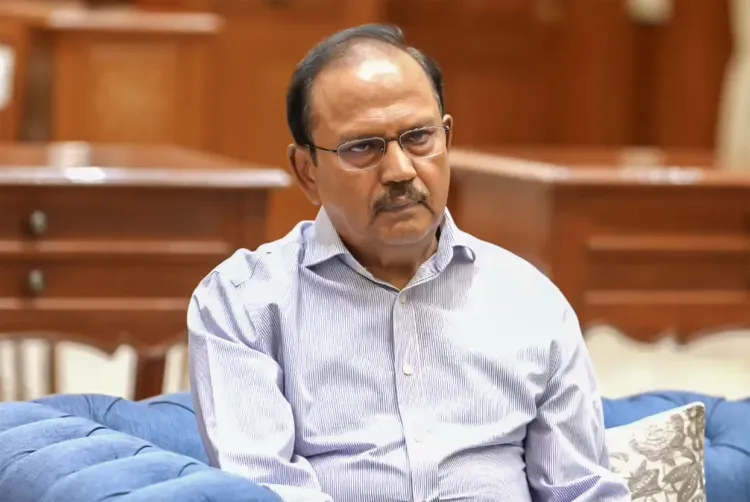
NSA Ajit Doval met Muslim community leaders in New Delhi, declaring India a 'large ship where all sail or sink together.' He cited 12 years of Muslim Army recruitment as proof of zero bias, warned against singular religious identity, and urged leaders to submit concrete proposals to the government for community advancement.
Key Takeaways
NSA Ajit Doval met a delegation of Muslim educationists, industrialists, and social workers in New Delhi in April 2025 , urging national unity.
Doval stated that Muslim youth have been recruited into the Indian Army and Paramilitary forces consistently over the last 12 years as proof of non-discrimination.
He warned against reducing identity to a singular religious label, saying it can lead to alienation and unfounded victimhood .
The delegation was led by Zafar Sareshwala and included AMU Vice-Chancellor Naima Khatoon and industrialists from Gujarat and Maharashtra .
Faruk Patel of KP Group shared that his company employs 1,600 people, 90% of whom are non-Muslims , citing Gujarat's business-friendly environment.
Doval urged community leaders to submit concrete proposals to the government to unlock greater opportunities and benefits for the Muslim community.
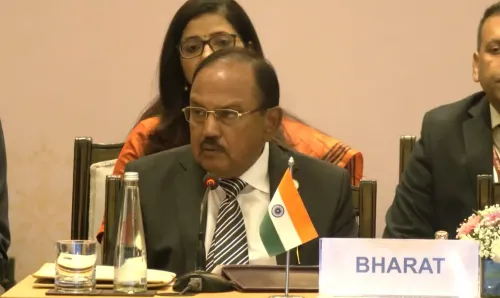
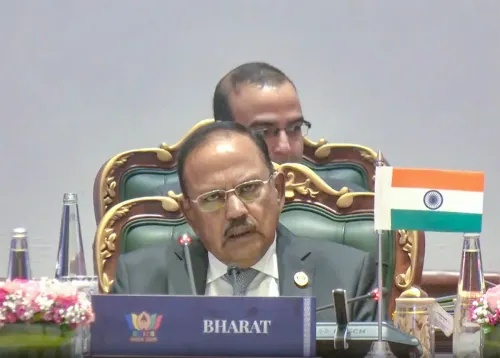
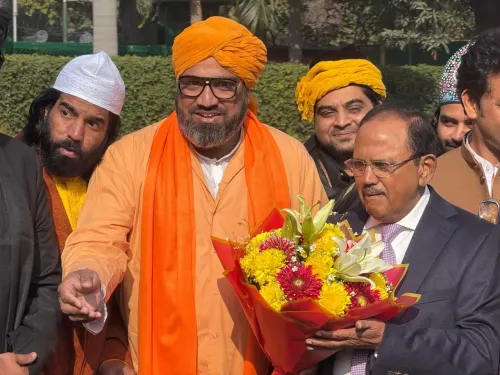
New Delhi, April 24: National Security Advisor (NSA) Ajit Doval convened a high-level dialogue with prominent Muslim community leaders in New Delhi this month, delivering a pointed message on national unity, identity, and opportunity. Doval stressed that thousands of Muslim youth have joined the Indian Army and Paramilitary forces over the past 12 years, calling it proof that India harbours no systemic bias against its Muslim citizens. "The country is like a large ship, and we are all sailors — we sail or sink together," he declared.
Key Highlights of the NSA-Muslim Community Meeting
Ajit Doval addressed a delegation that included educationists, social workers, and industrialists, led by noted educationist and businessman Zafar Sareshwala. The gathering also featured AMU Vice-Chancellor Naima Khatoon, social entrepreneur Bhamla Saher, and senior figures such as Kausar Jahan, Zahir I Kazi, and Dr. Nishat Hussain, an AIIMS Gold Medalist.
Prominent industrialists were also present, including Faruk Patel, Chairman of KP Group; Ibrar Raki, CMD of German Steel Co.; Haji Rayama from Kutch; Altaf Sadikot from the Dawoodi Bohra community; and Juned Sharif, CMD of Niton Valves Ltd, representing business interests from Gujarat and Maharashtra.
Doval on Identity, Victimhood, and Community Integration
The NSA urged Muslim citizens to embrace their multifaceted identities — as Indians, professionals, and community members — rather than reducing themselves to a singular religious identity. He warned that excessive focus on a separate identity can generate an unfounded sense of victimhood and limit broader social participation.
"Confusion arises when individuals become overly conscious of a separate identity," Doval said, while clearly affirming that Muslims are fully entitled to their religious identity and freedom of worship. He underlined that all Indians — past, present, and future — form part of the same national continuum.
This framing is significant. It comes amid a broader national conversation about social cohesion, particularly in the backdrop of debates around the Waqf Amendment Act, Uniform Civil Code discussions, and periodic communal tensions in several states. Doval's outreach signals a deliberate government effort to maintain dialogue with Muslim stakeholders at a time of heightened political sensitivity.
Army Recruitment as Evidence Against Discrimination
NSA Doval pointed to consistent recruitment of Muslim youth into the Indian Armed Forces and central paramilitary organisations over the last 12 years as tangible evidence that institutional discrimination does not exist. He stressed that the community should not doubt the government's intent, while simultaneously retaining the right to critique its policies and actions.
This argument carries strategic weight. Critics of the government have long cited economic marginalisation data — including the Sachar Committee Report findings from 2006 — which highlighted gaps in Muslim representation in government jobs, banking, and education. Doval's emphasis on Army recruitment figures is a direct counter-narrative, though independent analysts note that comprehensive, updated data on Muslim representation across all government sectors remains a demand from civil society groups.
Business Leaders Speak: Gujarat's Conducive Environment
Faruk Patel, whose father was a bus conductor before the family entered business, shared his personal success story. His company today employs approximately 1,600 people, of whom 90 per cent are non-Muslims — a point he offered as evidence of secular business practice and community integration.
Patel stated that the Gujarat government has not obstructed business growth and credited a supportive environment for the community's economic progress. AMU Vice-Chancellor Naima Khatoon praised the central government's focus on women's empowerment, aligning her remarks with the broader tone of constructive engagement.
NSA's Call to Action: Proposals, Schools, and Scholarships
Doval concluded the interaction by urging business and community leaders to take a proactive role. He specifically encouraged them to establish schools, educational institutions, and scholarship programmes for underprivileged children, regardless of religion — a signal that the government expects the community's elite to invest in grassroots development.
Most critically, he asked community representatives to submit concrete proposals to the government outlining specific needs, so that targeted opportunities and benefits could be structured and delivered effectively. This marks a shift from passive dialogue to outcome-oriented engagement.
As India heads deeper into a politically charged period with multiple state elections on the horizon, NSA Doval's outreach to Muslim community leaders is likely to be the first of several such structured engagements — with the government keen to project inclusive governance while managing complex social dynamics on the ground.
Point of View
The government is attempting to reframe the national conversation from grievance to partnership. However, the Sachar Committee's two-decade-old data on Muslim underrepresentation in public institutions still awaits a comprehensive, publicly updated audit — and until that gap is addressed with hard numbers, outreach meetings risk being perceived as optics over outcomes. The real test will be whether the 'concrete proposals' Doval invited actually translate into policy — or quietly disappear into bureaucratic inertia.
NationPress
6 Oct 2026
Frequently Asked Questions
What did NSA Ajit Doval say at the Muslim community meeting in New Delhi?
NSA Ajit Doval told Muslim community leaders that India is like a large ship and all citizens must sail or sink together. He emphasised that Muslim youth have been recruited into the Indian Army and Paramilitary forces over the last 12 years, and urged the community to embrace multiple identities rather than a singular religious one.
Who attended the NSA Doval Muslim community meeting?
The delegation was led by educationist and businessman Zafar Sareshwala and included AMU Vice-Chancellor Naima Khatoon, AIIMS Gold Medalist Dr. Nishat Hussain, and industrialists such as Faruk Patel of KP Group and Ibrar Raki of German Steel Co. from Gujarat and Maharashtra.
Why did NSA Doval meet Muslim community leaders in April 2025?
The meeting was aimed at fostering dialogue between the government and Muslim stakeholders on issues of national unity, identity, and economic opportunity. Doval sought to address concerns about discrimination while encouraging community leaders to submit concrete proposals to the government for targeted benefits.
What did NSA Doval say about Muslim recruitment in the Indian Army?
Doval stated that consistent recruitment of Muslim youth into the Indian Army and Paramilitary forces over the past 12 years is clear evidence that there is no bias or discrimination against Muslims in India's institutional framework.
What action did NSA Doval ask Muslim business leaders to take?
Doval urged Muslim industrialists and community leaders to establish schools, educational institutions, and scholarship programmes for underprivileged children irrespective of religion. He also asked them to present concrete proposals to the government to ensure greater opportunities for the community.