Dr Jitendra Singh invokes Sarabhai on World Science Day
Synopsis
On World Science Day 2026, Union Science Minister Dr. Jitendra Singh invoked Dr. Vikram Sarabhai's conviction that science education must be compulsory for all Indians, linking ISRO's founding legacy to the country's ongoing push for universal scientific literacy.
Key Takeaways
Union Science and Technology Minister Dr.
Jitendra Singh posted a tribute on World Science Day, 10 November 2026 .
Vikram Sarabhai , cited as the Father of India's space programme, is credited with believing science education should be compulsory for all citizens.
Sarabhai established INCOSPAR in 1962 , which evolved into ISRO in 1969 .
India's Constitution, under Article 51A(h) , already enshrines developing a scientific temper as a fundamental duty of citizens.
The tribute arrives amid ongoing curriculum discussions under India's National Education Policy (NEP) .
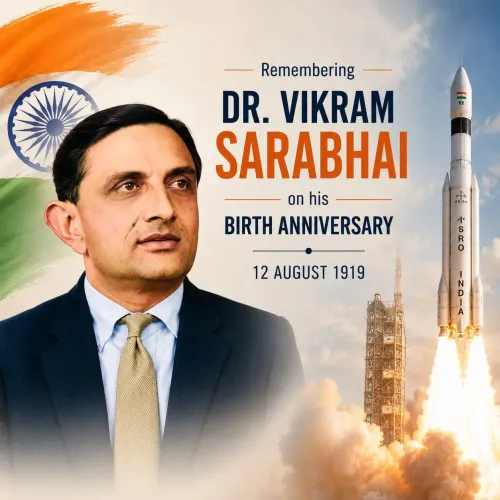
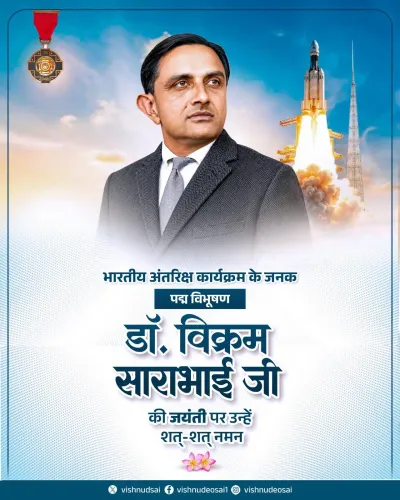
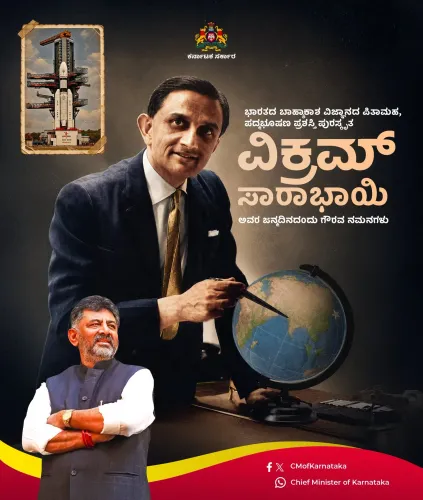
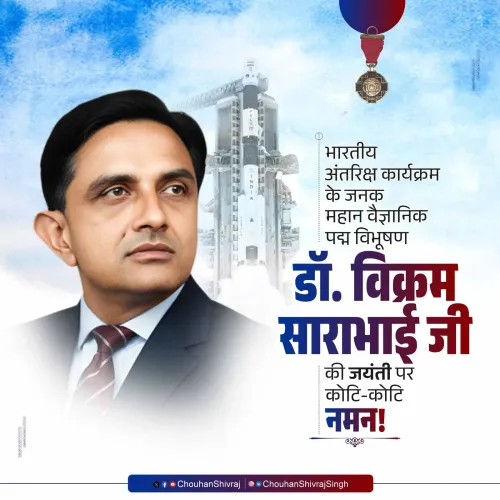
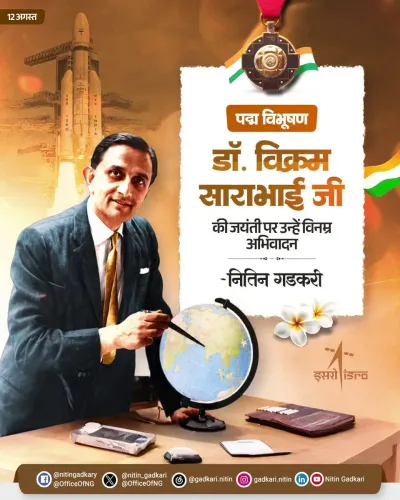
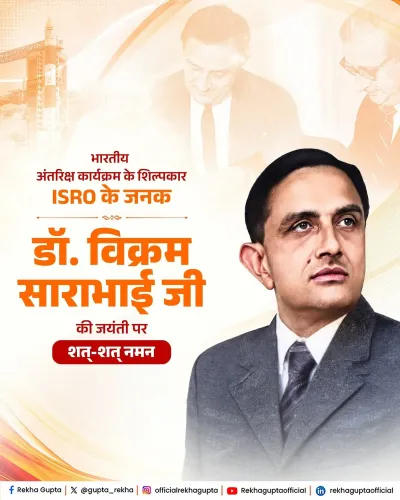
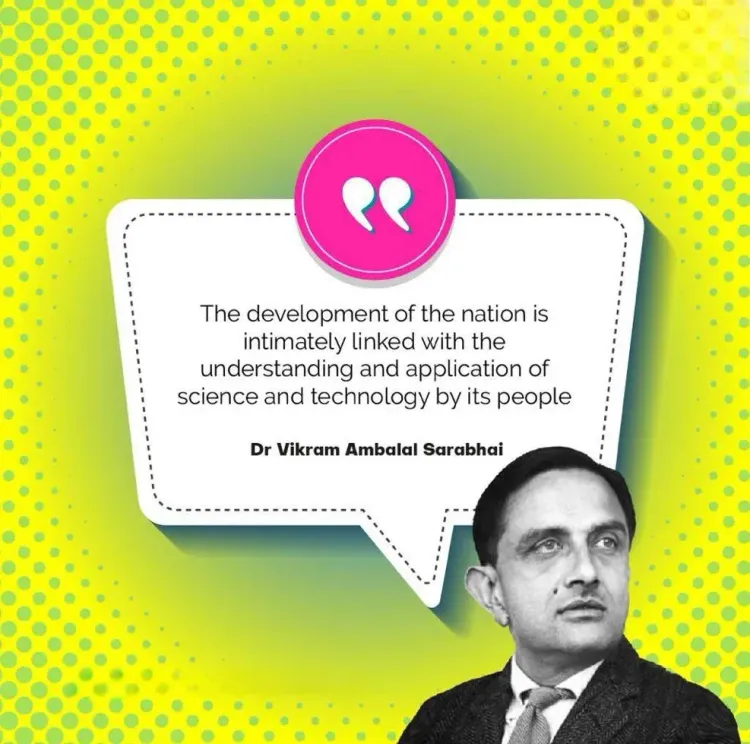
India's space legacy is not just rockets and orbits — it begins, as Union Science and Technology Minister Dr. Jitendra Singh reminded the country on World Science Day, 10 November 2026, with a belief that science belongs to every citizen. Marking the occasion, the Minister turned to the foundational vision of Dr. Vikram Sarabhai, the Father of India's space programme, who held that science education must be made compulsory for all.
Sarabhai's vision: space science as a democratic right
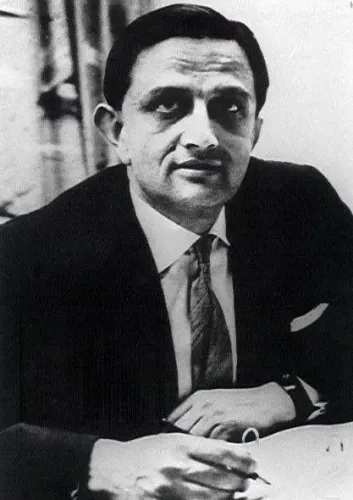
Dr. Vikram Sarabhai is credited with laying the institutional bedrock of India's space ambitions. In 1962, he constituted the Indian National Committee for Space Research (INCOSPAR), the body that would eventually evolve into the Indian Space Research Organisation (ISRO), formally established in 1969. For Sarabhai, however, the enterprise was never purely technological — it was deeply democratic. He envisioned a scientifically literate citizenry as a precondition for a self-reliant nation.
Dr. Jitendra Singh's post invokes that spirit directly, citing Sarabhai's conviction that science education 'should be made compulsory for all citizens.' The reference lands with particular resonance from the minister who oversees both the Science and Technology portfolio and the Earth Sciences ministry.
Scientific temper as national policy
India's political leadership has consistently returned to Sarabhai's name when anchoring science policy in a larger national narrative. The Indian government's repeated invocation of Sarabhai connects present-day ambitions — from deep-space missions to the expansion of science literacy — to the republic's founding scientific ethos. Article 51A(h) of the Indian Constitution already enshrines 'developing a scientific temper' as a fundamental duty of every citizen, a provision that finds a philosophical echo in Sarabhai's own stated beliefs.
The post arrives as discussions around curriculum reform under India's National Education Policy (NEP) continue, with science and technology education placed at the centre of its school and higher-education frameworks.
ISRO at the intersection of science and citizenship
ISRO today stands as one of the world's most cost-effective and ambitious space agencies — a direct institutional heir to Sarabhai's 1962 vision. For Dr. Jitendra Singh, whose ministerial portfolio spans both the science ministry and the Prime Minister's Office, World Science Day offers a moment to stitch together past founding ideals and present-day policy priorities. The message is pointed: the pipeline from classroom to launchpad starts with making science education universal, not aspirational.
Sarabhai built the architecture. The question for policymakers today is whether the foundation is wide enough.
Point of View
The Minister signals alignment with NEP's science-push without making a direct policy announcement. The invocation of Sarabhai is a recurring tool in Indian science governance: it simultaneously depoliticises ambition and elevates institutional continuity. The broader arc here is a government working to close the gap between constitutional aspiration — scientific temper as a fundamental duty — and actual classroom reality.
NationPress
10 Nov 2026
Frequently Asked Questions
Who is Vikram Sarabhai and why is he called the Father of ISRO?
Dr. Vikram Sarabhai pioneered India's organised space research by founding INCOSPAR in 1962, which evolved into ISRO in 1969. His vision of using space science for national development earned him the title of Father of the Indian space programme.
What is World Science Day and when is it observed?
World Science Day for Peace and Development is observed on 10 November every year. It is a UNESCO-designated day to highlight the importance of science in society and promote public engagement with scientific research.
What did Dr. Jitendra Singh say on World Science Day 2026?
Dr. Jitendra Singh posted on X calling on citizens to draw inspiration from Dr. Vikram Sarabhai, citing the ISRO founder's belief that science education should be made compulsory for all citizens of India.
What is scientific temper and is it part of Indian law?
Scientific temper refers to a rational, evidence-based approach to understanding the world. In India, Article 51A(h) of the Constitution lists developing scientific temper, humanism, and the spirit of inquiry as a fundamental duty of every citizen.
How does INCOSPAR relate to ISRO?
INCOSPAR — the Indian National Committee for Space Research — was set up under Dr. Vikram Sarabhai in 1962 to coordinate India's early space research. It was reconstituted as the full-fledged Indian Space Research Organisation (ISRO) in 1969 .