Dr. Jitendra Singh: AI, Agri-Startups Key to Farm Future
Synopsis
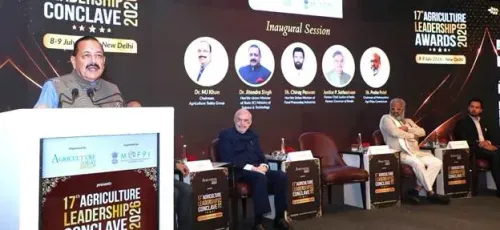
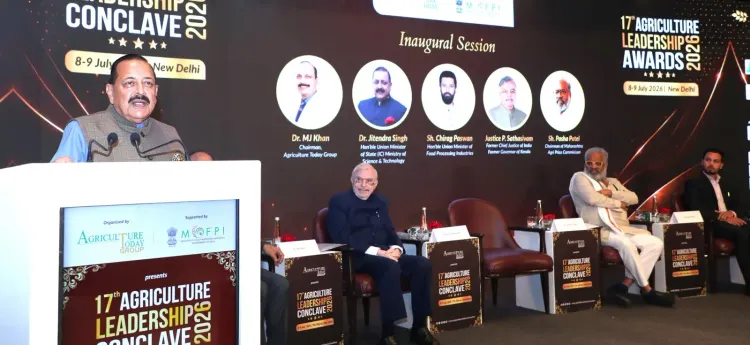
Science Minister Dr. Jitendra Singh, addressing the 17th Agriculture Leadership Conclave 2026 in New Delhi, called for AI and agri-startups to lead India's next startup wave from farms, citing the CSIR Aroma Mission's Purple Revolution in Jammu and Kashmir as a model for technology-linked rural entrepreneurship.
Key Takeaways
Jitendra Singh addressed the 17th Agriculture Leadership Conclave 2026 in New Delhi on 8 July 2026 .
He called for India's next startup revolution to emerge from farms rather than only from urban technology hubs.
Artificial Intelligence was described as an indispensable tool for predictive crop management, precision irrigation and weather-based advisories.
The Ministry of Science and Technology has ongoing work in climate-resilient crops, genomics, crop improvement, pest-resistant varieties and precision farming.
The CSIR Aroma Mission and lavender cultivation in Jammu and Kashmir — the Purple Revolution — were cited as a model for industry-linked, technology-driven rural entrepreneurship.
PM Narendra Modi has previously highlighted the Purple Revolution in his Mann Ki Baat radio addresses.
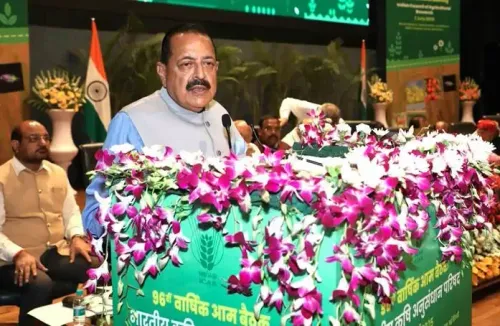
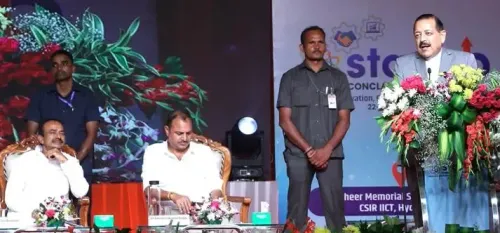
Union Science and Technology Minister Dr. Jitendra Singh on Wednesday, 8 July 2026, addressed the 17th Agriculture Leadership Conclave 2026 in New Delhi, calling for artificial intelligence and agri-startups to drive the next wave of India's farming economy and rural entrepreneurship.
Context
Speaking at the conclave, Dr. Jitendra Singh argued that the 'next wave of India's startup revolution must emerge from farms rather than only from technology hubs.' He framed agriculture as a potential 'major source of entrepreneurship, employment and wealth creation,' urging a decisive shift away from conventional farming approaches in an era of rapid technological change.
The minister emphasised that India must 'continuously adapt to new scientific developments in order to remain globally competitive and ensure long-term food and nutritional security' — a signal that science policy will increasingly be evaluated through an agricultural productivity lens.
Policy Backdrop
The remarks draw on a broad portfolio of programmes under the Ministry of Science and Technology, which Dr. Singh said is conducting 'extensive scientific work' spanning climate-resilient crop development, genomics, crop improvement, pest-resistant varieties, precision farming and resource optimisation.
Artificial Intelligence was highlighted as 'increasingly becoming an indispensable tool' for predictive crop management, precision irrigation, weather-based advisories and efficient utilisation of agricultural resources. The ministry's push aligns with the Startup India initiative launched in 2016, which had explicitly included agri-entrepreneurship as a priority vertical.
The CSIR Aroma Mission, launched in 2016 by the Council of Scientific and Industrial Research, was cited as a flagship example. Lavender cultivation introduced in the villages of Jammu and Kashmir under the mission has spawned what Dr. Singh described as the 'Purple Revolution' — 'creating new livelihood opportunities for thousands of young entrepreneurs.' Prime Minister Narendra Modi has referenced this success story in his Mann Ki Baat (monthly radio address to citizens) broadcasts, lending it national visibility.
Stakeholders and Impact
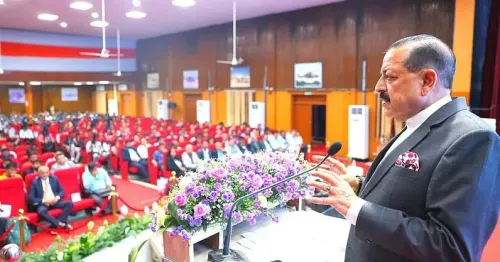
The conclave's audience — policymakers, scientists and agribusiness leaders — heard a direct pitch for industry-linked, science-driven farming models. Jammu and Kashmir farmers and rural youth are the most immediate beneficiaries cited, with the Aroma Mission held up as a replicable template for decentralised innovation beyond metropolitan technology clusters.
Agri-startups stand to gain from the policy direction outlined, as the minister's remarks suggest forthcoming institutional support for farm-based entrepreneurship. The emphasis on AI tools such as precision irrigation and weather-based advisories points to opportunities for technology firms already working in the agricultural advisory space.
What's Next
Observers will watch for the roll-out of AI-based crop advisory systems under state agriculture departments and any possible expansion of aroma-type missions to additional high-value crops in the next Union Budget cycle. Dr. Singh's address signals that the intersection of frontier science and rural livelihoods will remain a central plank of the government's technology agenda, with farm-based startups likely to feature prominently in upcoming policy announcements.
Point of View
Particularly ahead of a budget cycle where agri-tech funding could become a political differentiator. By anchoring the argument in the already-celebrated Purple Revolution, the minister leverages a proven, PM-endorsed success story to build credibility for a broader science-to-farm pipeline. The repeated invocation of AI signals that the government intends to position frontier technology not merely as an urban productivity tool but as an instrument of rural income parity. This framing also serves to defend the Ministry of Science and Technology's budget relevance by demonstrating direct links between research expenditure and grassroots economic outcomes.
NationPress
8 Jul 2026
Frequently Asked Questions
What did Dr. Jitendra Singh say at the Agriculture Leadership Conclave 2026?
Dr. Jitendra Singh said that AI and agri-startups hold the key to India's farming future, and that the next wave of India's startup revolution must emerge from farms rather than only from technology hubs, citing the CSIR Aroma Mission's Purple Revolution in Jammu and Kashmir as a model.
What is the Purple Revolution in India?
The Purple Revolution refers to the expansion of lavender cultivation in Jammu and Kashmir under the CSIR Aroma Mission, launched in 2016, which created new livelihood and entrepreneurship opportunities for thousands of rural youth and was highlighted by PM Modi in Mann Ki Baat.
What is the CSIR Aroma Mission?
The CSIR Aroma Mission is a Council of Scientific and Industrial Research programme launched in 2016 to promote the cultivation and value-addition of aromatic crops, including lavender, across Indian states, with a focus on Jammu and Kashmir.
How is AI being used in Indian agriculture?
According to Dr. Jitendra Singh, AI is being used for predictive crop management, precision irrigation, weather-based advisories and efficient utilisation of agricultural resources, and the Ministry of Science and Technology is actively working to expand these applications.
What is the 17th Agriculture Leadership Conclave 2026?
The Agriculture Leadership Conclave is an annual industry forum that brings together policymakers, scientists and agribusiness leaders to discuss technology adoption and policy direction in Indian farming; the 17th edition was held in New Delhi in July 2026.