Dr. Jitendra Singh Calls for AI-Driven Governance Reforms at Shillong
Synopsis
Union Minister Dr. Jitendra Singh inaugurated the National Conference on Governance in Shillong on 13 July 2026, outlining India's shift to AI- and cybersecurity-driven 'Next Generation' administrative reforms and offering DARPG collaboration to Meghalaya and other northeastern states.
Key Takeaways
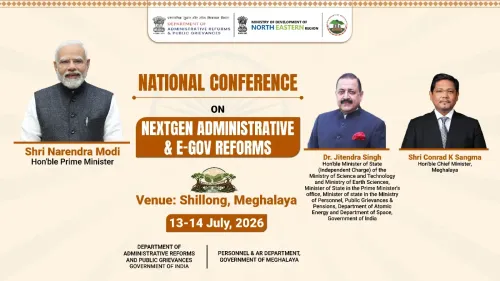
Jitendra Singh delivered the inaugural address at the two-day National Conference on Governance in Shillong, Meghalaya on 13 July 2026 .
He announced India is entering a 'Next Generation Administrative and e-Governance Reforms' phase, building on the removal of nearly 2,000 obsolete rules over the past decade.
The minister identified artificial intelligence , cybersecurity , digital public infrastructure , and citizen-centric service platforms as the pillars of the next reform phase.
DARPG has proposed 'State Collaboration Initiatives' and is ready to assist Meghalaya and other northeastern states with digital governance and long-term administrative planning.
Singh invoked PM Modi's concept of the 'Reform Express' to argue that the pace of technology-driven reform must accelerate to match rapid technological change.
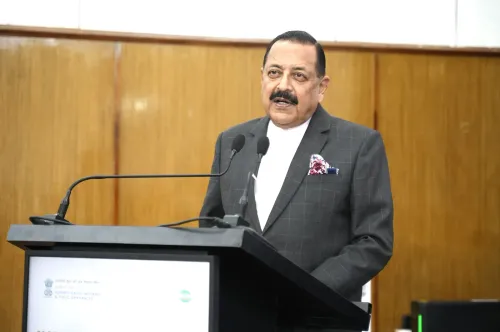
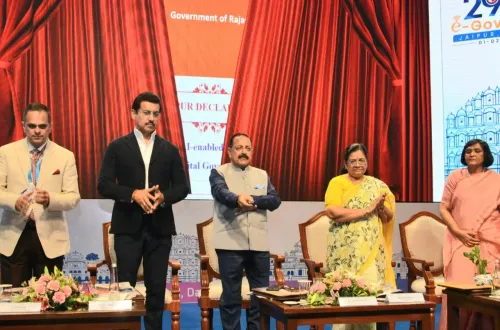
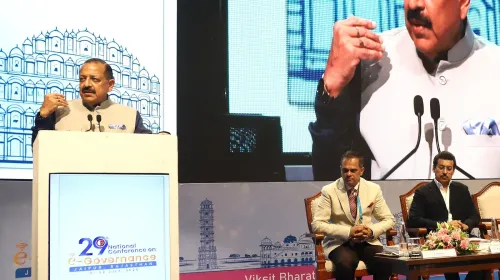
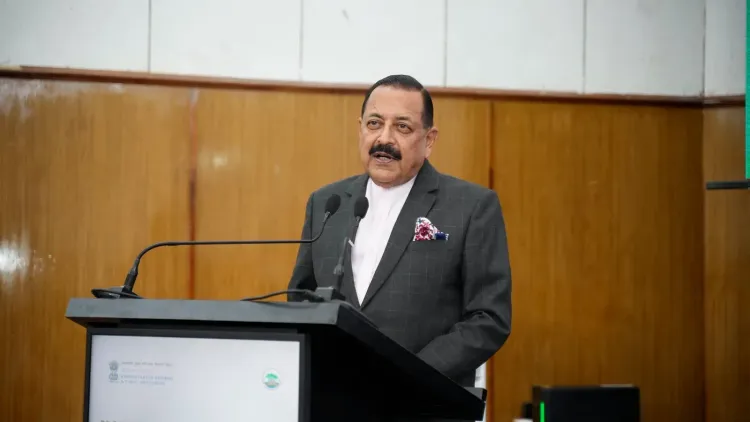
Union Minister of State (Independent Charge) for Science and Technology Dr. Jitendra Singh delivered the inaugural address at the two-day National Conference on Governance held in Shillong, Meghalaya on 13 July 2026, calling for a new phase of technology-driven administrative transformation anchored in artificial intelligence, cybersecurity, and digital public infrastructure.
Context
Speaking at the conference, Dr. Singh described India as entering what he termed 'Next Generation Administrative and e-Governance Reforms' — a phase that builds on over a decade of administrative simplification. He stated that 'after over a decade of path-breaking administrative reforms and the removal of nearly 2,000 obsolete rules, India now enters the next phase of governance transformation.' The minister framed this evolution as consistent with Prime Minister Narendra Modi's vision of a 'Reform Express' — a metaphor for rapid, momentum-driven policy change.
Dr. Singh emphasised that 'technology evolution is happening at a very fast speed' and that the pace of reform must accelerate in kind. He identified artificial intelligence, cybersecurity, digital public infrastructure, and citizen-centric service platforms as the four pillars of the next governance phase.
Policy Backdrop
The conference sits within a broader arc of e-governance reform stretching back to the National e-Governance Plan of 2006, which established the initial framework of Mission Mode Projects for online service delivery. Since 2014, the central government has layered successive technology initiatives onto that base — including an upgraded centralised public grievance portal under the Department of Administrative Reforms and Public Grievances (DARPG) — progressively shifting from portal-based delivery to integrated digital public infrastructure.
The repeal of obsolete laws and administrative rules has been a consistent strand of the Modi government's reform agenda. Dr. Singh's reference to 'nearly 2,000 obsolete rules' removed reflects the cumulative scale of that simplification effort over the past decade, though the precise figure originates from the minister's own statement at the conference.
Stakeholders and Impact
A notable dimension of the address was its explicit focus on Northeast India. Dr. Singh highlighted that DARPG has proposed 'State Collaboration Initiatives' and is prepared to offer technical and planning assistance to the Government of Meghalaya and other North Eastern state governments to develop modern infrastructure combining digital governance with long-term administrative planning. This aligns with the Act East Policy articulated in 2014, which prioritised governance capacity-building across the eight northeastern states.
State administrative cadres, citizens accessing government services, and local governments across the Northeast stand to be the primary beneficiaries if the proposed collaboration initiatives materialise. Closing the historical gap in administrative capacity and digital connectivity in the region remains a stated priority of the central government.
What's Next
The immediate focus shifts to whether formal agreements — in the form of Memoranda of Understanding — will be signed between DARPG and Meghalaya or other northeastern states under the proposed State Collaboration Initiative framework. Observers will also watch for any follow-up budget allocations or pilot announcements for AI or cybersecurity programmes in state secretariats. If the 'Next Generation' reform agenda translates into concrete scheme launches or inter-governmental MoUs, it could mark a significant step in extending India's digital governance infrastructure to its historically underserved northeastern frontier.
Point of View
Using DARPG's State Collaboration Initiative as the institutional vehicle. The invocation of the 'Reform Express' framing ties the announcement tightly to the Prime Minister's political brand, reinforcing that administrative reform remains a core electoral and governance narrative for the ruling dispensation. The explicit offer of central assistance to Meghalaya and other northeastern states is also strategically timed, given the region's political salience and the government's Act East commitments. Whether this translates into binding MoUs or remains aspirational will be the real test of the initiative's seriousness.
NationPress
13 Jul 2026
Frequently Asked Questions
What is the National Conference on Governance 2026?
The National Conference on Governance is a two-day event held in Shillong, Meghalaya, inaugurated on 13 July 2026, where Union Minister Dr. Jitendra Singh outlined India's next phase of administrative and e-governance reforms focused on AI, cybersecurity, and digital public infrastructure.
What is DARPG's State Collaboration Initiative for Northeast India?
The Department of Administrative Reforms and Public Grievances (DARPG) has proposed State Collaboration Initiatives to offer technical and planning assistance to Meghalaya and other northeastern state governments to build modern digital governance infrastructure and long-term administrative capacity.
What did Dr. Jitendra Singh say about AI in governance?
Dr. Singh stated that future governance reforms must integrate artificial intelligence, cybersecurity, digital public infrastructure, and citizen-centric service platforms to build an agile, technology-driven ecosystem capable of meeting citizens' aspirations.
What is PM Modi's 'Reform Express' concept?
'Reform Express' is a phrase used by Prime Minister Narendra Modi to describe the rapid, momentum-driven approach to policy and administrative reform; Dr. Singh cited it to argue that the pace of technology-driven governance reform must accelerate.
How many obsolete rules has India removed under administrative reforms?
According to Dr. Jitendra Singh's address at the Shillong conference, India has removed nearly 2,000 obsolete rules over more than a decade of administrative reforms; this figure originates from the minister's own statement and has not been independently verified.