Dr. Jitendra Singh calls for Zero-Litigation Pension ecosystem
Synopsis
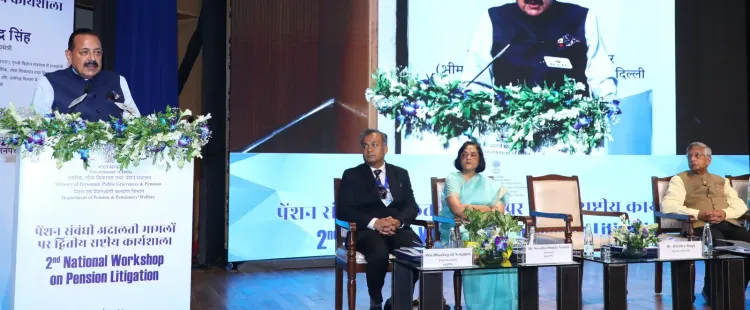
At the National Workshop on Pension Litigation on 20 July 2026, Union Minister Dr. Jitendra Singh called for periodic revision of pension rules and a shift from dispute resolution to dispute prevention, aiming to build a Zero-Litigation Pension ecosystem for central government pensioners and senior citizens.
Key Takeaways
Jitendra Singh addressed the National Workshop on Pension Litigation on 20 July 2026 .
He called for building a 'Zero-Litigation Pension ecosystem' through proactive policy reform rather than reactive litigation management.
The minister stated that pension rules must be revisited periodically to keep pace with changing societal needs and minimise disputes.
Grievance redressal was framed as a mechanism for policy improvement , not merely case disposal.
The Modi government has removed several legacy regulations since 2014 that caused hardship to citizens, per the minister's remarks.
Follow-up action is expected in the form of revised CCS (Pension) Rules circulars and a possible zero-litigation monitoring dashboard.
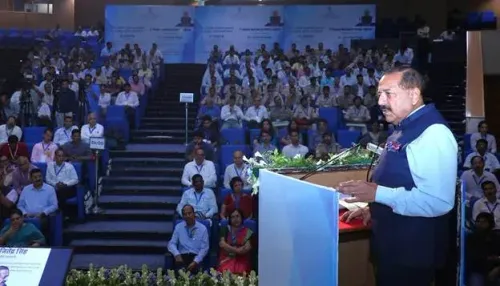
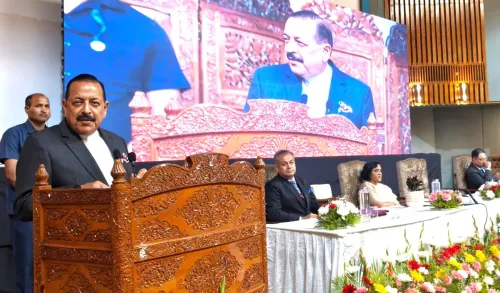
Union Minister of State (Independent Charge) for Personnel, Public Grievances and Pensions Dr. Jitendra Singh on Monday, 20 July 2026 addressed the National Workshop on Pension Litigation, calling for a fundamental shift in how the government approaches pension disputes — from reactive litigation management to proactive policy reform aimed at building a 'Zero-Litigation Pension ecosystem'.
Context
Speaking at the workshop, Dr. Singh underscored that pension disputes are not merely administrative failures but symptoms of rules that have not kept pace with evolving societal realities. 'Many pension disputes arise because existing rules have failed to keep pace with changing societal needs,' he said, framing litigation as a policy signal rather than an isolated legal problem. He stressed that the objective of pension administration must shift from resolving disputes after they reach the court to preventing them through timely reforms.
The minister called for periodic revisits of pension rules, stating: 'The need is to revisit the Pension rules, from time to time, to minimise litigation and strengthen the welfare of senior citizens.' His remarks position grievance redressal as a diagnostic tool for policy improvement, not simply a case-disposal exercise.
Policy Backdrop
The Department of Pension and Pensioners' Welfare, the nodal agency under the Ministry of Personnel responsible for central civil pension rules, has been at the centre of a broader administrative simplification drive since 2014. Dr. Singh noted that the government led by Prime Minister Shri Narendra Modi has 'done away with several regulations inherited from earlier administrative frameworks that tended to create hardship for citizens' over the last decade.
This approach mirrors parallel exercises in tax, labour, and regulatory domains, where grievance data has been used as an input for rule revision rather than treated as isolated case management. The Seventh Central Pay Commission recommendations, notified in 2016, had earlier revised pension fixation, family pension, and commutation rules for central government employees, forming a significant policy milestone in this lineage.
Stakeholders and Impact
The primary beneficiaries of a zero-litigation pension framework would be central government pensioners and senior citizens who currently navigate lengthy court processes to resolve entitlement disputes. Reducing litigation would also ease the burden on administrative tribunals and civil courts that handle a significant volume of pension-related cases each year.
Dr. Singh's framing of grievance redressal as 'an important mechanism for policy improvement' signals a data-driven approach: patterns in disputes would feed back into rule amendments, creating a self-correcting administrative cycle. This has implications for how the Department of Pension and Pensioners' Welfare designs future circulars and amendments to the Central Civil Services (Pension) Rules.
What's Next
The workshop's outcomes are expected to inform follow-up circulars revising the CCS (Pension) Rules, and there is anticipation of a possible online monitoring dashboard to track progress toward the zero-litigation goal. Observers will watch for references to these commitments in the next Union Budget or the Ministry's annual report.
If the government moves to institutionalise grievance data as a formal input into rule-making cycles, it could set a precedent for other welfare-oriented departments managing large pensioner populations. The minister's remarks signal that pension policy reform will remain an active legislative and administrative priority under the current dispensation.
Point of View
The government is attempting to reposition the state as a proactive welfare actor rather than a reluctant respondent in court. The 'Zero-Litigation' framing is also politically significant: it offers a measurable, citizen-visible benchmark that can be cited in future electoral narratives around good governance. Whether the ambition translates into binding rule amendments or remains aspirational will depend on the institutional follow-through from the Department of Pension and Pensioners' Welfare in the months ahead.
NationPress
21 Jul 2026
Frequently Asked Questions
What is the Zero-Litigation Pension ecosystem announced by Dr. Jitendra Singh?
The Zero-Litigation Pension ecosystem is a government objective announced by Union Minister Dr. Jitendra Singh at the National Workshop on Pension Litigation on 20 July 2026. It aims to prevent pension disputes from reaching courts by periodically revising pension rules and using grievance data to improve policy, rather than simply resolving cases after litigation begins.
Why do pension disputes arise in India?
According to Dr. Jitendra Singh, many pension disputes arise because existing rules have not kept pace with changing societal needs. Outdated regulations inherited from earlier administrative frameworks often create hardship for central government pensioners, leading to litigation that could be avoided through timely policy reforms.
What is the Department of Pension and Pensioners' Welfare?
The Department of Pension and Pensioners' Welfare is the nodal agency under the Ministry of Personnel, Public Grievances and Pensions. It is responsible for framing and revising central civil pension rules, including the Central Civil Services (Pension) Rules, and for overseeing grievance redressal for central government retirees.
What pension rule changes has the Modi government made since 2014?
Dr. Jitendra Singh stated at the workshop that the government led by Prime Minister Narendra Modi has removed several legacy regulations inherited from earlier administrative frameworks that caused hardship to citizens. A notable milestone was the implementation of Seventh Central Pay Commission recommendations in 2016, which revised pension fixation, family pension, and commutation rules.
What follow-up action is expected after the National Workshop on Pension Litigation?
Observers expect follow-up circulars revising the Central Civil Services (Pension) Rules and the possible introduction of an online monitoring dashboard to track progress toward the zero-litigation goal. These developments may also be referenced in the next Union Budget or the Ministry of Personnel's annual report.