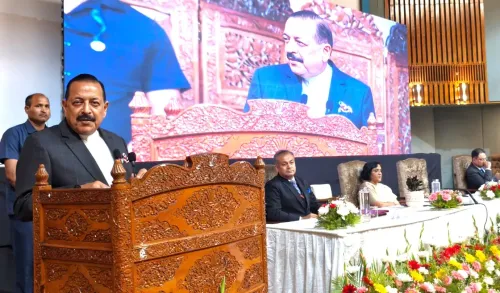
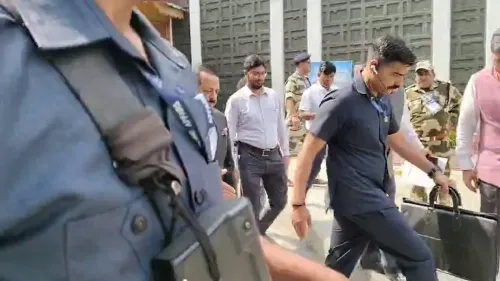
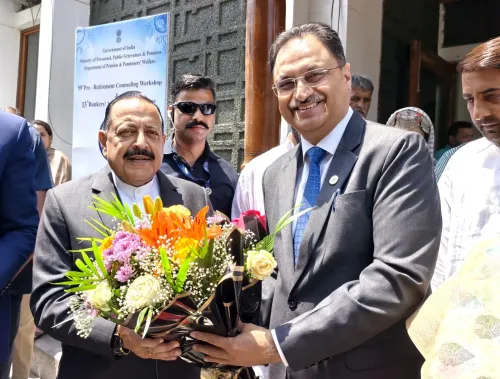
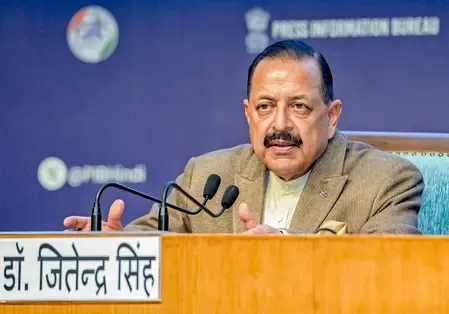
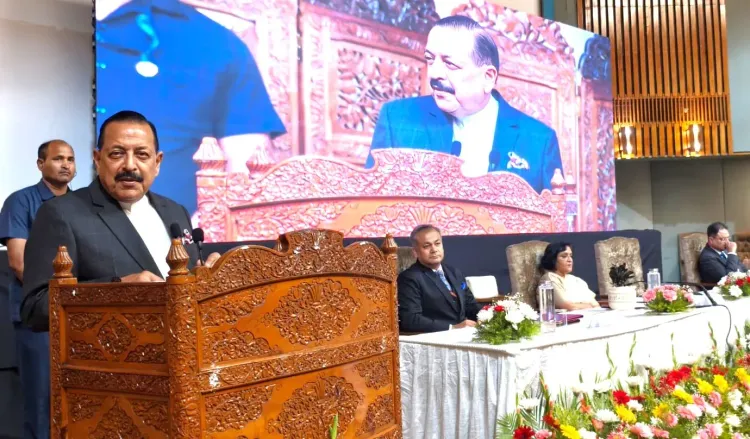
Dr. Jitendra Singh addresses pre-retirement workshop in Srinagar
Synopsis
Union Minister Dr. Jitendra Singh addressed the 59th Pre-Retirement Counselling Workshop at SKICC, Srinagar, spotlighting twelve years of Modi government pension reforms — including Digital Life Certificates via face authentication, CPENGRAMS, and the ANUBHAV platform — now reaching central government employees and pensioners in Jammu and Kashmir following its 2019 UT transition.
Key Takeaways
Jitendra Singh addressed the 59th Pre-Retirement Counselling Workshop at SKICC, Srinagar on June 16, 2026 .
He said the Modi government's 12 years of governance and pension reforms are now reaching employees and pensioners in Jammu and Kashmir following its transition to a Union Territory in 2019 .
The Digital Life Certificate via Face Authentication Technology allows pensioners to submit life certificates from home using a mobile phone.
CPENGRAMS , National Pension Adalats , and the ANUBHAV platform for retiring employees to record service experiences were cited as key reform pillars.
J&K Central Government Pensioners' Associations were lauded for facilitating the integration of erstwhile state employees into the central government framework.
The minister said pre-retirement workshops aim to help retiring employees prepare for 'a meaningful and productive post-retirement life' beyond mere procedural orientation.
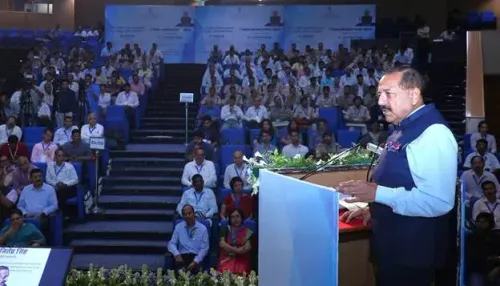
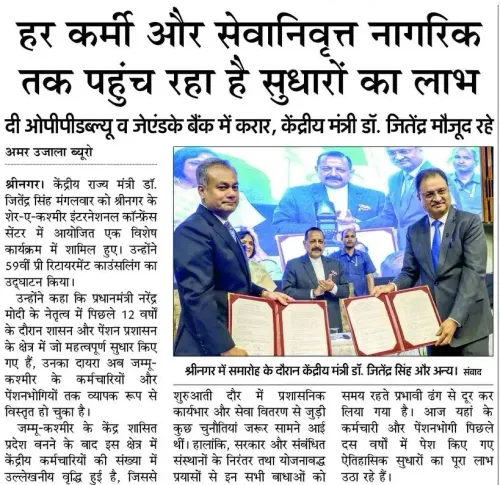
Union Minister of State Dr. Jitendra Singh addressed the 59th Pre-Retirement Counselling Workshop at the Sher-i-Kashmir International Conference Centre (SKICC) in Srinagar on Tuesday, June 16, 2026, highlighting twelve years of pension and governance reforms reaching central government employees and pensioners in Jammu and Kashmir following the region's transition to a Union Territory.
Context
Speaking at the workshop, Dr. Singh noted that the Modi government's 12 years of governance reforms, including pension reforms, are now 'reaching wider sections of employees and pensioners in Jammu and Kashmir following its transition to UT.' He credited J&K Central Government Pensioners' Associations for playing 'a constructive role in facilitating smooth functioning of the Central Government framework' and helping erstwhile state employees integrate into central government service rules.
The workshop, part of a long-running series conducted by the Department of Pension and Pensioners' Welfare, aims to familiarise retiring central government employees with pension procedures, retirement benefits, and post-retirement life planning.
Policy Backdrop
The administrative integration of Jammu and Kashmir into the central government framework followed the Jammu and Kashmir Reorganisation Act, 2019, which converted the former state into two Union Territories. This transition brought the erstwhile state's employees under central government service and pension rules, creating a significant administrative realignment that required structured outreach and counselling.
Dr. Singh highlighted three specific reform instruments at the workshop. The Digital Life Certificate — implemented through the Jeevan Pramaan scheme, launched in 2014 — now uses Face Authentication Technology, allowing pensioners to submit their annual life certificates from home via a mobile phone, eliminating the need for physical bank visits. He also cited the CPENGRAMS (Centralised Pension Grievance Redress and Monitoring System), National Pension Adalats, and the ANUBHAV platform — which enables retiring employees to record their service-tenure experiences as a repository for future generations of public servants — as key pillars of the reform architecture built over the last twelve years.
Stakeholders and Impact
The primary beneficiaries of these reforms are central government pensioners in J&K and the large cohort of erstwhile state government employees absorbed into the central framework post-2019. For many of these employees, particularly in remote areas of the Union Territory, the shift to digital life certificates and online grievance mechanisms represents a substantive reduction in the compliance burden of retirement.
J&K Central Government Pensioners' Associations have played a facilitating role in this transition, according to Dr. Singh, acting as intermediaries between pensioners and the central administration during a period of significant procedural change. Pre-retirement counselling workshops serve both an administrative and a social function — the minister emphasised that the objective is not only procedural familiarity but also helping 'elder citizens prepare for a meaningful and productive post-retirement life.'
What's Next
The government is expected to continue expanding the reach of face-authentication upgrades under Jeevan Pramaan to cover more pensioners across J&K, particularly in areas with limited connectivity. The ANUBHAV platform's repository of service experiences is also likely to grow as more retiring employees from the erstwhile J&K cadre contribute to it. Parliamentary oversight of pension portability and service-rule harmonisation for UT employees remains an area to watch as the administrative integration matures.
Point of View
The address frames the UT transition as a net benefit for ordinary government employees, not merely a constitutional or political event. The emphasis on Pensioners' Associations as constructive partners, rather than adversarial stakeholders, also reflects a broader government strategy of co-opting civil society intermediaries to smooth out legacy administrative mismatches. This kind of outreach, relatively low-profile nationally, carries outsized political weight in J&K where trust between central institutions and local employees remains a live issue.
NationPress
15 Sept 2026
Frequently Asked Questions
What is the Pre-Retirement Counselling Workshop and why was it held in Srinagar?
The Pre-Retirement Counselling Workshop is a programme organised by the Department of Pension and Pensioners' Welfare to familiarise retiring central government employees with pension procedures, retirement benefits, and post-retirement life planning. The 59th edition was held at SKICC, Srinagar, reflecting the government's focus on reaching central government employees in Jammu and Kashmir following the region's 2019 transition to a Union Territory.
What is the Digital Life Certificate and how does face authentication help pensioners?
The Digital Life Certificate, implemented under the Jeevan Pramaan scheme launched in 2014, enables pensioners to submit their annual life certificates digitally instead of visiting a bank in person. The addition of Face Authentication Technology allows pensioners to complete this process from home using a mobile phone, significantly reducing the compliance burden especially for elderly or mobility-limited pensioners.
What is the ANUBHAV platform?
ANUBHAV is a government platform that allows retiring central government employees to document and share their service-tenure experiences. These contributions form a repository intended to guide and inform future generations of public servants, preserving institutional knowledge from experienced officials.
How did Jammu and Kashmir's 2019 UT transition affect government employees' pension rules?
The Jammu and Kashmir Reorganisation Act, 2019 converted the former state into two Union Territories, bringing erstwhile state government employees under central government service and pension rules. This required significant administrative realignment, with Pensioners' Associations and pre-retirement counselling workshops playing a key role in facilitating the transition.