Dr. Jitendra Singh: India Now a Global Tech Leader

Synopsis
At the Times Now Conclave, Union Minister Dr. Jitendra Singh declared India has moved from technology follower to global leader, citing BioE3, the National Quantum Mission, India AI Mission, and a space economy projected to grow from $9 billion to $40-45 billion in under a decade.
Key Takeaways
Jitendra Singh spoke at the Times Now Conclave on August 9, 2026 , outlining India's frontier technology ambitions.
India has a dedicated biotechnology policy — BioE3 — alongside the National Quantum Mission and the India AI Mission .
The National Quantum Mission was approved in April 2023 with an outlay of Rs 6,003 crore over five years.
India's space economy currently stands at $9 billion , with projections to reach $40–45 billion in 8–9 years .
The minister argued India will be an 'essential player' in the next industrial revolution, which will be biotechnology and AI-driven , unlike the IT-driven last one where India was a late entrant.
These missions form part of the broader Atmanirbhar Bharat push for indigenous technology leadership.
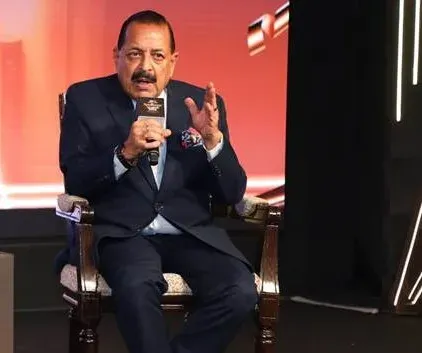
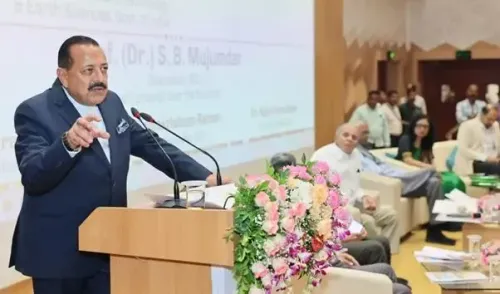
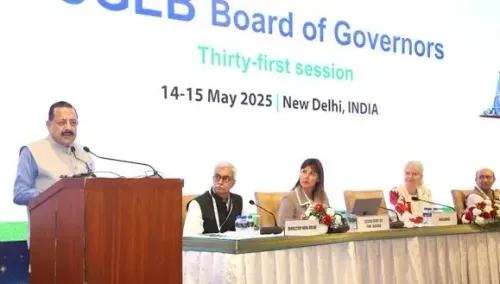
India has crossed a threshold that took decades to reach — and Union Science and Technology Minister Dr. Jitendra Singh made that case in sharp, unambiguous terms at a high-profile policy conclave on Sunday, August 9, 2026. Speaking at the Times Now Conclave, the minister drew a direct line from India's late-mover status in the IT revolution to its current position at the frontier of biotechnology, artificial intelligence, quantum computing, and space — and argued the country will not be left behind this time.
From Late Adopter to Frontier Setter
The minister's sharpest line landed here: 'India has moved from Technology Follower to Global Leader in emerging technologies.' That is not a rhetorical flourish — it is a policy claim backed by a stack of national missions. Dr. Singh pointed to three by name: the BioE3 policy, India's dedicated national biotechnology framework; the National Quantum Mission; and the India AI Mission, alongside rapid advances in space. The implicit contrast was with the IT services era, when India arrived late to a revolution it eventually came to dominate — but as a service provider, not an architect.
The National Quantum Mission was approved by the Union Cabinet in April 2023 with an outlay of Rs 6,003 crore over five years — one of the largest dedicated quantum investments by any government in Asia. The India AI Mission followed in 2024, designed to build national AI infrastructure, curated datasets, and research capacity through public-private participation. BioE3 — focused on economy, environment, and employment — builds on biotechnology strategies dating to the 2015 National Biotechnology Development Strategy, but positions India as a rule-maker rather than a rule-taker in global biotech governance.
A Space Economy on the Launchpad
Dr. Singh put a number to India's space ambitions: the space economy currently stands at $9 billion and is projected to reach $40–45 billion in 8–9 years. That trajectory, if realised, would place India among the top-tier space economies globally, riding the commercial launch boom and domestic satellite demand that has followed the opening of the sector to private players. The minister's framing was deliberate — space is no longer a prestige programme; it is an economic engine.
The Next Industrial Revolution — and India's Seat at the Table
The minister's most consequential argument was structural. The last industrial revolution was IT-driven. India caught the wave, but late. The next one, he said, will be biotechnology and AI-driven — and India, this time, has positioned itself at the starting line rather than scrambling to board a moving train. 'India will be an essential player in the next industrial revolution,' he said, citing the convergence of bio, AI, quantum, and space as the defining technology stack of the coming decades.
That framing mirrors national strategies being assembled in the United States, European Union, and China — all of which have launched dedicated quantum, AI, and biotech programmes in the same window. India's move to stack vertical missions across all four domains simultaneously reflects the Atmanirbhar Bharat push in high-tech sectors, where indigenous leadership — not just adoption — is the stated goal. Whether budget utilisation and mid-term reviews of these missions match the ambition will be the real test in the 2025–26 fiscal cycle.
India spent a generation proving it could execute in technology. The minister's message at the conclave was that the next generation will be spent proving it can lead.
Point of View
The Quantum Mission, and the AI Mission as a policy portfolio rather than isolated initiatives, the minister signals a deliberate convergence doctrine. The IT-era comparison is pointed: it acknowledges a past failure of timing while asserting the structural conditions are now different. The real political test will come at the mid-term review of these missions — ambition without utilisation data becomes a vulnerability, not an asset.
NationPress
9 Aug 2026
Frequently Asked Questions
What is India's BioE3 policy?
BioE3 is India's dedicated national biotechnology policy, focused on economy, environment, and employment goals. It builds on earlier strategies like the 2015 National Biotechnology Development Strategy and positions India as a rule-maker in global biotech governance.
What is the National Quantum Mission and how much has India invested?
The National Quantum Mission is a central government initiative to develop quantum computing, communication, and sensing technologies. The Union Cabinet approved it in April 2023 with an outlay of Rs 6,003 crore over five years.
What is India's current space economy size and future projection?
According to Dr. Jitendra Singh at the Times Now Conclave, India's space economy currently stands at $9 billion and is projected to reach $40–45 billion in 8–9 years, driven by commercial launches and domestic satellite demand.
What is the India AI Mission?
The India AI Mission is a national programme launched in 2024 to build AI infrastructure, curated datasets, and research capacity across sectors through public-private participation.
Why does Dr. Jitendra Singh say India was late to the last industrial revolution?
The minister was referring to the IT services era, when India became a major player in technology outsourcing but arrived late as a service provider rather than as an architect or innovator. He contrasted this with India's current early positioning in biotechnology and AI.