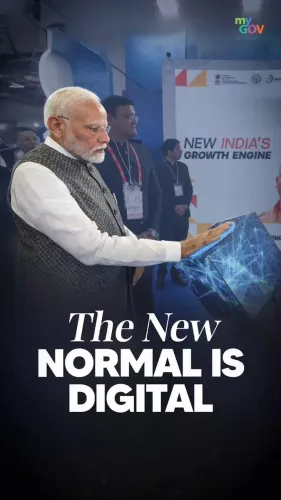
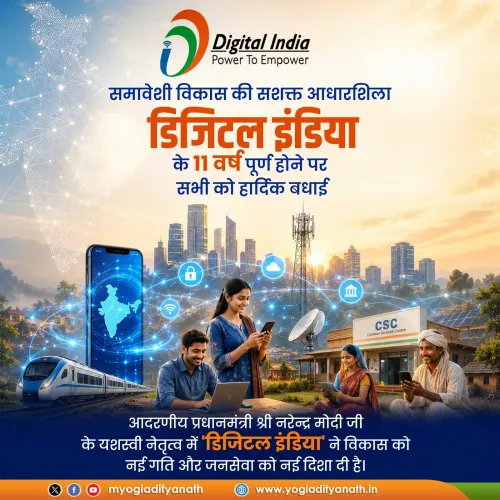
Dr. Jitendra Singh marks 11 years of Digital India

Synopsis
Union Science and Technology Minister Dr. Jitendra Singh marked 11 years of Digital India on 1 July 2026, citing transformative gains in e-governance, digital transactions, and citizen empowerment since the programme's launch by PM Modi in 2015.
Key Takeaways
Digital India completed 11 years on 1 July 2026 , having been launched by Prime Minister Narendra Modi on 1 July 2015 .
Jitendra Singh credited the programme with advancing transparency, convenience, and citizen empowerment through technology.
The JAM trinity — Jan Dhan, Aadhaar, and Mobile — underpins the programme's direct benefit transfer and financial inclusion architecture.
UPI , introduced in 2016 , has grown into one of the world's largest real-time digital payments systems.
The next phase of Digital India is expected to integrate artificial intelligence and 5G into government service delivery.
The Digital Personal Data Protection Act (2023) is awaiting follow-up rules that will govern citizen data across digital platforms.
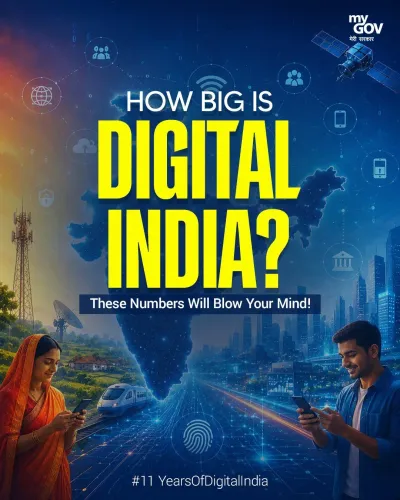
Union Science and Technology Minister Dr. Jitendra Singh on Wednesday, 1 July 2026 marked 11 years of the Digital India programme, calling it a transformative phase for governance, public service delivery, and innovation across the country.
Posting on X with the hashtag #11YearsOfDigitalIndia, the Minister highlighted how technology has enhanced 'transparency, convenience, and empowerment for every citizen' — from seamless digital transactions to efficient e-governance platforms.
Context
Digital India was launched by Prime Minister Narendra Modi on 1 July 2015, anchored on nine pillars spanning broadband infrastructure, digital literacy, and citizen-facing services. The programme built on the earlier National e-Governance Plan of 2006, which had set the groundwork for electronically delivered government services. Its eleventh anniversary on 1 July 2026 marks over a decade of sustained expansion in the country's digital public infrastructure.Policy Backdrop
The programme's reach has been amplified by the JAM trinity — Jan Dhan bank accounts, Aadhaar biometric identity, and Mobile connectivity — promoted from 2014 onwards to enable direct benefit transfers and financial inclusion for crores of Indians. The Unified Payments Interface (UPI), introduced in 2016, became a cornerstone of cashless transactions and is now one of the largest real-time payment systems in the world. Together, these platforms have repositioned India as a global reference point for digital public infrastructure. Dr. Jitendra Singh's ministry — the Ministry of Science and Technology — sits at the intersection of this broader digital push, overseeing research and development that feeds into next-generation technology adoption. The minister's post reflects the government's continued ownership of the Digital India narrative at the highest levels of the executive.Stakeholders and Impact
The beneficiaries of Digital India span Indian citizens in urban and rural settings alike, government departments seeking administrative efficiency, fintech startups building on open digital rails, and rural populations gaining first-time access to banking and welfare services. The programme's identity-linked welfare architecture has enabled direct subsidy transfers, reducing leakage in public spending. For the fintech ecosystem, platforms built atop UPI and Aadhaar-based authentication have attracted significant domestic and foreign investment over the past decade.What's Next
Looking ahead, the government's stated priorities include integrating artificial intelligence and 5G networks into the next phase of Digital India's service delivery architecture. The Digital Personal Data Protection Act — passed in 2023 — is also expected to see follow-up rules framed by Parliament, which will shape how citizen data generated across these platforms is governed. The anniversary message from Dr. Jitendra Singh signals that Digital India remains a central plank of the government's technology and governance agenda as it enters its second decade.Point of View
' the minister is invoking the programme's original promise to ordinary citizens, not just its infrastructure metrics. The message also positions the Ministry of Science and Technology as a stakeholder in the digital governance narrative, beyond its traditional research mandate. As Digital India enters its second decade amid debates over data protection and AI regulation, the government's anniversary communications will increasingly need to address questions of accountability alongside celebration.
NationPress
1 Jul 2026
Frequently Asked Questions
When was Digital India launched and by whom?
Digital India was launched by Prime Minister Narendra Modi on 1 July 2015 , with nine pillars covering digital infrastructure, literacy, and citizen services.
What is Dr. Jitendra Singh's role in Digital India?
Dr. Jitendra Singh is the Union Minister of State (Independent Charge) for Science and Technology. His ministry oversees research and development that feeds into India's broader digital and technology agenda.
What is the JAM trinity and how does it relate to Digital India?
The JAM trinity — Jan Dhan bank accounts, Aadhaar biometric identity, and Mobile connectivity — was promoted from 2014 to enable direct benefit transfers and financial inclusion, forming a key pillar of the Digital India ecosystem.
What is next for Digital India after 11 years?
The government's stated next phase focuses on integrating artificial intelligence and 5G into service delivery, alongside implementation of rules under the Digital Personal Data Protection Act of 2023 .
How has UPI contributed to Digital India's goals?
UPI , launched in 2016 , enabled real-time digital payments at scale and is now one of the world's largest such systems, directly advancing Digital India's cashless-transaction and financial-inclusion objectives.