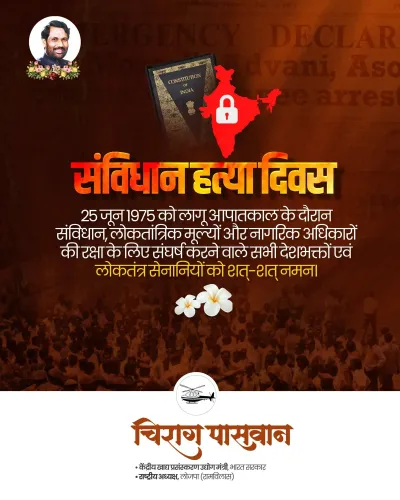
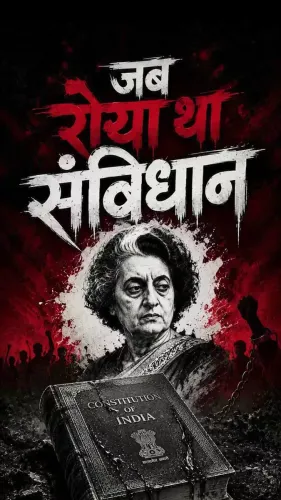
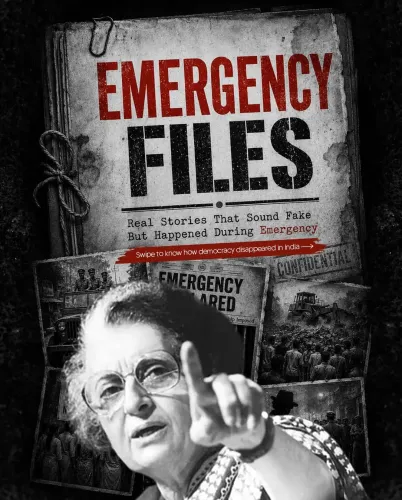
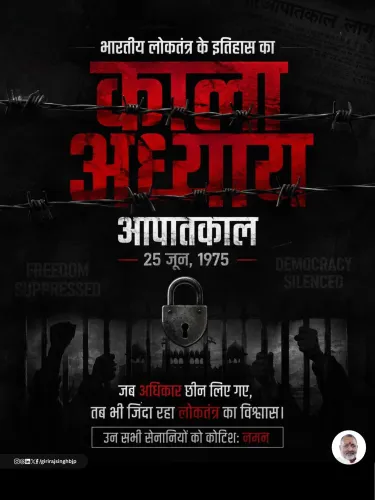
Dr. Jitendra Singh Marks 51st Anniversary of 1975 Emergency
Synopsis
Union Science and Technology Minister Dr. Jitendra Singh marked the 51st anniversary of the 1975 Internal Emergency on 25 June 2026, calling it a 'Black Day' when fundamental rights were suspended, opposition leaders arrested, and press freedom curtailed under Prime Minister Indira Gandhi's proclamation.
Key Takeaways
Jitendra Singh on 25 June 2026 posted on X to mark the 51st anniversary of the Internal Emergency of 1975.
The Emergency was proclaimed by Prime Minister Indira Gandhi on 25 June 1975 under Article 352 of the Constitution and lasted until 21 March 1977 .
Fundamental rights under Articles 14, 19 and 21 were suspended; thousands of opposition figures including Jayaprakash Narayan were detained without trial.
The 38th, 39th and 42nd Constitutional Amendments enacted during 1975-1976 expanded executive power; the 44th Amendment (1978) partially reversed these changes.
The 1977 general elections held after the Emergency ended produced India's first non-Congress central government, setting a precedent for democratic alternation of power.
The anniversary is annually invoked in political debate as a benchmark for the limits of executive authority under the Constitution.
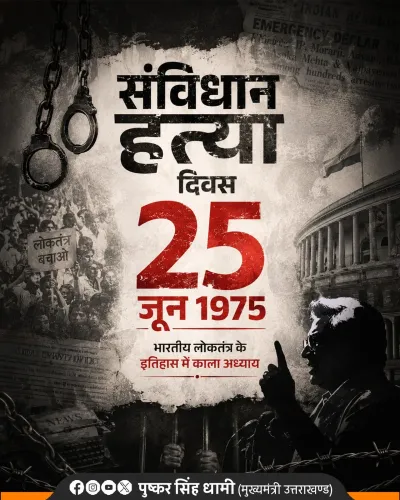
Union Science and Technology Minister Dr. Jitendra Singh on Thursday, 25 June 2026 marked the 51st anniversary of the proclamation of the Internal Emergency of 1975, calling it a 'Black Day in the history of Indian democracy' in a post shared on X.
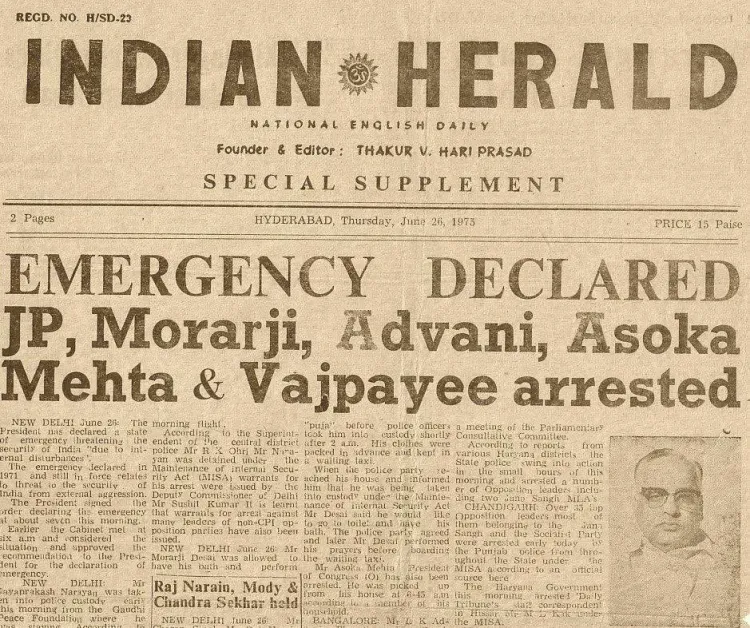
In his post, Dr. Singh wrote: 'Today... the 51st Anniversary of that Black Day in the history of Indian democracy! 25 Jun 1975, PM Indira Gandhi declared Internal Emergency, suspended all fundamental rights, ordered arrest of opposition leaders and curtailed freedom of press.'
Context
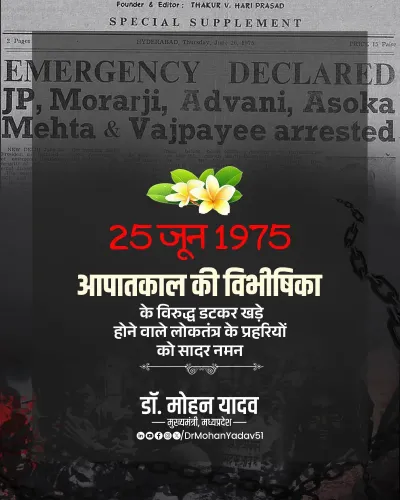
On the night of 25 June 1975, then Prime Minister Indira Gandhi advised President Fakhruddin Ali Ahmed to proclaim a state of internal emergency under Article 352 of the Constitution, citing internal disturbance as the grounds. The proclamation came into force almost immediately, and its effects were felt across the country within hours. Fundamental rights guaranteed under Articles 14, 19 and 21 — covering equality, freedom of speech, and the right to life — were effectively suspended. The Emergency lasted from 25 June 1975 to 21 March 1977 — a period of roughly 21 months. Thousands of opposition figures, civil society leaders, and journalists were detained without trial under preventive detention statutes. Among the most prominent arrested was Jayaprakash Narayan, the Sarvodaya activist whose call for peaceful resistance had galvanised a broad opposition movement in the months preceding the proclamation.Policy Backdrop
The Emergency period was accompanied by sweeping constitutional changes. The 38th, 39th and 42nd Constitutional Amendments, enacted between 1975 and 1976, significantly expanded executive authority and curtailed the scope of judicial review. Press censorship was imposed, with publications required to submit content for government clearance before printing. The 42nd Amendment, sometimes called a 'mini-constitution', was among the most far-reaching, altering the Preamble and restructuring the balance between Parliament and the judiciary. After the Emergency was lifted and general elections were held in March 1977, voters returned a decisive verdict against the ruling Congress. The result produced India's first non-Congress central government, led by the Janata Party coalition. The incoming government subsequently enacted the 44th Amendment in 1978, which partially reversed the Emergency-era constitutional changes and introduced procedural safeguards designed to make a future misuse of Article 352 more difficult.Stakeholders and Impact
The anniversary is observed annually by political parties across the spectrum, former detainees, press freedom groups, and constitutional scholars. For the ruling Bharatiya Janata Party and its allies, the Emergency anniversary has become an occasion to highlight what they describe as the dangers of concentrated executive power and the suppression of democratic dissent. Opposition parties and civil liberties organisations, meanwhile, use the occasion to reflect on the resilience of constitutional institutions and the role of citizens in resisting authoritarian overreach. Media organisations and journalists' bodies mark the day in recognition of the press censorship that was imposed during the period, which remains one of the most cited historical episodes in debates about press freedom in India.What's Next
References to the 1975 Emergency continue to surface in parliamentary debates whenever proposed changes to preventive detention statutes, sedition provisions, or media regulation come up for discussion. Annual statements from political parties, former detainee associations, and constitutional bodies are expected each June, with the 51st anniversary likely prompting renewed public discourse on the safeguards built into the Constitution after 1977. As India approaches the 50th anniversary of the end of the Emergency in 2027, the episode is expected to receive sustained attention in political and academic circles alike.Point of View
Aimed at keeping the 1975 episode alive in public memory as a political reference point. The post carries particular institutional weight coming from a minister who also holds charge in the Prime Minister's Office, signalling that the commemoration has official resonance beyond personal opinion. As constitutional debates around preventive detention and press regulation periodically resurface, the Emergency anniversary functions as a recurring anchor for arguments about the limits of executive power.
NationPress
25 Jun 2026
Frequently Asked Questions
What was the Internal Emergency of 1975?
The Internal Emergency of 1975 was a constitutional emergency proclaimed by Prime Minister Indira Gandhi on 25 June 1975 under Article 352, which suspended fundamental rights, enabled mass detention of opposition leaders without trial, and imposed press censorship. It lasted until 21 March 1977.
Why is 25 June called a Black Day in India?
25 June is referred to as a 'Black Day' by many political parties and leaders because it marks the date in 1975 when the Internal Emergency was declared, leading to the suspension of civil liberties, arrest of opposition figures, and curtailment of press freedom for nearly 21 months.
Who declared the Emergency in India in 1975?
Prime Minister Indira Gandhi advised President Fakhruddin Ali Ahmed to proclaim the Internal Emergency on the night of 25 June 1975, citing internal disturbance as the constitutional ground under Article 352.
What happened to fundamental rights during the 1975 Emergency?
Fundamental rights guaranteed under Articles 14, 19 and 21 of the Constitution — covering equality before law, freedom of speech and expression, and the right to life — were effectively suspended during the Emergency period from 1975 to 1977.
What did Dr. Jitendra Singh say about the Emergency anniversary in 2026?
On 25 June 2026, Union Science and Technology Minister Dr. Jitendra Singh posted on X calling the 51st anniversary of the 1975 Emergency a 'Black Day in the history of Indian democracy,' noting that PM Indira Gandhi had declared the Emergency, suspended fundamental rights, ordered the arrest of opposition leaders, and curtailed press freedom.