Dr. Jitendra Singh Meets Skyroot Founders After Vikram-1 Launch
Synopsis
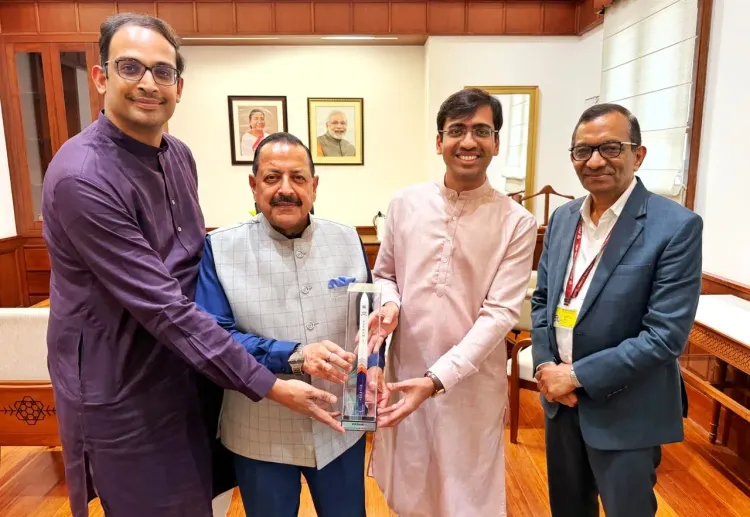
Union Minister Dr. Jitendra Singh met Skyroot Aerospace co-founders Pawan Kumar Chandana and Naga Bharath Daka in Delhi, congratulating them on Vikram-1's successful orbital launch on 18 July 2026 and India's first space-sector unicorn milestone. The company's next launch is targeted for November 2026.
Key Takeaways
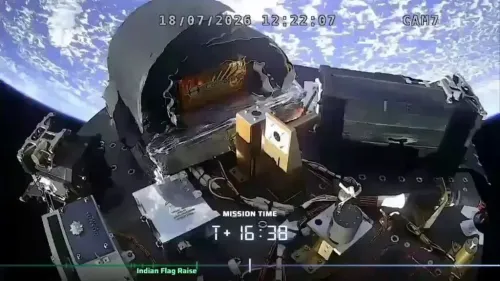
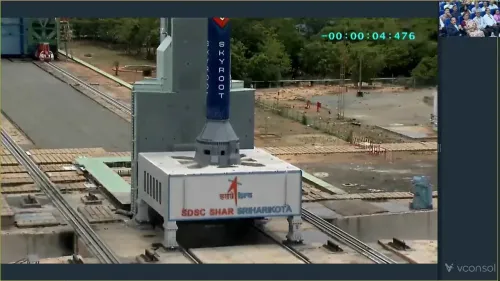
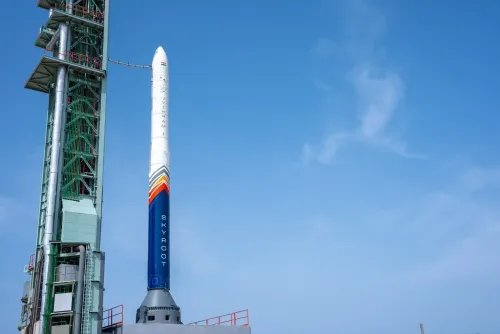
Vikram-1 achieved orbital insertion on 18 July 2026 , making Skyroot Aerospace India's first private company to successfully launch an orbital rocket.
Skyroot Aerospace has become India's first unicorn in the space sector.
Co-founders Pawan Kumar Chandana (CEO) and Naga Bharath Daka (COO) met Union Minister Dr.
Jitendra Singh in New Delhi on 27 July 2026 .
Skyroot's next launch is scheduled for approximately November 2026 .
India's private space sector was opened to commercial players through reforms in 2020 , with IN-SPACe established as the dedicated regulator.
The government discussed Skyroot's future plans, signalling continued policy support for private launch-vehicle developers.
Union Science and Technology Minister Dr. Jitendra Singh met Skyroot Aerospace co-founders Pawan Kumar Chandana and Naga Bharath Daka in New Delhi on 27 July 2026, congratulating them on the successful orbital launch of Vikram-1 on 18 July 2026 — India's first privately developed rocket to reach orbit — and on Skyroot becoming India's first unicorn in the space sector.
Context
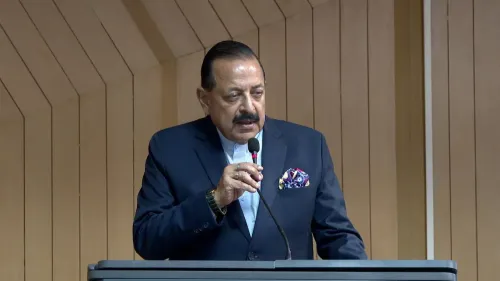
The meeting marked the Skyroot founders' first visit to Delhi following the landmark Vikram-1 mission. Dr. Jitendra Singh described the encounter on social media, noting he 'congratulated them for becoming India's first unicorn in the Space sector, discussed their future plans and conveyed my best wishes for their next launch scheduled around November this year.' The minister also tagged the company's official handle, signalling continued government engagement with the private space ecosystem.
Skyroot Aerospace, headquartered in Hyderabad, was founded in 2018 by former ISRO scientists and has been developing the Vikram series of small-satellite launch vehicles. The company achieved the Vikram-1 orbital insertion in a single attempt, a milestone that positions it alongside a small global cohort of private launch providers.
Policy Backdrop
The Skyroot achievement is a direct outcome of India's 2020 space-sector reform, under which the government opened launch vehicle development, satellite manufacturing and ground-segment operations to private enterprise. A dedicated single-window regulator, IN-SPACe (Indian National Space Promotion and Authorisation Centre), was established to license and facilitate private players alongside ISRO.
Successive Union Budgets have reinforced this direction through eased licensing norms, provisions for technology transfer from ISRO, and access to government launch infrastructure for qualified startups. Dr. Jitendra Singh's ministry has been the nodal political authority overseeing both ISRO and IN-SPACe throughout this transition.
Stakeholders and Impact
Skyroot's unicorn status — the first in India's space sector — signals that private capital is now flowing into domestic orbital launch capabilities at scale. For smaller satellite operators, a commercially available Indian launch vehicle reduces dependence on foreign rideshare programmes and compresses turnaround timelines.
The broader private space ecosystem, comprising satellite manufacturers, ground-station operators and downstream data-analytics firms, stands to benefit as launch frequency increases. Global small-satellite demand is projected to grow sharply through the decade, and India's policy posture aims to capture a meaningful share of that commercial market.
What's Next
Dr. Jitendra Singh confirmed that Skyroot's next launch is scheduled around November 2026. A successful second mission would validate Vikram-1's replicability and strengthen the company's commercial order book. Analysts will also watch for any fresh IN-SPACe licensing decisions or government funding announcements that could benefit other private launch-vehicle developers in the pipeline.
India's ambition to position itself as a preferred launch destination for the global small-satellite market hinges on consistent private-sector delivery — making each Skyroot mission a policy proof-point as much as a commercial one.
Point of View
The minister is also managing investor and industry expectations, reinforcing that New Delhi remains an active stakeholder in commercial outcomes. The broader arc here is India's attempt to replicate, on its own terms, the public-private dynamism that transformed launch economics globally. Each ministerial endorsement of a private milestone raises the reputational stakes for the regulatory framework itself.
NationPress
27 Jul 2026
Frequently Asked Questions
What is Vikram-1 and who launched it?
Vikram-1 is an orbital-class launch vehicle developed by Skyroot Aerospace , a Hyderabad-based private Indian space startup. It was successfully launched on 18 July 2026 , making it India's first privately developed rocket to reach orbit in a single attempt.
Is Skyroot Aerospace India's first space unicorn?
Yes. Following the successful Vikram-1 orbital launch, Skyroot Aerospace achieved a valuation that made it India's first unicorn in the space sector, as acknowledged by Union Minister Dr. Jitendra Singh during his meeting with the company's founders.
When is Skyroot's next rocket launch?
Skyroot Aerospace's next launch is scheduled for approximately November 2026 , as confirmed by Dr. Jitendra Singh after his meeting with co-founders Pawan Kumar Chandana and Naga Bharath Daka in New Delhi.
Who are the founders of Skyroot Aerospace?
Skyroot Aerospace was co-founded by Pawan Kumar Chandana , who serves as CEO, and Naga Bharath Daka , who serves as COO. Both are former ISRO scientists who incorporated the company in 2018 .
How did India open its space sector to private companies?
In June 2020 , the Government of India approved structural reforms allowing private firms to develop launch vehicles, manufacture satellites and operate ground stations. A dedicated regulator, IN-SPACe , was established as a single-window authority to license and support private players alongside ISRO.