Delhi weather turns dry, cooler nights ahead; AQI moderate on 1 Oct
Synopsis
Delhi has moved firmly into its dry post-monsoon phase — clear skies all week, nights cooling, and a 13% national monsoon deficit as the backdrop. But with IIT Delhi's AQI already at 249 and winter winds approaching, the capital's annual pollution season may be closer than the moderate-category headline suggests.
Key Takeaways
Delhi recorded a maximum temperature of 34.2°C and minimum of 22.4°C on 1 October 2026 , with dry conditions and no rain forecast this week.
The IMD confirmed the southwest monsoon season ended with a 13 per cent rainfall deficit nationally.
Monsoon withdrawal is expected within 2–3 days from remaining parts of Punjab, Haryana, Rajasthan and Uttar Pradesh .
Heavy rainfall and thunderstorm alerts are in effect for Kerala , Tamil Nadu , Karnataka and northeastern states on Thursday.
Kibbanahalli in Tumakuru , Karnataka recorded the highest 24-hour rainfall at 10 cm .
Delhi's AQI remained moderate , with IIT Delhi logging the highest station reading at 249 and CRRI Mathura Road at 198 .
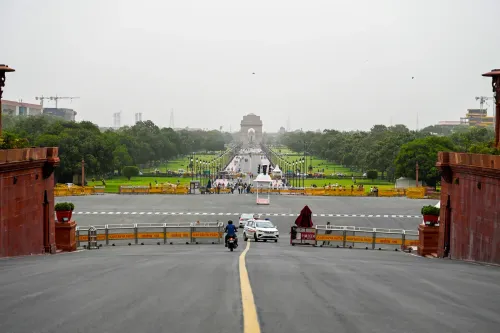
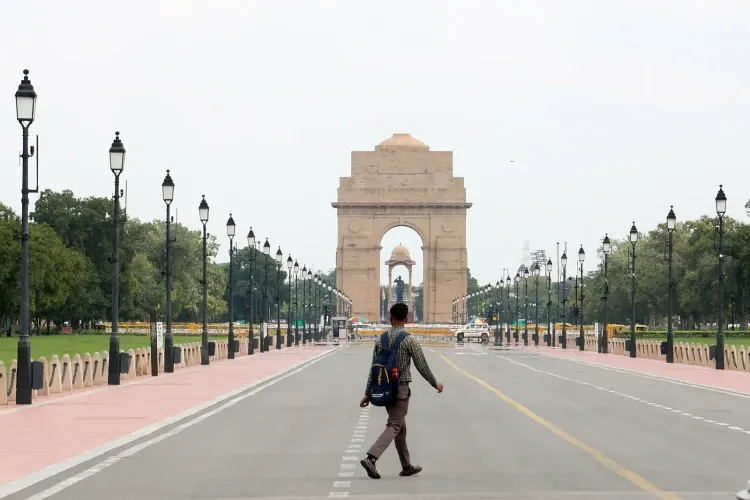
New Delhi's weather turned markedly dry on 1 October 2026, with bright sunshine dominating daytime hours and northwesterly winds accelerating the post-monsoon transition. The India Meteorological Department (IMD) has forecast clear skies across the capital for the coming week, with no rain expected, though night temperatures are set to dip gradually.
Delhi Temperature and Conditions
The maximum temperature at the Safdarjung observatory — Delhi's standard reference station — was recorded at 34.2 degrees Celsius, marginally 0.5 degrees below normal. The minimum temperature stood at 22.4 degrees Celsius. Northwesterly winds are largely responsible for the increasing dryness, pushing out residual moisture as the southwest monsoon retreats from the region.
The IMD has confirmed that the southwest monsoon season has ended with a 13 per cent rainfall deficit nationally — a number that adds context to an already below-average wet season across several states.
Monsoon Withdrawal: Where It Stands
The monsoon's withdrawal line currently runs through Gurdaspur (Punjab), Chandigarh, Muzaffarnagar and Aligarh (Uttar Pradesh), Dholpur, Udaipur and Deesa (Rajasthan), and extends to Naliya in Gujarat. The IMD said conditions are likely to become favourable within the next two to three days for further withdrawal from the remaining parts of Punjab, Haryana, Rajasthan and Uttar Pradesh.
Withdrawal is also expected to progress across most of Gujarat and Madhya Pradesh, the entirety of Jammu and Kashmir, Himachal Pradesh and Uttarakhand, with parts of Bihar, Jharkhand, Chhattisgarh and Maharashtra potentially seeing further retreat. Normally, the monsoon begins withdrawing from northwest India in mid-September and completes its exit by mid-October.
Rainfall Alerts for South and Northeast India
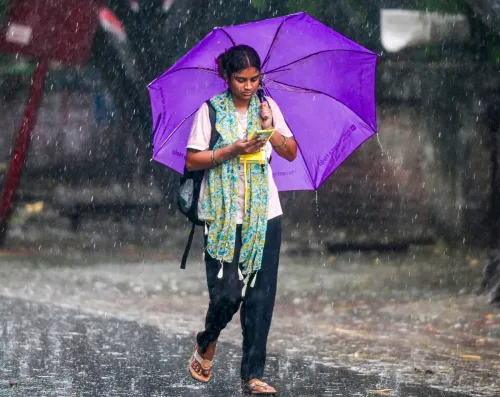
While Delhi stays dry, the picture is starkly different elsewhere. Heavy rainfall is very likely at isolated places over Kerala, South Interior Karnataka, Tamil Nadu, Puducherry and Karaikal on Thursday. In IMD terminology, 'isolated' indicates rainfall at up to 25 per cent of weather stations in a given region.
Thunderstorms, lightning and gusty winds of 40–50 kmph are forecast over isolated parts of Kerala and Mahe, Rayalaseema, and Tamil Nadu, Puducherry and Karaikal. Winds of 30–40 kmph are expected over Andhra Pradesh, Interior Karnataka and Odisha.
In Karnataka, Kibbanahalli in Tumakuru district recorded the highest rainfall of the preceding 24-hour period at 10 cm, according to the IMD. In the Northeast, thunderstorms and lightning are expected over Assam, Meghalaya, Nagaland, Manipur, Mizoram and Tripura, as well as East Madhya Pradesh.
Delhi AQI: Moderate but Uneven
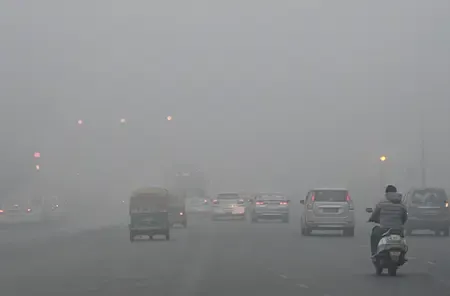
Delhi's air quality remained in the moderate category on Wednesday, though readings varied considerably across monitoring stations. IIT Delhi posted the highest reading at 249, while CRRI Mathura Road recorded 198, Jahangirpuri at 207 and Narela at 189. Several other stations — including Mandir Marg (150), Aya Nagar (135), Sirifort (171), IGI Airport T3 (155), Commonwealth Sports Complex (179) and Jawaharlal Nehru Stadium (173) — also reflected elevated levels, even as Pusa logged just 22 and Anand Vihar came in at 98.
As the monsoon fully withdraws and wind patterns shift with the onset of winter, air quality in Delhi is expected to come under increasing pressure in the weeks ahead — historically the start of the capital's annual pollution season.
Point of View
The moderate AQI readings at stations like IIT Delhi (249) and Jahangirpuri (207) are creeping toward the upper edge of 'moderate', and the shift to northwesterly winds historically accelerates the decline into 'poor' and 'very poor' territory by late October. Framing this week as simply 'dry and pleasant' risks underselling what is actually the opening chapter of Delhi's most dangerous seasonal health crisis.
NationPress
1 Oct 2026
Frequently Asked Questions
What is Delhi's weather forecast for the coming week?
The IMD has forecast clear skies and dry conditions across Delhi for the entire coming week, with no possibility of rain. Daytime temperatures will remain warm, but night temperatures are expected to dip gradually as northwesterly winds strengthen.
What is Delhi's AQI level today?
Delhi's air quality is in the moderate category on 1 October 2026, though readings vary sharply by station. IIT Delhi recorded the highest reading at 249, while Pusa logged just 22, highlighting uneven pollution distribution across the city.
Has the southwest monsoon withdrawn from Delhi?
Yes, the monsoon has effectively withdrawn from Delhi. The current withdrawal line runs through Punjab, Chandigarh, and parts of Uttar Pradesh and Rajasthan, and the IMD expects further retreat from these states within two to three days.
What is the national monsoon deficit for 2026?
The IMD has stated that the southwest monsoon season ended with a 13 per cent rainfall deficit nationally. This is significant for agricultural planning, particularly for the rabi sowing season that begins in October-November.
Which parts of India are receiving heavy rainfall despite Delhi's dry weather?
Heavy rainfall is forecast for Kerala, South Interior Karnataka, Tamil Nadu, Puducherry and Karaikal. Thunderstorms and gusty winds of 40–50 kmph are also expected over isolated parts of Kerala, Rayalaseema and Tamil Nadu, while northeastern states including Assam and Meghalaya face similar alerts.