Eastern Command Chief Calls on CM Himanta at Lok Sewa Bhawan
Synopsis
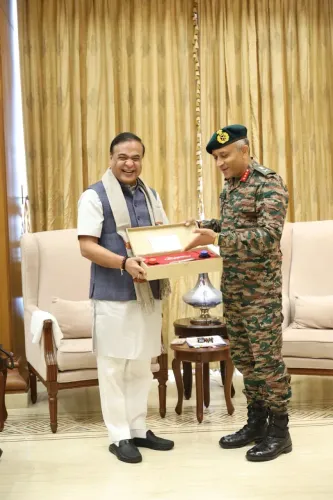
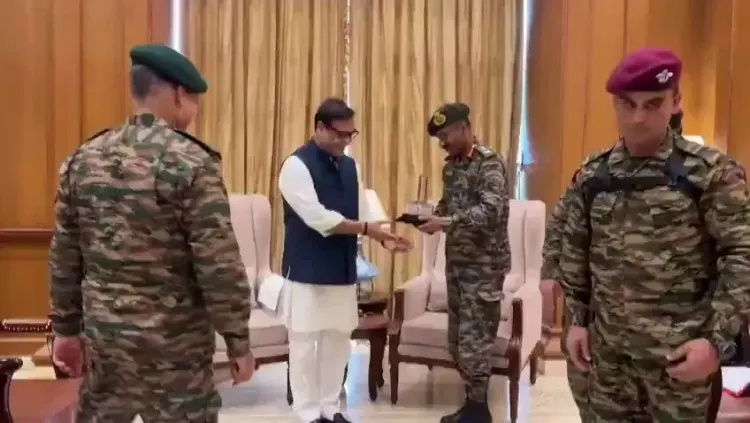
Lieutenant General V. M. Bhuvana Krishnan, GOC-in-C of the Indian Army's Eastern Command, met Assam Chief Minister Dr. Himanta Biswa Sarma at Lok Sewa Bhawan on 15 June 2026. The two reviewed security and disaster response coordination between the Army and the state government ahead of the monsoon season.
Key Takeaways
Bhuvana Krishnan , GOC-in-C of the Indian Army's Eastern Command , called upon CM Dr.
Himanta Biswa Sarma at Lok Sewa Bhawan, Guwahati on 15 June 2026 .
Discussions covered security and disaster response, reaffirming coordination between the Indian Army and the Government of Assam .
Eastern Command oversees India's eastern borders with China , Myanmar , and Bangladesh , and supports disaster relief across the Northeast.
The Indian Army has conducted flood relief operations in Assam since at least 2004 , with formal civil-military coordination strengthened after major floods in 2012 and 2017 .
The meeting aligns with the central government's Act East Policy emphasis on secure borders and resilient infrastructure in the Northeast .
Communities in flood-prone and border districts of Assam are the primary beneficiaries of sustained Army-state coordination.
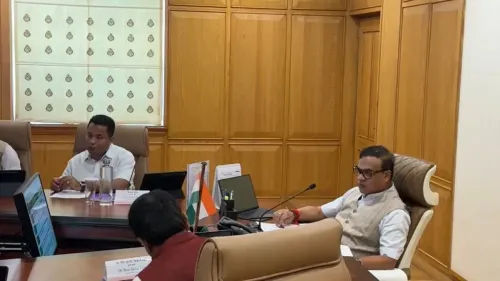
The Chief Minister's Office of Assam announced on Monday, 15 June 2026 that Lieutenant General V. M. Bhuvana Krishnan, General Officer Commanding-in-Chief of the Indian Army's Eastern Command, called upon Chief Minister Dr. Himanta Biswa Sarma at Lok Sewa Bhawan in Guwahati. The two leaders discussed security and disaster response, reaffirming civil-military coordination in the state.
Context
The meeting brought together the head of the Army's eastern operational command and the chief executive of Assam at the state secretariat. According to the official post, discussions centred on 'matters related to security and disaster response,' underscoring the dual mandate that shapes Army-state relations in the Northeast. Eastern Command, headquartered in Kolkata, is responsible for India's eastern borders with China, Myanmar, and Bangladesh, as well as disaster relief operations across the region.
Policy Backdrop
The Indian Army has conducted flood relief operations in Assam regularly since at least the 2004 Brahmaputra floods, with formal coordination mechanisms strengthened after major deluges in 2012 and 2017. Under the National Disaster Management Authority framework, Eastern Command and Northeast state governments have run joint civil-military disaster response exercises since guidelines were issued in 2013. Assam sits in a multi-hazard zone exposed to annual monsoon flooding, seismic activity, and residual internal security challenges, making sustained liaison between the state government and the Army a standing feature of governance.
The meeting also fits within the broader pattern of the central government's Act East Policy, which emphasises secure borders and resilient infrastructure across the Northeast. High-level meetings between the Chief Minister and the GOC-in-C, Eastern Command occur periodically to review operational readiness and resource-sharing arrangements ahead of critical periods such as the monsoon season.
Stakeholders and Impact
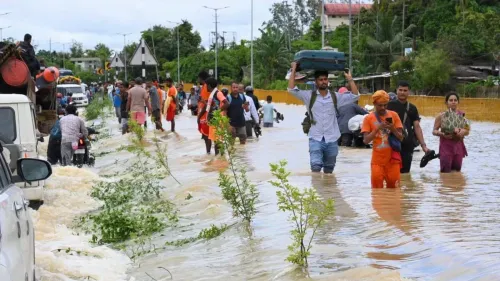
Communities in flood-prone and border districts of Assam stand to benefit most directly from improved Army-state coordination. The state's disaster management apparatus relies on Army logistics, engineering support, and airlift capacity during large-scale flood events when civilian infrastructure is overwhelmed. Reaffirming this coordination ahead of the monsoon season signals institutional preparedness for the communities most at risk.
Dr. Himanta Biswa Sarma, who has served as Chief Minister since May 2021, has consistently prioritised disaster preparedness and border security as twin pillars of his administration's agenda. The meeting with Lt. Gen. Bhuvana Krishnan reinforces that both the state government and the Army remain aligned on operational priorities in a strategically sensitive region.
What's Next
Observers will watch for any joint flood preparedness reviews or updated standard operating procedures issued by the state and Eastern Command ahead of the 2027 monsoon cycle. Army-assisted civic action projects in vulnerable districts of Assam could also see renewed momentum following the engagement. The meeting signals that civil-military cooperation in the Northeast remains active at the highest levels, with implications for both emergency response capacity and broader regional security architecture.
Point of View
Coming as Assam braces for its annual monsoon flood cycle. It reflects an institutionalised civil-military relationship in the Northeast that has deepened since the National Disaster Management Authority framework formalised joint exercises in 2013. For the Sarma administration, high-visibility engagement with the Army's eastern command reinforces its dual positioning on security and disaster governance. Broader regional dynamics — including active border management along the China and Myanmar frontiers — give such meetings a strategic dimension beyond domestic disaster preparedness.
NationPress
14 Sept 2026
Frequently Asked Questions
Why did the Eastern Command chief meet Assam CM Himanta Biswa Sarma?
Lieutenant General V. M. Bhuvana Krishnan, GOC-in-C of Eastern Command, met Chief Minister Dr. Himanta Biswa Sarma on 15 June 2026 at Lok Sewa Bhawan to discuss security matters and disaster response coordination between the Indian Army and the Government of Assam.
What is Eastern Command of the Indian Army?
Eastern Command is one of the Indian Army's six operational commands, headquartered in Kolkata. It is responsible for defence of India's eastern borders with China, Myanmar, and Bangladesh, and also provides disaster relief support across the Northeast.
What is Lok Sewa Bhawan in Assam?
Lok Sewa Bhawan is the state secretariat complex in Guwahati, housing key Government of Assam departments including home and disaster management. It is where senior officials and visiting dignitaries meet the Chief Minister.
How does the Indian Army help during Assam floods?
The Indian Army, primarily through Eastern Command, provides logistics, engineering support, and airlift capacity during large-scale floods in Assam. Formal civil-military coordination mechanisms have been in place since at least the 2004 Brahmaputra floods, strengthened after major deluges in 2012 and 2017.
What is the Act East Policy and how does it relate to Assam's security?
The Act East Policy is the central government's framework for deepening economic and strategic engagement with Southeast Asia, with the Northeast serving as the gateway. It emphasises secure borders and resilient infrastructure in states like Assam, making regular Army-state coordination a key component of its implementation.