Env Minister Yadav Chairs Delhi-NCR Pollution Review from Türkiye
Synopsis
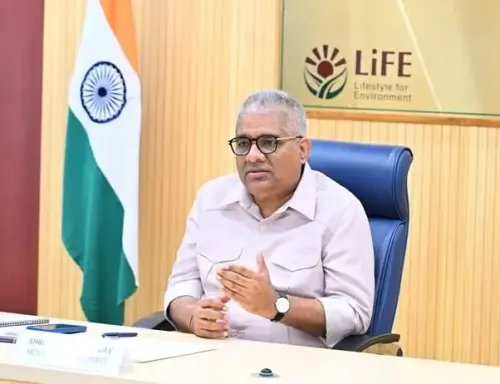
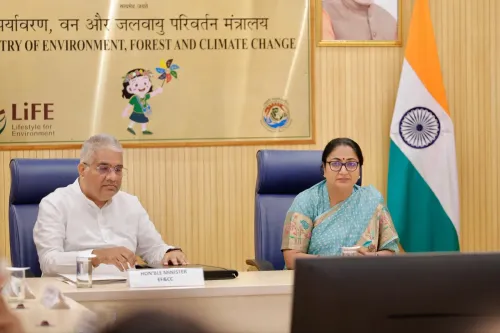
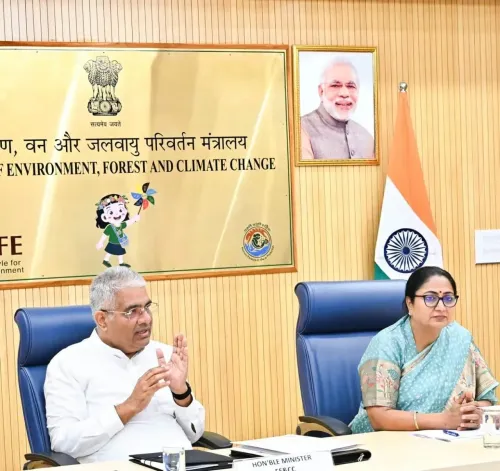
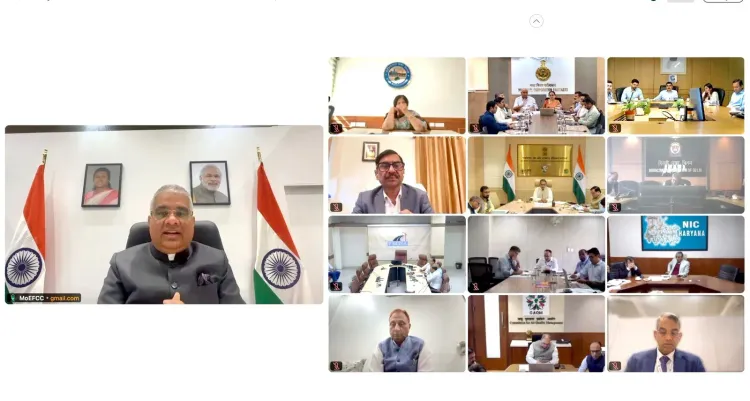
Union Environment Minister Bhupender Yadav chaired a virtual review meeting from Antalya, Türkiye, with civic bodies of Delhi, Ghaziabad, Noida, Gurugram and Faridabad, directing a zero-tolerance approach to air pollution violations and demanding ward-level accountability for time-bound enforcement across Delhi-NCR.
Key Takeaways
Union Environment Minister Bhupender Yadav chaired the review meeting virtually from Antalya, Türkiye on November 19, 2026 .
Civic bodies of Delhi, Ghaziabad, Noida, Gurugram and Faridabad were reviewed on their winter air pollution action plans.
Yadav directed all bodies to adopt a zero-tolerance approach towards air pollution violations.
Ward-level accountability of officials was explicitly called for, pushing enforcement responsibility down to the ground level.
The meeting is part of the Centre's institutionalised annual winter review process under the CAQM framework .
Compliance with GRAP stages and follow-up PIB releases from the civic bodies will be the next key indicators to watch.
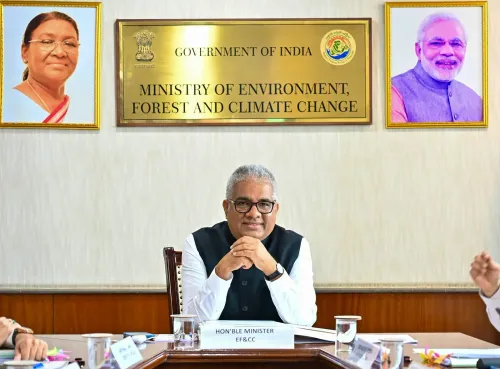
Even from Antalya, Türkiye, Union Environment Minister Bhupender Yadav did not let Delhi's winter air crisis wait — chairing a virtual review meeting on Thursday, November 19 with civic bodies across Delhi, Ghaziabad, Noida, Gurugram and Faridabad to assess the implementation of their winter action plans for air pollution control.
Yadav issued a sharp directive: a zero-tolerance approach towards air pollution violations across the Delhi-NCR region. He called for ward-level accountability of officials and demanded time-bound enforcement of pollution control measures as the region heads deeper into its most hazardous air months.
Ward-Level Officials in the Crosshairs
The meeting marks a pointed escalation in Central government pressure on local civic machinery. For years, Delhi-NCR's winter pollution crisis has exposed a gap between policy announcements and last-mile enforcement — dust from construction sites, open waste burning, and industrial violations persisting at the ward level even as emergency protocols activate at the top. By explicitly calling for ward-level accountability, Yadav is pushing the accountability chain down to where violations actually happen. This is consistent with a broader Central pattern: annual pre-winter reviews with NCR civic bodies have become institutionalised, targeting dust control, waste burning bans, and industrial compliance before the peak October-March pollution season sets in. The virtual format from a foreign location, rather than deferring the meeting, signals the priority the Ministry now places on real-time coordination.GRAP, CAQM and the Architecture Behind the Directive
The enforcement push sits within a layered policy architecture. The Commission for Air Quality Management in NCR and Adjoining Areas (CAQM), constituted under a 2021 Act of Parliament, is the statutory backbone — it replaced the earlier Supreme Court-appointed body and now coordinates air quality action across NCR states. When pollution spikes, the Graded Response Action Plan (GRAP) — first implemented in 2017 and revised annually — kicks in with staged restrictions: construction halts, odd-even vehicle schemes, and industrial shutdowns scaled to the Air Quality Index. The National Clean Air Programme (NCAP), launched in 2019, had set a target of a 20-30 percent reduction in particulate matter across 131 non-attainment cities including Delhi by 2024. Progress against that target has kept enforcement pressure on civic bodies a live political and administrative issue.Five Cities, One Directive, One Screen
That one minister, sitting in Türkiye, could simultaneously hold five municipal bodies across two states and the national capital to account speaks to how seriously the Centre is treating winter air coordination this year. The question now is whether that direction translates into verifiable compliance reports from the civic bodies — GRAP activation stages will provide the first measurable test as AQI readings rise through November and December. The next marker to watch: follow-up enforcement action reports from the five civic bodies and any fresh CAQM directives triggered by deteriorating AQI levels in the coming weeks.Point of View
Identifiable local officials. The real test will be whether this verbal directive produces verifiable compliance data before Delhi's AQI enters its most dangerous winter window.
NationPress
19 Nov 2026
Frequently Asked Questions
Why did Bhupender Yadav hold the Delhi pollution review from Türkiye?
Minister Yadav was in Antalya, Türkiye during the meeting and chose to chair it virtually rather than defer it, signalling the high priority the Ministry places on real-time winter pollution coordination with NCR civic bodies.
Which cities were part of the Delhi-NCR pollution review meeting?
The review covered civic bodies of Delhi, Ghaziabad, Noida, Gurugram and Faridabad — the five major urban centres of the National Capital Region.
What is GRAP and how does it relate to Delhi's winter pollution?
The Graded Response Action Plan (GRAP) is a staged emergency framework first implemented in 2017 that triggers restrictions such as construction halts and vehicle restrictions based on Delhi's Air Quality Index readings during winter months.
What is the CAQM and what role does it play in NCR air quality?
The Commission for Air Quality Management (CAQM) is a statutory body created under a 2021 Act of Parliament to coordinate air pollution control across NCR states, replacing the earlier Supreme Court-appointed EPCA.
What did Bhupender Yadav direct regarding ward-level officials?
Yadav specifically called for accountability of ward-level officials and time-bound enforcement of pollution control measures, pushing responsibility down to the ground level where violations most commonly occur.