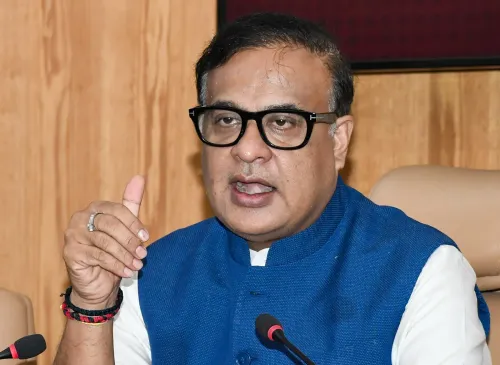
EU Lifts Assam Travel Advisory: CM Himanta Announces Milestone

Synopsis
The European Union has lifted its long-standing travel advisory on most parts of Assam, Chief Minister Himanta Biswa Sarma announced on 20 June 2026 during a Facebook Live. The move follows peace accords with Bodo groups and ULFA, and is expected to boost tourism and investment in the northeastern state.
Key Takeaways
The European Union has withdrawn its long-standing travel advisory covering most parts of Assam , effective June 2026 .
Himanta Biswa Sarma made the announcement during a Facebook Live session on 20 June 2026 .
The decision follows the 2020 Bodo Peace Accord and a 2023 tripartite peace agreement with the pro-talks faction of ULFA .
The withdrawal is expected to benefit Assam 's tourism, hospitality, and investment climate by removing an institutional barrier for European visitors.
Analysts will watch whether the US , UK , and Australia follow suit with revisions to their own travel advisories for Assam .
The Chief Minister's Office of Assam announced on Saturday, 20 June 2026 that the European Union has withdrawn its long-standing travel advisory on most parts of Assam, citing an improved security situation in the northeastern state. The announcement was made by Chief Minister Dr. Himanta Biswa Sarma during a Facebook Live session, marking what the state government described as a significant milestone.
Context
Assam has for decades been associated with insurgency movements, most notably the United Liberation Front of Asom (ULFA) and armed groups operating in the Bodoland Territorial Region. These conflicts prompted several Western nations and the European Union to issue travel advisories cautioning their citizens against visiting parts of the state. The EU advisory had been in place for an extended period, reflecting concerns about violence and instability in the region.
CM Himanta Biswa Sarma, who took office in May 2021, has consistently positioned improved law and order as a cornerstone of his administration. The withdrawal of the EU advisory represents external validation of the security gains the state government has claimed over recent years.
Policy Backdrop
The turnaround in Assam's security environment has been shaped by a series of landmark peace agreements. In 2020, the Bodo Peace Accord was signed, bringing an end to decades of armed conflict in the Bodoland Territorial Region. This was followed in 2023 by a tripartite peace agreement with the pro-talks faction of ULFA, which resulted in the surrender of cadres and the rollout of rehabilitation packages for former militants.
Across the Northeast more broadly, insurgency incidents have recorded a sustained decline since the mid-2010s, driven by a combination of security operations and negotiated settlements. International travel advisories from Western governments have been incrementally eased in step with improving violence metrics — a pattern that the EU's latest decision now reinforces for Assam specifically.
Stakeholders and Impact
The lifting of the advisory is expected to have a direct bearing on Assam's tourism and hospitality sectors. European travellers, who had been formally cautioned against visiting most parts of the state, now face no such institutional barrier, potentially opening a significant new source of inbound tourism to the state's tea gardens, wildlife sanctuaries, and river cruise circuits.
Local businesses, hoteliers, and tour operators stand to benefit from increased European footfall. The development also strengthens Assam's pitch to foreign investors, for whom travel advisories often serve as a proxy indicator of business environment risk. CM Sarma has in recent years hosted multiple investor summits, and the EU advisory withdrawal adds diplomatic weight to those efforts.
What's Next
Attention will now turn to whether other countries — including the United States, the United Kingdom, and Australia — follow the EU's lead and revise their own advisories for Assam. Each of these nations maintains independent travel advisory systems and conducts its own security assessments. A cascade of advisory withdrawals would significantly amplify the reputational and economic benefits for the state.
The Assam tourism department is likely to use the EU decision as a centrepiece of forthcoming promotional campaigns targeting European markets. Tracking actual European visitor arrivals in the months ahead will be the clearest measure of whether the advisory change translates into tangible economic gains for the state.
Point of View
Arriving at a time when Assam is actively courting foreign investment and tourism. For a state whose insurgency-era image long overshadowed its economic potential, a formal signal from a major multilateral bloc carries outsized diplomatic and promotional value. The announcement also fits a broader pattern in which Northeastern states leverage peace-process milestones to reframe their identity for global audiences. The real test, however, will be whether improved perceptions translate into measurable increases in European arrivals and foreign direct investment over the next two to three years.
NationPress
19 Sept 2026
Frequently Asked Questions
Why did the EU issue a travel advisory for Assam in the first place?
The EU had issued travel advisories for most parts of Assam due to decades of armed insurgency by groups such as ULFA and Bodo militants, which posed safety risks to foreign visitors. The advisories reflected sustained violence and instability in the region.
What peace agreements contributed to the EU lifting the Assam travel advisory?
Two key agreements are credited: the 2020 Bodo Peace Accord, which ended conflict in the Bodoland Territorial Region, and a 2023 tripartite peace agreement with the pro-talks faction of ULFA that led to cadre surrenders and rehabilitation packages.
What does the EU travel advisory withdrawal mean for tourists visiting Assam?
European citizens no longer face an institutional caution from the EU against travelling to most parts of Assam, making it easier for tour operators and travellers to plan trips to the state without a formal risk flag from their governments.
Will other countries like the US or UK also remove their Assam travel advisories?
That is not confirmed yet. The US, UK, and Australia maintain independent advisory systems and conduct separate security assessments. The EU decision may prompt reviews, but no announcements from those governments have been reported.
How does this affect investment in Assam?
Travel advisories are often used by foreign companies as a proxy indicator of business environment risk. The EU withdrawal strengthens Assam's case in investor outreach and could reduce perceived risk for European businesses considering the state.