Himachal Pradesh climate model wins praise from ex-UN Environment chief Solheim
Synopsis
Former UNEP chief Erik Solheim's praise for Himachal Pradesh isn't just diplomatic goodwill — it spotlights two concrete programmes that could redefine how India's hill states handle forest fires and farmer incomes. A biochar initiative turning fire-hazard pine needles into carbon credits, and a project backing 1.5 lakh farmers, make Himachal a rare case where climate finance and rural livelihood actually converge.
Key Takeaways
Former UNEP Executive Director Erik Solheim praised Himachal Pradesh's climate model on 3 July in a post on X after visiting the state.
The HIM EVERGREEN Project , inaugurated this week, will support more than 1.5 lakh smallholder farmers in climate-smart agriculture.
The project could generate over $60 million in additional income for farming communities through carbon markets.
An indigenous biochar programme will process around 9,000 tonnes of pine needles annually into biochar, bio-oil, and wood vinegar via a Forest Department–ProClime partnership.
According to Forest Department records, 22% — or 8,267 sq km — of Himachal's forests are fire-prone, with pine needles a leading cause of summer blazes.
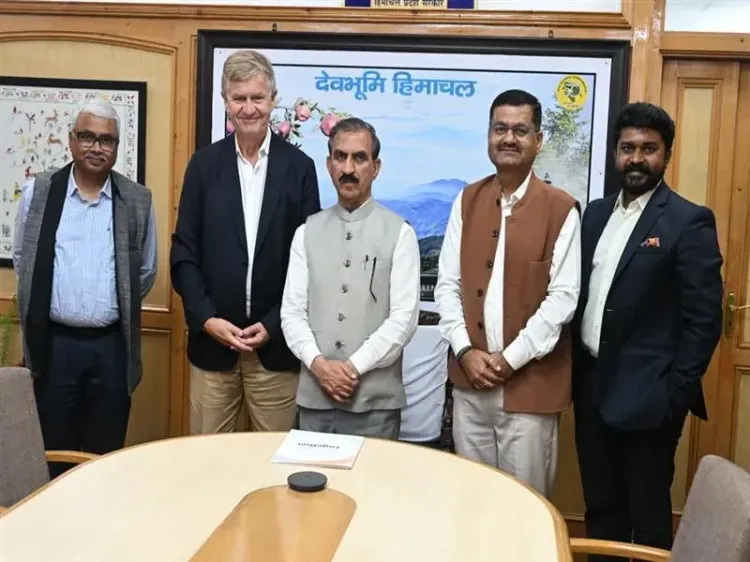
Former UN Environment Programme (UNEP) Executive Director Erik Solheim on Friday, 3 July praised Himachal Pradesh for showing how climate action and economic prosperity can advance together, saying the state is opening new income streams for farmers while safeguarding the fragile Himalayan ecosystem. Solheim, who also served as UN Under-Secretary-General, made the remarks in a post on X following a visit to the state.
What Impressed Solheim
In his post, Solheim said what struck him most was Himachal Pradesh's resolve to ensure that climate initiatives deliver tangible benefits to ordinary people. He described the state's programmes as the kind of environmental leadership needed to simultaneously address ecological challenges and improve rural livelihoods.
The HIM EVERGREEN Project
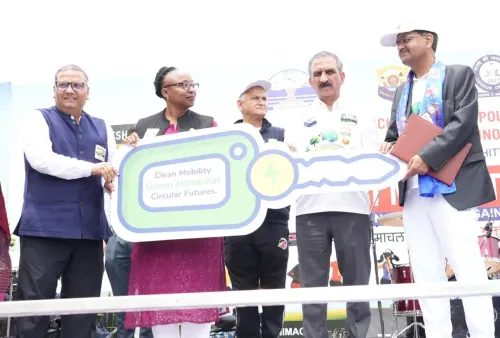
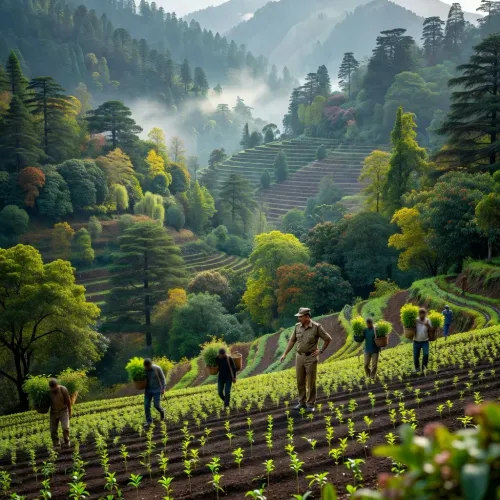
Among the flagship initiatives Solheim highlighted is the HIM EVERGREEN Project, inaugurated this week. The project will support more than 1.5 lakh smallholder farmers in adopting boundary plantations and climate-smart agricultural practices. Over the coming decades, it has the potential to generate more than $60 million in additional income for farming communities through South Asia's leading carbon company.
Turning Pine Needles Into an Opportunity
A second initiative that drew Solheim's attention is an indigenous biochar programme that will convert around 9,000 tonnes of pine needles per year into biochar, bio-oil, and wood vinegar. The programme is being implemented through a partnership between local communities, the Himachal Pradesh Forest Department, and ProClime, and is designed to generate high-integrity carbon credits.
The significance of this project is hard to overstate. Forest floors blanketed by pine needles are one of the primary drivers of devastating forest fires in the region. According to Forest Department records, 22 per cent — or 8,267 sq km — of the state's total forest area is classified as fire-prone. The bulk of these fires break out in pine forests during peak summer, when shed needles, saturated with turpentine oil, become highly inflammable. 'It's turning a problem into an opportunity,' Solheim wrote.
Broader Significance and What Comes Next
Solheim said he looks forward to seeing these projects scale across India and beyond. This comes amid growing international pressure on Himalayan states to balance development with ecological preservation — a tension that has often pitted forest communities against conservation mandates. Himachal Pradesh's approach, which routes carbon revenue directly to farmers and local communities, offers a replicable model for other hill states grappling with similar fire-risk and livelihood challenges.
With carbon markets expanding and India committed to ambitious net-zero targets, the success of these pilots could influence national forest policy and the design of future climate finance instruments.
Point of View
But the real story is structural: Himachal Pradesh is attempting to solve a fire-management crisis and a farmer-income deficit with a single carbon-market mechanism. That is genuinely novel. The risk is that carbon credit markets remain volatile and opaque — if prices fall or verification frameworks tighten, the $60 million income projection for 1.5 lakh farmers could shrink considerably. Mainstream coverage tends to celebrate the headline numbers; what deserves scrutiny is the governance of the ProClime partnership and whether revenue actually reaches smallholders rather than intermediaries. India's broader climate finance architecture will be watching this pilot closely.
NationPress
2 Oct 2026
Frequently Asked Questions
What did Erik Solheim say about Himachal Pradesh's climate efforts?
Former UNEP Executive Director Erik Solheim praised Himachal Pradesh in a post on X on 3 July, saying the state demonstrates how climate action can deliver tangible economic benefits to people. He highlighted the HIM EVERGREEN Project and a pine-needle biochar programme as models of leadership that link environmental protection with rural livelihoods.
What is the HIM EVERGREEN Project in Himachal Pradesh?
The HIM EVERGREEN Project, inaugurated in early July, will support more than 1.5 lakh smallholder farmers in adopting boundary plantations and climate-smart agricultural practices. Through South Asia's leading carbon company, it has the potential to generate over $60 million in additional income for farming communities over the coming decades.
How does the biochar programme address forest fires in Himachal Pradesh?
The programme converts around 9,000 tonnes of pine needles per year — a leading cause of forest fires — into biochar, bio-oil, and wood vinegar, generating high-integrity carbon credits in the process. It is implemented through a partnership between local communities, the Himachal Pradesh Forest Department, and ProClime.
How serious is the forest fire risk in Himachal Pradesh?
According to Forest Department records, 22 per cent — or 8,267 sq km — of Himachal Pradesh's total forest area is classified as fire-prone. Most fires occur in pine forests during peak summer, when shed pine needles, rich in turpentine oil, become highly inflammable.
Why does Himachal Pradesh's climate model matter for the rest of India?
Himachal Pradesh's approach routes carbon revenue directly to farmers and local communities, offering a replicable model for other hill states facing similar fire-risk and livelihood pressures. Solheim said he hopes to see these projects scale across India and beyond, and their success could influence national forest policy and climate finance design.