Union Education Ministry Discusses the Role of Indian Knowledge Systems in Modern Governance and Education
Synopsis
In a week-long session, the Union Education Ministry explored the vital role of Indian Knowledge Systems in shaping contemporary education and governance. Experts emphasized the integration of traditional wisdom into modern practices, aiming for a more sustainable future.
Key Takeaways
Indian Knowledge Systems are crucial for modern education and governance.
The Capacity Building Commission under Mission Karmayogi offers online courses to improve citizen-centric governance.
The event celebrated the fifth anniversary of Mission Karmayogi .
Experts emphasized integrating traditional wisdom into contemporary practices.
Mohan Raghavan highlighted the transformative potential of these systems in higher education.
New Delhi, April 9 (NationPress) The significance of Indian Knowledge Systems in modern education, research, and governance was the central theme of a week-long dialogue led by experts from the Union Education Ministry, as reported on Thursday.
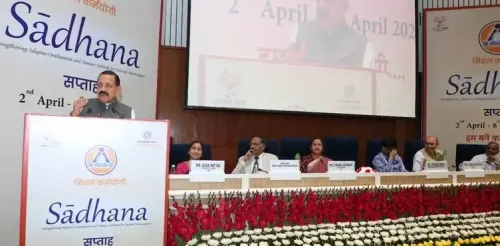
Syed Ekram Rizvi, the Joint Secretary (Administration) in the Department of Higher Education, emphasized the role of the Capacity Building Commission under Mission Karmayogi, which offers a variety of online courses focused on improving knowledge, skills, and capacity for governance that prioritizes citizens.
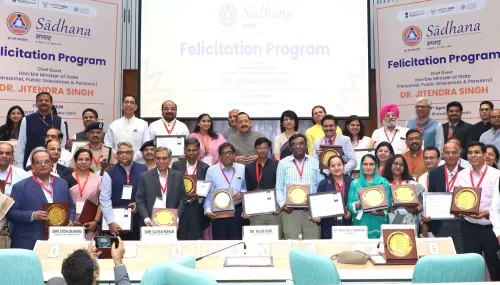
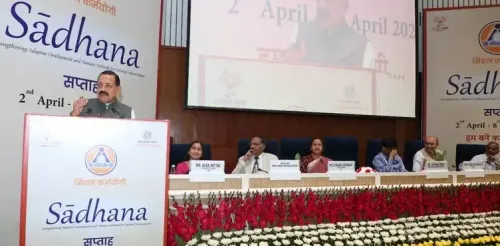
This interactive session was arranged by the Department on Indian Knowledge Systems as part of the Strengthening Adaptive Development and Humane Aptitude for National Advancement (Sadhana) Saptah 2026, observed from April 2 to 8, according to a statement.
The week also celebrated the Foundation Day of the Capacity Building Commission (CBC) and marked five years of Mission Karmayogi, a pivotal initiative aimed at enhancing citizen-focused governance in India.
Experts discussed how India's profound intellectual heritage can inform contemporary problem-solving, innovation, and policy-making.
Participants highlighted the ongoing importance of Indian Knowledge Systems in creating comprehensive educational frameworks and the need to integrate traditional wisdom into governance strategies for sustainable national progress.
Senior officials from the Ministry of Education's Department of Higher Education attended the session.
By uniting thought leaders and practitioners, the Department reaffirmed its dedication to fostering a knowledge-centric, adaptive, and humane governance framework under Mission Karmayogi.
The session aimed to promote structured peer learning and meaningful discussions regarding the relevance of Indian Knowledge Systems in modern education, research, and governance.
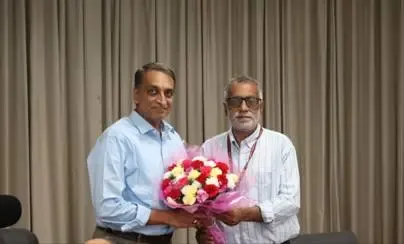
A key highlight was the presentation by Mohan Raghavan, Associate Professor at IIT Hyderabad's Department of Biomedical Engineering. As the founding Head of the Department of Heritage Science and Technology and a contributor to the field of Artificial Intelligence, Raghavan shared insights from his interdisciplinary research that connects technology, science, and India's scholarly traditions.
He pointed out that while the market potential of Indian Knowledge Systems is considerable, its true value lies in its transformative influence on higher education.
He stressed that Indian Knowledge Systems should not be classified as a standalone discipline but rather as a multidisciplinary framework that can enhance various academic fields, including science, engineering, humanities, and management.
Point of View
Aiming for a more holistic approach to national development.
NationPress
10 Sept 2026
Frequently Asked Questions
What was the purpose of the session organized by the Union Education Ministry?
The session aimed to discuss the relevance of Indian Knowledge Systems in enhancing modern education, research, and governance.
Who highlighted the role of the Capacity Building Commission?
Syed Ekram Rizvi, Joint Secretary (Administration) in the Department of Higher Education, emphasized the commission's role in offering online courses for citizen-centric governance.
What is Mission Karmayogi?
Mission Karmayogi is India's initiative designed to improve citizen-centric governance, marking its fifth anniversary during the discussions.
Who was a key speaker at the event?
Mohan Raghavan, Associate Professor at IIT Hyderabad, was a key speaker, sharing insights from his interdisciplinary work.
How can Indian Knowledge Systems benefit modern education?
Indian Knowledge Systems can enrich various academic disciplines by providing a multidisciplinary framework that enhances learning in fields like science, engineering, and humanities.