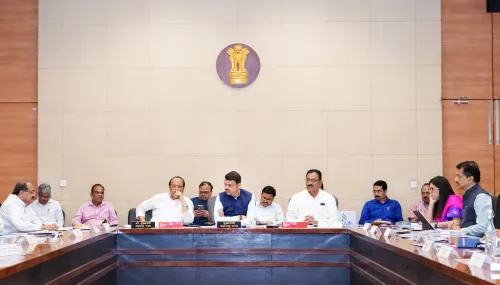
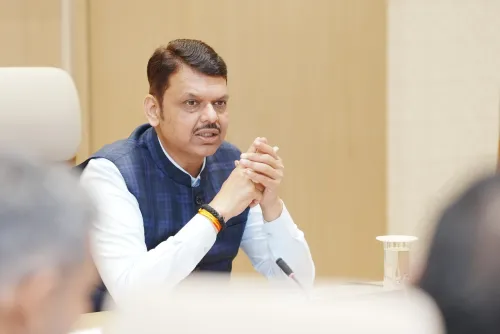
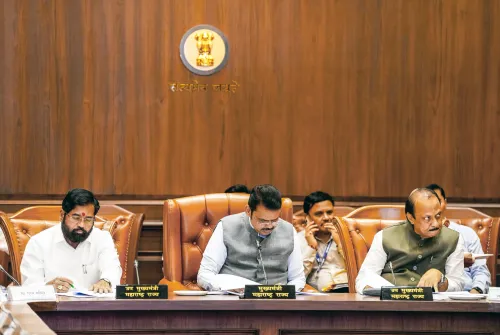
CM Fadnavis chairs first MAHACARE board meet, signs MoU with Tata Memorial
Synopsis
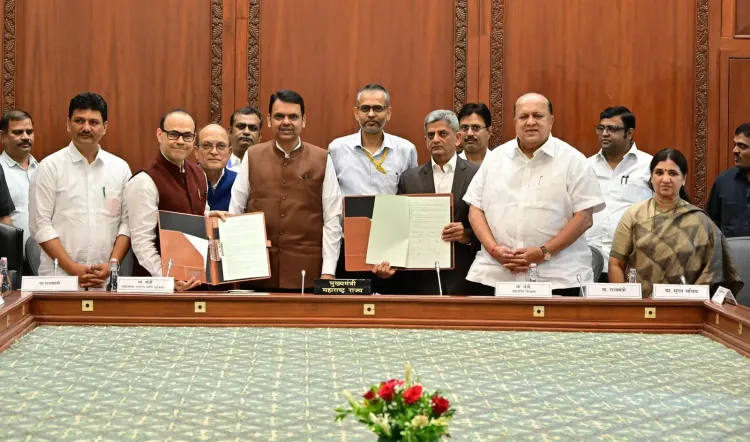
Chief Minister Devendra Fadnavis chaired the first board meeting of Maharashtra's cancer foundation, MAHACARE, on 16 July 2026. An MoU was signed with Tata Memorial Centre to develop comprehensive cancer hospitals and research programmes across Maharashtra, with TMC serving as the technical and knowledge partner.
Key Takeaways
CM Devendra Fadnavis chaired the inaugural board meeting of the Maharashtra Cancer Care, Research and Education Foundation (MAHACARE) on 16 July 2026 .
An MoU was signed between MAHACARE Foundation and Tata Memorial Centre (TMC) to plan, develop and operate a comprehensive cancer hospital and research programme in Maharashtra.
Tata Memorial Centre will serve as the Technical and Knowledge Partner, providing expertise in oncology services, training, research, infrastructure planning and capacity building.
Minister Prakash Abitkar , MoS Madhuri Misal and MAHACARE CEO Dr.
Ajay Chandanwale were present at the meeting.
The partnership aligns with TMC's National Cancer Grid model, which has networked oncology centres across India since 2012 .
The initiative aims to decentralise advanced cancer care beyond Maharashtra's metros to underserved districts.
Maharashtra Chief Minister Devendra Fadnavis chaired the inaugural meeting of the board of directors of the Maharashtra Cancer Care, Research and Education Foundation (MAHACARE) on Thursday, 16 July 2026, during which the foundation signed a landmark Memorandum of Understanding with the Tata Memorial Centre (TMC) to build a comprehensive cancer hospital and research programme across the state.
Context
The Chief Minister's Office of Maharashtra announced that the MoU establishes 'a collaborative framework between MAHACARE Foundation and Tata Memorial Centre for the planning, development, establishment, operation and advancement of a comprehensive Cancer Hospital and Cancer Research Program in the State of Maharashtra.' Under the agreement, Tata Memorial Centre will serve as the 'Technical and Knowledge Partner' to provide guidance, expertise and support in oncology services, training, research, infrastructure planning and capacity building.
The meeting was attended by Minister Prakash Abitkar, Minister of State Madhuri Misal, and Dr. Ajay Chandanwale, CEO of the MAHACARE Foundation, along with senior government officials.
Policy Backdrop
Tata Memorial Centre, a premier national cancer institute operating under the Department of Atomic Energy, has long been a cornerstone of India's oncology infrastructure. In 2012, TMC launched the National Cancer Grid — a network connecting oncology centres across India for collaborative care, training and research — making it a natural institutional partner for state-level cancer expansion programmes.
Maharashtra's decision to anchor MAHACARE's technical framework around TMC mirrors similar partnerships the institute has undertaken with other states in recent years, reflecting a broader national push to decentralise high-quality cancer care beyond major metropolitan centres.
Stakeholders and Impact
The agreement is expected to directly benefit cancer patients across Maharashtra, particularly those in districts that currently lack access to advanced oncology services and must travel to Mumbai or other metros for treatment. By embedding TMC's expertise into a dedicated state foundation, the arrangement positions Maharashtra to build capacity in oncology training and research at a regional level.
Oncology researchers and medical professionals in the state stand to gain through structured training modules and knowledge-transfer programmes that the MoU envisions. The creation of a dedicated state foundation — MAHACARE — also signals institutional commitment beyond a single hospital project, providing a governance structure for long-term cancer care planning.
What's Next
The immediate priorities following the MoU signing will be site selection, infrastructure planning and the rollout of the first training and research modules in collaboration with Tata Memorial Centre. The MAHACARE Foundation's newly constituted board, now formally activated under CM Fadnavis's chairmanship, will oversee these milestones. How swiftly the partnership translates into ground-level hospital construction and patient services will determine whether Maharashtra's model becomes a template for other states seeking to expand equitable cancer care.
Point of View
Maharashtra is leveraging an established national centre of excellence to fast-track credibility and capacity. This approach reduces the risk of quality gaps that have plagued standalone state hospital projects in the past. The move also fits a pattern of state governments using public-private and centre-state knowledge partnerships to signal healthcare ambition ahead of electoral cycles. The real test will be whether the foundation's board translates this framework agreement into commissioned facilities within a defined timeline.
NationPress
15 Oct 2026
Frequently Asked Questions
What is the MAHACARE Foundation?
The Maharashtra Cancer Care, Research and Education Foundation (MAHACARE) is a state government entity created to plan, establish and operate comprehensive cancer hospitals and research programmes across Maharashtra. Its board held its first meeting on 16 July 2026 under the chairmanship of CM Devendra Fadnavis.
What did the MAHACARE and Tata Memorial Centre MoU agree to?
The MoU establishes a collaborative framework for planning, developing and operating a comprehensive cancer hospital and cancer research programme in Maharashtra. Tata Memorial Centre will act as the Technical and Knowledge Partner, offering guidance in oncology services, training, research, infrastructure planning and capacity building.
What is Tata Memorial Centre and why is it significant?
Tata Memorial Centre is India's premier cancer treatment and research institute, operating under the Department of Atomic Energy. It launched the National Cancer Grid in 2012 to network oncology centres nationwide, making it a leading authority on cancer care infrastructure and an experienced partner for state-level projects.
Who attended the first MAHACARE board meeting?
The meeting was chaired by CM Devendra Fadnavis and attended by Minister Prakash Abitkar, Minister of State Madhuri Misal, MAHACARE CEO Dr. Ajay Chandanwale, and senior government officials.
How will the MAHACARE-TMC partnership benefit cancer patients in Maharashtra?
The partnership aims to establish comprehensive cancer hospitals and research programmes across Maharashtra, with the goal of bringing advanced oncology services to districts currently underserved, reducing the need for patients to travel to Mumbai or other metros for treatment.