CM Fadnavis Launches Tribal Cluster Scheme, Pledges ₹25,000 Cr
Synopsis
Maharashtra CM Devendra Fadnavis launched the Janjatiya Sankul Vikas Pariyojana in Mumbai on October 1, pledging ₹25,000 crore for tribal development through a cluster-based convergence model targeting education, healthcare, livelihood, and curbing migration.
Key Takeaways
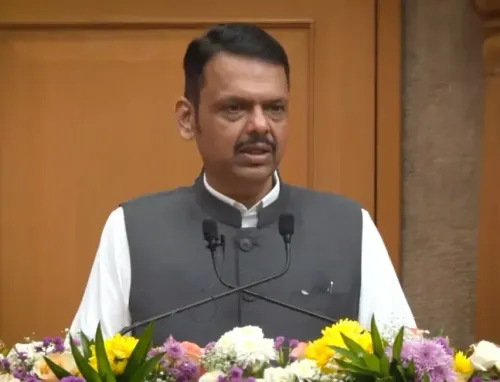
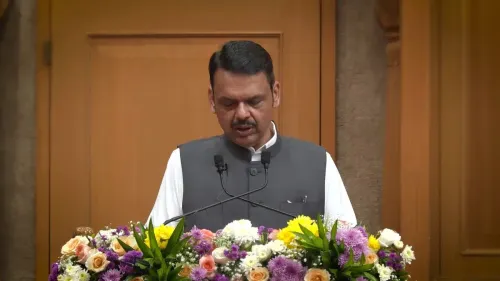
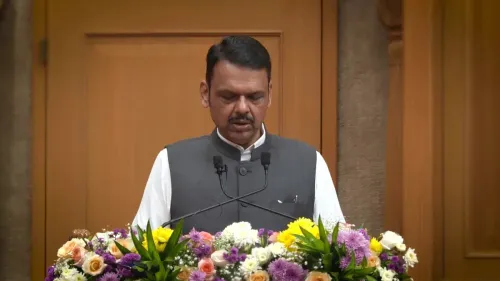
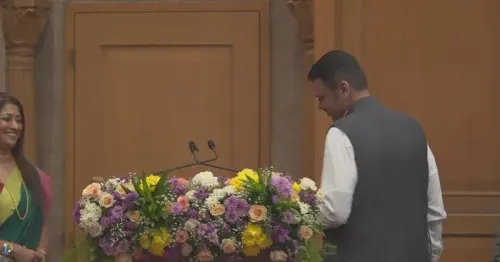
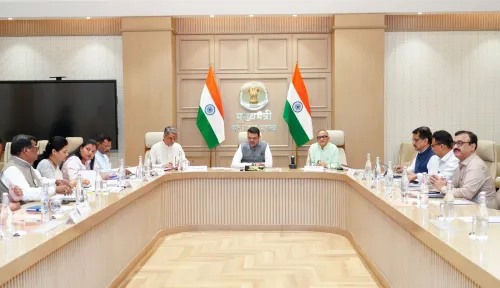
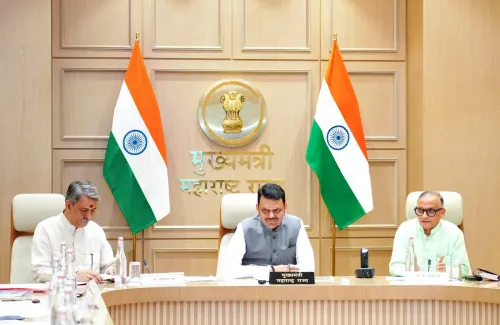
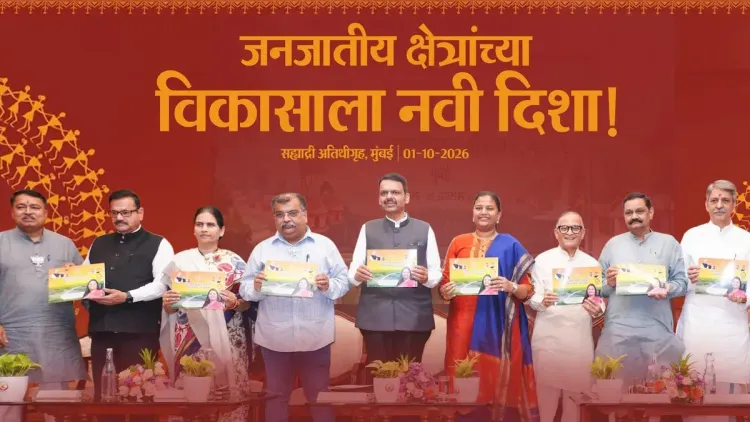
Maharashtra CM Devendra Fadnavis attended the launch of the Janjatiya Sankul Vikas Pariyojana in Mumbai on October 1, 2026 .
Maharashtra has allocated ₹25,000 crore for tribal development under this initiative.
The programme shifts strategy from individual-village targeting to cluster-based convergence of central and state government schemes.
Key pillars include village-level employment generation , reducing rural migration , and improving access to education and healthcare.
Nandurbar district's recent agricultural gains were cited by Fadnavis as proof the model is delivering results.
Senior leaders including BJP State President Ravindra Chavan , Minister Dr.
Ashok Uike , and BJP National VP Bharatitai Pawar were present at the event.
A ₹25,000 crore tribal development commitment took centre stage in Mumbai on Thursday, October 1, 2026, as Maharashtra Chief Minister Devendra Fadnavis attended the launch of the Janjatiya Sankul Vikas Pariyojana — a cluster-based programme designed to carry integrated government services directly to tribal villages and arrest the wave of rural-to-urban migration that has long disrupted family life in the state's hinterlands.
Clusters over individual villages — the shift in strategy
The core design of the Janjatiya Sankul Vikas Pariyojana marks a deliberate departure from the conventional scheme architecture. Rather than targeting isolated villages, the initiative groups settlements into clusters, allowing convergence of central and state resources — education, healthcare, and livelihood programmes — at a single nodal point. CM Fadnavis argued that this pooling effect is what turns government spending into 'deep, lasting impact on the ground.'
The Chief Minister was direct about the migration problem: village-level employment, he said, is the single most effective lever to keep families rooted, keep children in school, and keep communities within reach of basic healthcare. The logic is tight — curb migration, and three social outcomes follow simultaneously.
Nandurbar's farm gains cited as early proof
Fadnavis pointed to Nandurbar — one of Maharashtra's most predominantly tribal districts — as evidence that the model is already delivering. 'The recent agricultural successes in Nandurbar prove that this project is working well,' he said, signalling that the cluster approach has moved beyond pilot-stage theory and is producing measurable results in the field.
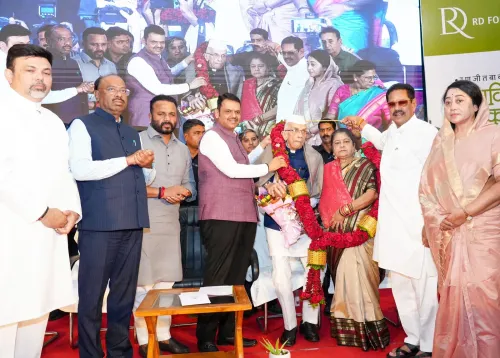
The programme has drawn together a notable political and civil-society coalition. Present at the Mumbai event were BJP Rashtriya Sanghatak V. Satish, BJP Maharashtra State President and MLA Ravindra Chavan, Minister Dr. Ashok Uike, BJP National Vice President Bharatitai Pawar, MLA Yogesh Sagar, and Dr. Gajanan Dange, Founder and President of YOJAK Center for Research and Strategic Planning for Sustainable Development.
The ₹25,000 crore question: reaching genuine beneficiaries
Headline allocations often mask the harder challenge of delivery. Fadnavis acknowledged this directly, stressing that the focus is on ensuring 'resources reach genuine beneficiaries' and that implementation is 'properly monitored.' Sustainable employment generation — not one-time infrastructure spends — is framed as the long-term anchor of the plan.
The Maharashtra Government, the Chief Minister said, 'will stand firmly behind the action plan prepared for this initiative.' With ₹25,000 crore on the table and a cluster-convergence model now formally launched, the pressure to show replicable results beyond Nandurbar will only intensify.
Point of View
000 crore headline figure gives the Maharashtra government a visible stake in tribal country ahead of future electoral cycles in districts like Nandurbar and Gadchiroli. The emphasis on 'genuine beneficiaries' and 'proper monitoring' signals awareness that past tribal allocations have faced credibility gaps at the last mile. Whether the cluster model resolves those gaps, or simply repackages them, will be the real test.
NationPress
1 Oct 2026
Frequently Asked Questions
What is the Janjatiya Sankul Vikas Pariyojana in Maharashtra?
The Janjatiya Sankul Vikas Pariyojana is a Maharashtra government programme that groups tribal villages into clusters to deliver converged central and state government schemes covering education, healthcare, and livelihood, with the aim of reducing migration and generating sustainable local employment.
How much money has Maharashtra allocated for tribal development?
Maharashtra has allocated ₹25,000 crore for tribal development, which will be channelled through the Janjatiya Sankul Vikas Pariyojana and related initiatives, with a stated focus on ensuring funds reach genuine beneficiaries.
What did CM Fadnavis say about Nandurbar and the tribal scheme?
CM Devendra Fadnavis cited recent agricultural successes in Nandurbar district as evidence that the Janjatiya Sankul Vikas Pariyojana is already delivering results on the ground.
How does the cluster approach differ from older tribal development schemes?
Unlike previous schemes that targeted individual villages in isolation, the cluster model aggregates groups of villages to enable convergence of multiple government programmes, making resource deployment more efficient and impact easier to monitor.
Who attended the Janjatiya Sankul Vikas Pariyojana launch in Mumbai?
The event was attended by BJP Rashtriya Sanghatak V. Satish, BJP Maharashtra State President Ravindra Chavan, Minister Dr. Ashok Uike, BJP National Vice President Bharatitai Pawar, MLA Yogesh Sagar, and Dr. Gajanan Dange of YOJAK Center, among other dignitaries.