Drug-free Maharashtra: CM Fadnavis orders fast-track courts, school curriculum push
Synopsis
Maharashtra CM Devendra Fadnavis has moved beyond political rhetoric on drugs — ordering fast-track NDPS courts, embedding anti-drug lessons in school curricula for classes 7 to 10, and amending MCOCA to classify large-scale trafficking as organised crime. With 17,611 cases and ₹1,340 crore in seizures already logged in 2025, the state is betting that simultaneous pressure on supply chains, the judiciary, and young minds can shift the needle.
Key Takeaways
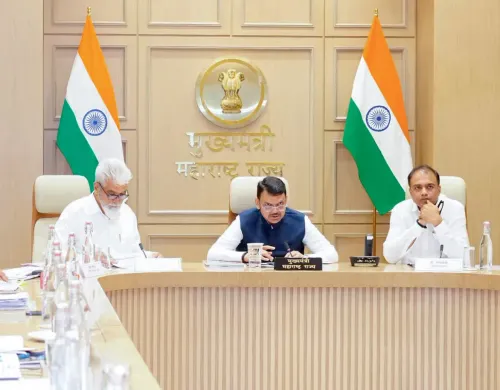
CM Devendra Fadnavis chaired a high-level anti-drug review meeting in Mumbai on 16 July , issuing directives across education, law, healthcare, and policing.
Anti-drug awareness will be integrated into school curricula for classes 7 to 10 ; school and college campuses must be declared drug-free zones.
Special fast-track courts will be set up for NDPS Act trials; prosecutors will receive specialised training to improve conviction rates.
MCOCA, 1999 has been amended to treat large-scale drug trafficking as organised crime, enabling property seizure and making bail harder to obtain.
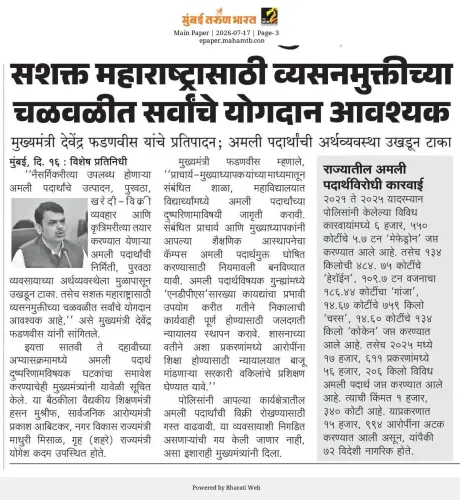
In 2025 , Maharashtra Police registered 17,611 cases , seized 56,206 kg of narcotics worth ₹1,340 crore , and arrested 15,994 accused including 72 foreign nationals .
Police officers showing exemplary anti-drug performance will receive a 3% salary advance ; those found complicit in drug crimes face dismissal.
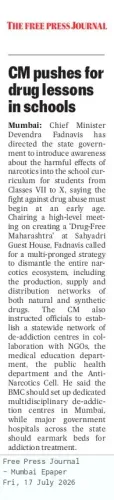
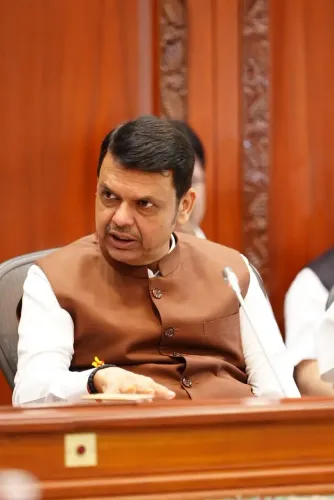
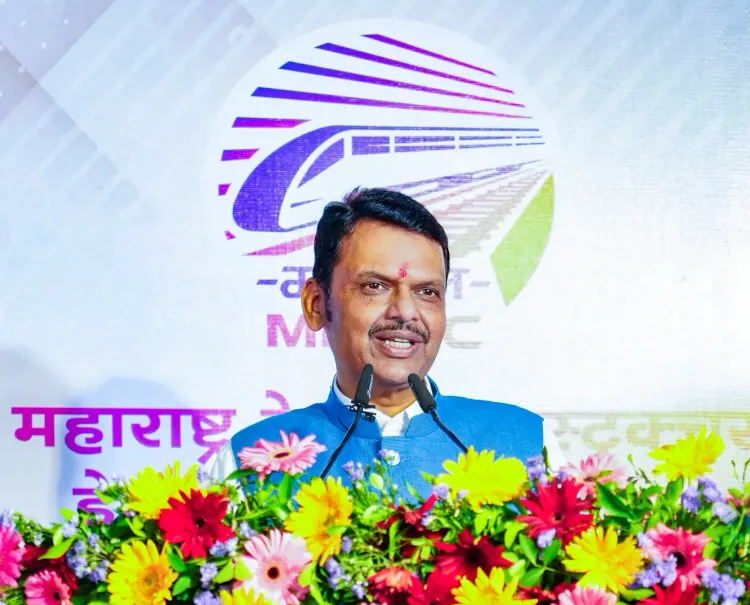
Maharashtra Chief Minister Devendra Fadnavis on Thursday, 16 July called for a broad-based public movement to make Maharashtra drug-free, chairing a high-level review meeting in Mumbai where he issued sweeping directives spanning education, law enforcement, healthcare, and the judiciary. The push comes as official data shows the state registered 17,611 narcotics cases in 2025, with seizures worth ₹1,340 crore.
Key Directives from the Review Meeting
Fadnavis directed authorities to dismantle the illicit economy surrounding natural and synthetic drug manufacturing, supply, and trade. He announced that anti-drug awareness will be embedded into the school curriculum for classes 7 to 10, and that school principals and college directors must formally declare their campuses drug-free zones.
The six-pillar framework outlined by Fadnavis covers curriculum integration, campus policies, de-addiction networks, healthcare provisioning, legal measures, and incentive schemes for informants and exemplary police personnel.
De-Addiction Infrastructure and Healthcare Measures
A state-wide network of de-addiction centres is to be established in coordination with NGOs, the Medical Education Department, the Public Health Department, and the Anti-Narcotics Cell. The Brihanmumbai Municipal Corporation (BMC) has been directed to set up multidisciplinary centres across Mumbai, while government hospitals will reserve dedicated beds for de-addiction treatment.
Fast-Track Courts and Legal Reforms
Special fast-track courts will be established to expedite trials under the Narcotic Drugs and Psychotropic Substances (NDPS) Act. Prosecutors will undergo specialised training aimed at securing higher conviction rates — a recognition that case quality, not just case volume, determines deterrence.
Notably, the Maharashtra Control of Organised Crime Act (MCOCA), 1999, has been amended to classify large-scale drug trafficking as organised crime, making bail harder to obtain and enabling property seizure. Stricter laws have also been proposed against adults who use minors as drug couriers, and standard operating procedures have been initiated to deport foreign nationals running drug rings.
Police Accountability and Reward Scheme
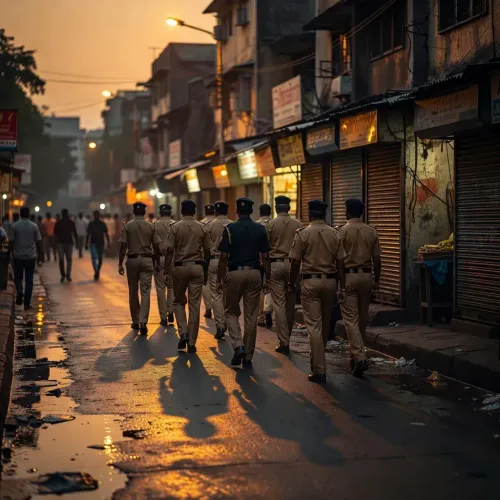
Police have been instructed to track peddlers, map supply networks, and intensify patrols in high-risk zones. A citizen reward scheme will be launched for confidential tip-offs that lead to drug busts. Officers demonstrating exemplary performance will receive a 3 per cent salary advance and special awards, while investigating officers may use air travel under operational requirements.
Fadnavis has also made clear that accountability runs both ways: police personnel found involved in drug crimes will face dismissal from service. He reportedly reviews narcotics cases personally on a daily basis and has directed anti-narcotics squads to be constituted at every police station.
Scale of the Problem: 2025 Data
According to government figures, Maharashtra Police registered 17,611 cases in 2025, seizing 56,206 kg of narcotics valued at ₹1,340 crore. A total of 15,994 accused were arrested, among them 72 foreign nationals. This is the backdrop against which Fadnavis had earlier, during the Monsoon Session, announced zero-tolerance measures against drug syndicates — Thursday's directives translate that political commitment into administrative action.
With fast-track courts, curriculum reform, and MCOCA amendments now in motion, the effectiveness of Maharashtra's anti-drug drive will ultimately be measured not by seizure weights but by whether conviction rates rise and whether de-addiction infrastructure reaches those who need it most.
Point of View
MCOCA amendments, fast-track courts, and police incentives — in a way that signals genuine administrative intent rather than seasonal optics. But the real stress test is implementation: Maharashtra has had anti-narcotics frameworks before, and conviction rates under the NDPS Act have historically been poor. Embedding awareness in school textbooks is sound long-term thinking, but it will take years to show results; the faster indicator will be whether the new fast-track courts actually reduce trial timelines and whether de-addiction bed capacity keeps pace with arrest volumes. The inclusion of a citizen reward scheme and the daily personal review by the CM are unusual enough to suggest this cycle may be different — but the 72 foreign nationals arrested in 2025 alone point to transnational supply chains that no state-level curriculum reform can address on its own.
NationPress
15 Oct 2026
Frequently Asked Questions
What is CM Fadnavis's drug-free Maharashtra plan?
Chief Minister Devendra Fadnavis on 16 July announced a multi-pronged campaign to make Maharashtra drug-free, covering school curriculum reform for classes 7 to 10, fast-track NDPS courts, expanded de-addiction centres, MCOCA amendments, and a citizen reward scheme for drug-bust tip-offs. The plan was unveiled at a high-level review meeting in Mumbai.
What do the new fast-track NDPS courts mean for drug cases in Maharashtra?
Special fast-track courts will be established specifically for trials under the Narcotic Drugs and Psychotropic Substances Act, aimed at reducing trial delays. Prosecutors will also receive specialised training to improve conviction rates, addressing a long-standing weakness in narcotics enforcement.
How has MCOCA been changed to tackle drug trafficking?
The Maharashtra Control of Organised Crime Act, 1999 has been amended to classify large-scale drug trafficking as organised crime. This makes it significantly harder for accused to obtain bail and allows authorities to seize property linked to drug networks.
What were Maharashtra's narcotics statistics in 2025?
According to government data, Maharashtra Police registered 17,611 narcotics cases in 2025, seizing 56,206 kg of drugs worth ₹1,340 crore. A total of 15,994 accused were arrested, including 72 foreign nationals.
What incentives are being offered to police and citizens under the new drive?
A citizen reward scheme will be launched for confidential information leading to drug busts. Police officers with exemplary anti-drug performance will receive a 3 per cent salary advance and special awards, while officers found involved in drug crimes face dismissal from service.