CM Fadnavis Orders Probe in Solapur ITI, Talegaon Cases
Synopsis
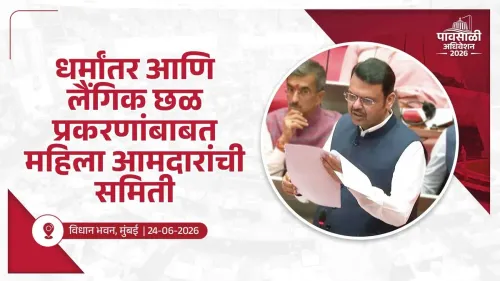
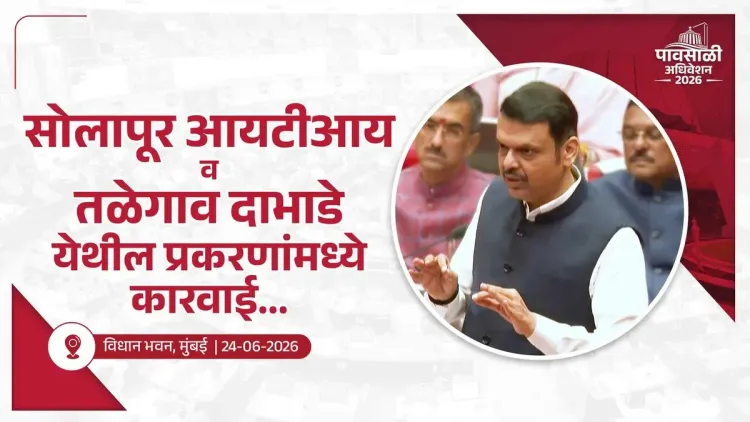
Maharashtra CM Devendra Fadnavis pledged swift inquiries into alleged religious conversion at a Solapur ITI and sexual harassment at a Spanish firm in Talegaon Dabhade, making the assurance on the floor of the Legislative Council during the Monsoon Session 2026 on 24 June.
Key Takeaways
Chief Minister Devendra Fadnavis made the assurance on 24 June 2026 in the Maharashtra Legislative Council during the Monsoon Session.
Two separate cases are under scrutiny: an alleged religious conversion at a government ITI in Solapur , and sexual harassment at a Spanish company in Talegaon Dabhade .
Fadnavis committed to prompt inquiry and action against the guilty in both cases.
The Sexual Harassment of Women at Workplace Act, 2013 provides the legal framework for the Talegaon Dabhade probe.
Outcomes are expected to be reported in a subsequent legislative session, with opposition likely to follow up on timelines.
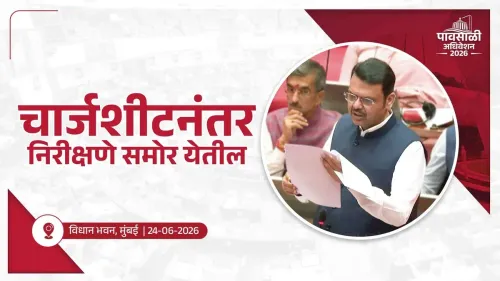
Maharashtra Chief Minister Devendra Fadnavis on Wednesday, 24 June 2026 assured the Maharashtra Legislative Council that swift action would be taken against those responsible in two separate cases: an alleged religious conversion at a government-run ITI in Solapur, and a sexual harassment complaint involving a Spanish company in Talegaon Dabhade, Pune district.
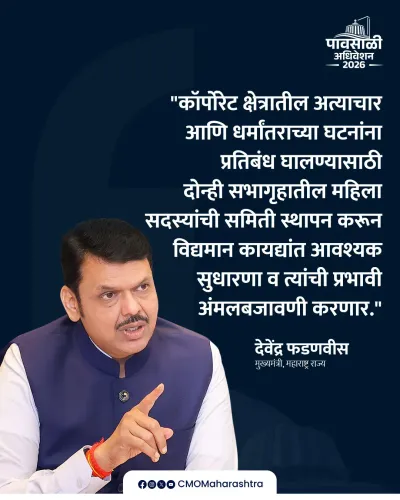
Speaking during the Monsoon Session 2026 in Mumbai, Fadnavis stated: 'The Solapur ITI conversion case and the sexual harassment case involving a Spanish company in Talegaon Dabhade will be promptly investigated, and action will be taken against the guilty.' The assurance came in response to questions raised on the floor of the upper house.
Context
The Solapur ITI case involves allegations of religious conversion within a government-run Industrial Training Institute — a state-funded vocational training facility catering to students from working-class backgrounds. The Talegaon Dabhade matter concerns alleged sexual harassment of workers at a manufacturing unit linked to a Spanish company operating in the Pune industrial corridor.
Both issues were raised during the ongoing legislative session, prompting the Chief Minister to make a direct floor assurance rather than deferring to a written response.
Policy Backdrop
Maharashtra has existing legal frameworks to address both categories of complaint. Allegations of forced or induced religious conversion in state institutions are typically examined under relevant provisions of the Indian Penal Code and state administrative rules. Workplace sexual harassment complaints in private industry are governed by the Sexual Harassment of Women at Workplace (Prevention, Prohibition and Redressal) Act, 2013, which mandates Internal Complaints Committees in every establishment with 10 or more employees.
BJP-led administrations in Maharashtra have historically addressed such complaints through a combination of legislative assurances, departmental probes, and referrals to law enforcement — a pattern that places the onus of accountability on departmental heads and district administrations.
Stakeholders and Impact
The Solapur ITI case directly affects enrolled trainees and their families, as well as the administrative staff of the institute. Any confirmed misconduct could trigger disciplinary action against institute officials and, if criminal elements are established, referral to the police.
In the Talegaon Dabhade matter, women workers at the Spanish company's facility are the primary stakeholders. A formal inquiry could involve the state Labour Department, local police, and the company's Internal Complaints Committee. The case also carries implications for Maharashtra's investment climate, given the foreign ownership of the company involved.
What's Next
The Chief Minister's floor assurance obligates the state government to initiate formal inquiry proceedings in both cases. The findings are expected to be tabled or reported in a subsequent legislative session. Advocacy groups monitoring workplace safety and communal harmony in state institutions will track whether departmental action translates into concrete disciplinary or criminal proceedings.
With the Monsoon Session 2026 ongoing, opposition members are likely to follow up on the timeline and scope of both inquiries, keeping pressure on the administration to deliver outcomes beyond the initial assurance.
Point of View
The other on workplace safety in a foreign-invested firm — reflects a calculated effort to signal administrative responsiveness during a high-scrutiny legislative session. By committing publicly rather than routing the matter through a written reply, the Chief Minister raises the accountability bar for district administrations and departmental heads. The dual nature of the cases, straddling communal and labour concerns, also signals that the BJP-led government is keen to be seen as equally firm on both fronts. Whether the assurances translate into time-bound action will be the real test of legislative accountability in the weeks ahead.
NationPress
23 Sept 2026
Frequently Asked Questions
What is the Solapur ITI conversion case?
The Solapur ITI conversion case involves allegations of religious conversion taking place within a government-run Industrial Training Institute in Solapur, Maharashtra. CM Fadnavis has ordered a prompt inquiry and promised action against those found guilty.
What happened at the Spanish company in Talegaon Dabhade?
A sexual harassment complaint has been raised against a Spanish company operating in the Talegaon Dabhade industrial area of Pune district. CM Fadnavis assured the Maharashtra Legislative Council on 24 June 2026 that an inquiry would be conducted swiftly.
Where did Fadnavis make this announcement?
Fadnavis made the announcement on the floor of the Maharashtra Legislative Council in Mumbai on 24 June 2026, during the ongoing Monsoon Session 2026.
What law covers the sexual harassment case in Talegaon Dabhade?
The Sexual Harassment of Women at Workplace (Prevention, Prohibition and Redressal) Act, 2013 is the primary legal framework applicable. It mandates Internal Complaints Committees in establishments with 10 or more employees and provides for formal inquiry procedures.
What action can be taken after the inquiry in both cases?
Depending on inquiry findings, action could include departmental disciplinary proceedings against officials or staff, referral to law enforcement for criminal action, and — in the Talegaon Dabhade case — involvement of the state Labour Department and the company's Internal Complaints Committee.