CM Fadnavis Reviews Mulyavardhan Programme Outcomes
Synopsis
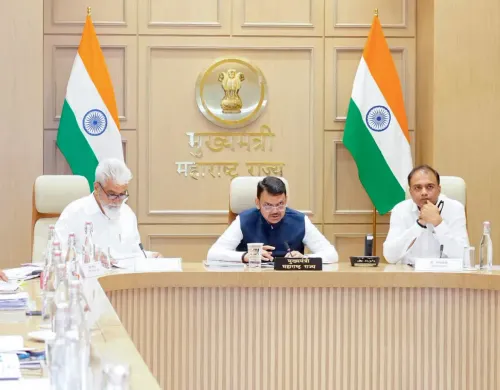
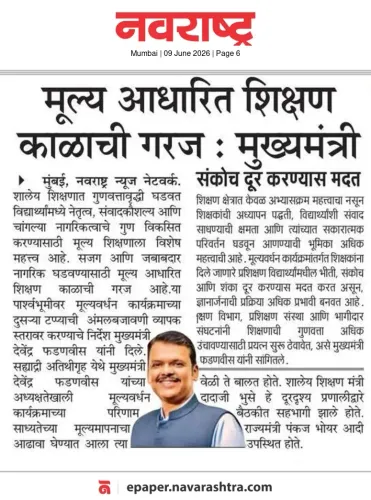
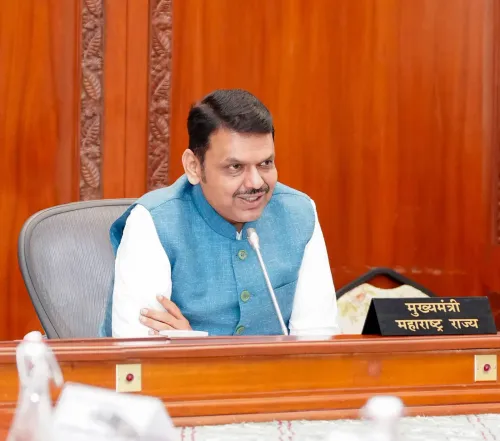
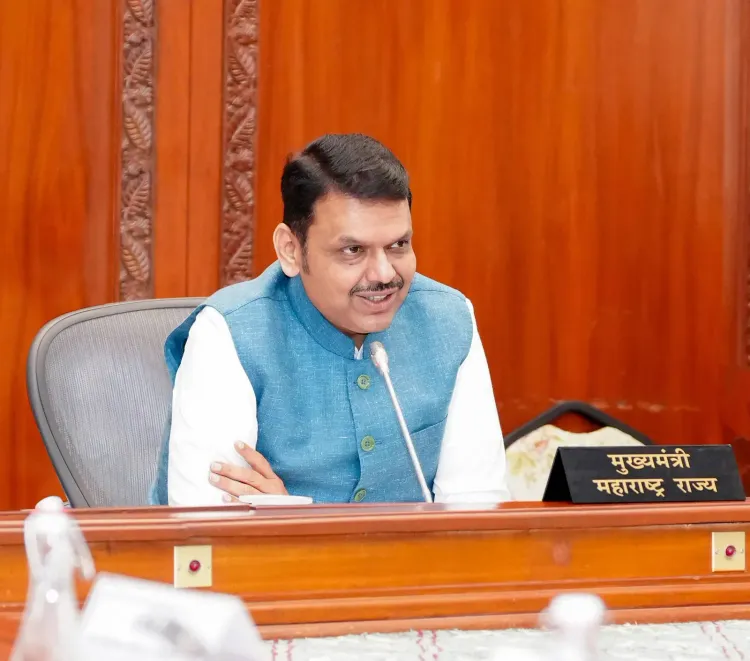
Chief Minister Devendra Fadnavis on 8 June 2026 chaired a meeting at Sahyadri Guest House, Mumbai, to evaluate outcomes of the Mulyavardhan Programme, Maharashtra's public-school value education initiative run in partnership with the Shantilal Muttha Foundation. Minister Dadaji Bhuse, MoS Dr. Pankaj Bhoyar, and senior officials were present.
Key Takeaways
CM Devendra Fadnavis chaired the Mulyavardhan Programme outcome review on 8 June 2026 at Sahyadri Guest House, Mumbai .
The meeting focused on evaluating results achieved under the Mulyavardhan Programme , Maharashtra's value education initiative for public schools.
Minister Dadaji Bhuse and Minister of State Dr.
Pankaj Bhoyar attended alongside senior officials.
Shantilal Muttha , founder of the Shantilal Muttha Foundation , was present, reflecting the NGO's role as an implementation and assessment partner.
The review is expected to inform decisions on scaling, curriculum changes, or teacher training for the next academic year.
Chief Minister Devendra Fadnavis chaired a high-level review meeting on 8 June 2026 at Sahyadri Guest House, Mumbai, to evaluate outcomes achieved under the Mulyavardhan Programme, Maharashtra's government-run value education initiative for public schools. The meeting was attended by Minister Dadaji Bhuse, Minister of State Dr. Pankaj Bhoyar, Shantilal Muttha — founder of the Shantilal Muttha Foundation — and senior state officials.
Context
The Chief Minister's Office of Maharashtra announced the meeting, noting it was convened specifically 'मूल्यवर्धन कार्यक्रम परिणाम साध्यतेच्या मूल्यमापनासंदर्भात' — that is, 'for the evaluation of outcomes achieved under the Mulyavardhan Programme.' The presence of both a cabinet minister and a minister of state alongside the foundation's founder signals that this was a structured programme review rather than a routine administrative discussion.
The Mulyavardhan Programme is a Maharashtra government initiative designed to embed value education and life-skills modules within the regular curriculum of public schools. It has been implemented in partnership with the Shantilal Muttha Foundation, a non-profit with a track record of school-based value education work in the state.
Policy Backdrop
Maharashtra began integrating value-education modules into government schools through NGO partnerships in the mid-2010s, recognising that non-academic outcomes — such as ethical reasoning, civic behaviour, and social skills — are difficult to capture through standard learning metrics alone. Periodic outcome evaluations of this kind are a standard mechanism through which state governments decide whether to scale, modify, or discontinue such programmes.
The involvement of the Shantilal Muttha Foundation reflects a broader pattern in Maharashtra of leveraging private philanthropic capacity to deliver and independently assess programmes within the public-school system. This model allows the government to draw on specialised expertise while retaining policy oversight at the ministerial level.
Stakeholders and Impact
The primary beneficiaries of the Mulyavardhan Programme are students and teachers in Maharashtra's government schools. An outcome evaluation of this scale — chaired directly by CM Fadnavis — suggests that the programme has reached sufficient coverage to warrant senior political attention and a formal assessment of its effectiveness.
For teachers, the findings of such a review typically inform training priorities and classroom delivery guidelines. For students, the downstream impact depends on whether the evaluation recommends expanding or refining the programme's modules ahead of the next academic calendar.
What's Next
The key output to watch is the formal publication of the evaluation report and any consequent government directives on the Mulyavardhan Programme's scope for the upcoming academic year. Decisions on expanding coverage, revising curriculum content, or intensifying teacher training are all likely outcomes of a review at this level. The participation of the foundation's founder alongside senior officials suggests that recommendations could involve a renewed or expanded partnership between the state and the Shantilal Muttha Foundation.
Point of View
Particularly in education. The inclusion of the foundation's founder in a ministerial-level review also signals that the state-NGO partnership is being formally institutionalised rather than kept at the bureaucratic level. The outcome of this review could set a template for how Maharashtra structures public-private collaboration in non-academic school programming.
NationPress
24 Oct 2026
Frequently Asked Questions
What is the Mulyavardhan Programme in Maharashtra?
The Mulyavardhan Programme is a Maharashtra government initiative that introduces value education and life-skills modules into public schools, implemented in partnership with the Shantilal Muttha Foundation.
Who attended the Mulyavardhan Programme review meeting on 8 June 2026?
The meeting was chaired by Chief Minister Devendra Fadnavis and attended by Minister Dadaji Bhuse, Minister of State Dr. Pankaj Bhoyar, Shantilal Muttha Foundation founder Shantilal Muttha, and senior state officials.
What is the Shantilal Muttha Foundation?
The Shantilal Muttha Foundation is a non-profit organisation founded by Shantilal Muttha that partners with the Maharashtra government to deliver and assess value-based education programmes in government schools.
Where was the Mulyavardhan review meeting held?
The meeting was held at Sahyadri Guest House in Mumbai on 8 June 2026 at 2:10 PM.
What will happen after the Mulyavardhan Programme outcome evaluation?
The evaluation is expected to result in government directives on whether to expand, modify, or continue the Mulyavardhan Programme, with potential implications for teacher training and curriculum design in the next academic year.