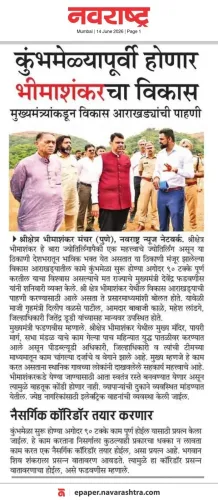
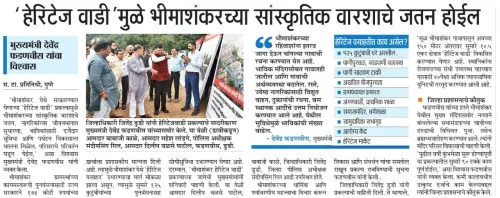
CM Fadnavis briefs media on Bhimashankar Corridor plan

Synopsis
Maharashtra Chief Minister Devendra Fadnavis held a media briefing in Pune on 13 June 2026 to discuss the development blueprint for the Bhimashankar Jyotirlinga temple precinct, including the proposed Bhimashankar Corridor aimed at modernising pilgrim infrastructure at one of Maharashtra's most sacred Shiva shrines.
Key Takeaways
CM Devendra Fadnavis addressed media in Pune on 13 June 2026 regarding the Bhimashankar temple precinct development plan.
The proposed Bhimashankar Corridor is the flagship infrastructure component of the development blueprint.
Bhimashankar Jyotirlinga , located in Pune district's Sahyadri ranges , is one of Hinduism's twelve sacred Jyotirlinga shrines.
The project follows a broader Maharashtra government policy to upgrade Jyotirlinga sites under state tourism and pilgrimage schemes.
Key stakeholders include pilgrims, temple trusts , and local communities dependent on religious tourism.
Environmental clearances will be critical given the temple's location within a protected wildlife sanctuary.
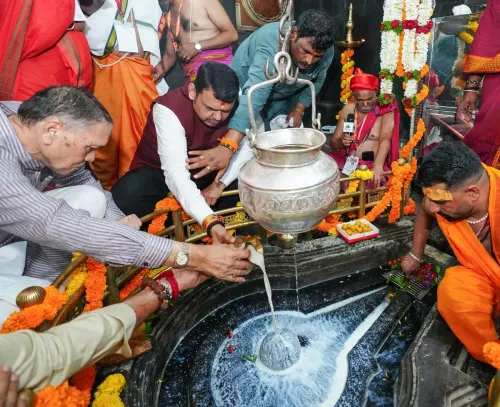
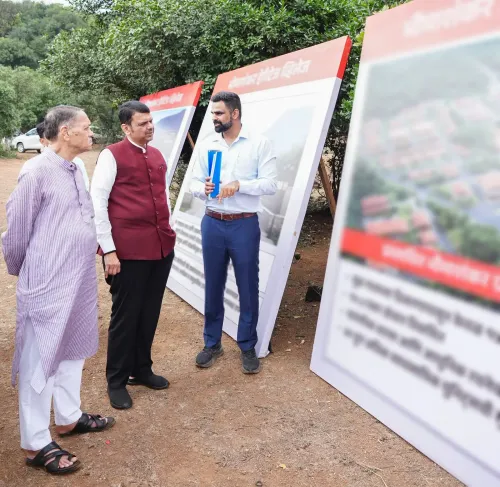
Maharashtra Chief Minister Devendra Fadnavis on Saturday, 13 June 2026, addressed the media in Pune to discuss the proposed development blueprint for the Shri Kshetra Bhimashankar Jyotirlinga temple precinct, including the planned Bhimashankar Corridor and several related infrastructure initiatives.
Context
The Chief Minister's media interaction, held in Pune, centred on the Shri Kshetra Bhimashankar Jyotirlinga Mandir Parisar Vikas Aakhda — the development blueprint for the Bhimashankar Jyotirlinga temple precinct. The Bhimashankar Corridor, the flagship component of this plan, is envisioned as a comprehensive infrastructure upgrade to one of Hinduism's twelve sacred Jyotirlinga shrines.
Bhimashankar, located in the Sahyadri ranges of Pune district, draws hundreds of thousands of pilgrims annually and holds protected status as a wildlife sanctuary, making any development plan sensitive to both religious and ecological considerations.
Policy Backdrop
The proposed corridor follows a broader national pattern in which state governments have pursued temple-precinct redevelopment projects to modernise pilgrim facilities, improve access roads, and generate revenue from religious tourism. States such as Uttar Pradesh and Madhya Pradesh have implemented similar corridor models at major shrines, and Maharashtra has been pursuing upgrades to its Jyotirlinga and heritage temple sites since the current coalition government assumed office.
The Maharashtra government had signalled intent in 2023–2024 to pursue integrated development of Jyotirlinga sites under state tourism and pilgrimage schemes. The Bhimashankar Corridor represents one of the more significant proposals to emerge from that policy direction.
Stakeholders and Impact
The primary beneficiaries of the corridor project would be pilgrims and religious tourists who visit Bhimashankar, along with temple trusts that manage the shrine's daily operations. Improved infrastructure — including better access roads, visitor amenities, and organised precinct facilities — is expected to ease congestion and enhance the overall pilgrimage experience.
Local communities dependent on pilgrimage-linked livelihoods, including vendors, transport operators, and hospitality businesses in the Pune district, also stand to gain from increased footfall and improved connectivity to the site.
What's Next
The immediate next steps will likely include the release of a detailed project report and formal budget allocations, potentially in the next state budget cycle. Tendering for corridor construction and precinct development works would follow once approvals are in place.
Given the temple's location within a protected wildlife area, environmental clearances will be a critical milestone. Observers will also watch for the government's plan to balance ecological preservation with the scale of proposed infrastructure.
Point of View
A necessary step before formal project approvals. The choice of a high-profile CM-level media interaction suggests the government is keen to build public and stakeholder consensus around a project that sits at the intersection of religious tourism, ecology, and electoral optics in a BJP-governed state. Corridor-style temple development has proven politically potent across BJP-ruled states, and Maharashtra's push at Bhimashankar fits that national template. The ecological sensitivity of the site, however, means the project's credibility will ultimately rest on how rigorously the government addresses environmental concerns alongside pilgrim amenities.
NationPress
27 Oct 2026
Frequently Asked Questions
What is the Bhimashankar Corridor?
The Bhimashankar Corridor is a proposed infrastructure development project for the Bhimashankar Jyotirlinga temple precinct in Pune district, Maharashtra, aimed at improving access roads, visitor facilities, and the overall pilgrim experience at the shrine.
Where is Bhimashankar Jyotirlinga located?
Bhimashankar Jyotirlinga is located in the Sahyadri mountain ranges of Pune district in Maharashtra. It is one of the twelve sacred Jyotirlinga shrines of Lord Shiva and sits within a protected wildlife sanctuary.
What did CM Devendra Fadnavis announce about Bhimashankar?
On 13 June 2026, CM Devendra Fadnavis addressed the media in Pune to discuss the development blueprint for the Bhimashankar Jyotirlinga temple precinct, including the proposed Bhimashankar Corridor and various related infrastructure topics.
Which other states have built temple corridors in India?
States such as Uttar Pradesh and Madhya Pradesh have implemented corridor-style redevelopment projects at major religious shrines. Maharashtra is pursuing a similar approach at its Jyotirlinga and heritage temple sites.
What are the next steps for the Bhimashankar Corridor project?
The next steps are expected to include release of a detailed project report, budget allocations in an upcoming state budget, and tendering for construction works, alongside obtaining necessary environmental clearances given the site's protected wildlife status.