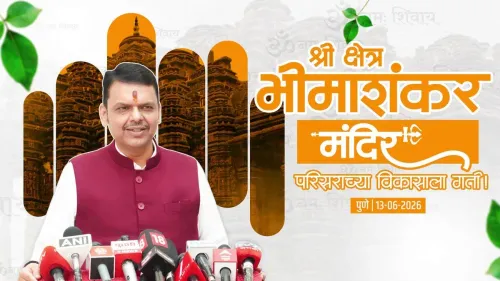
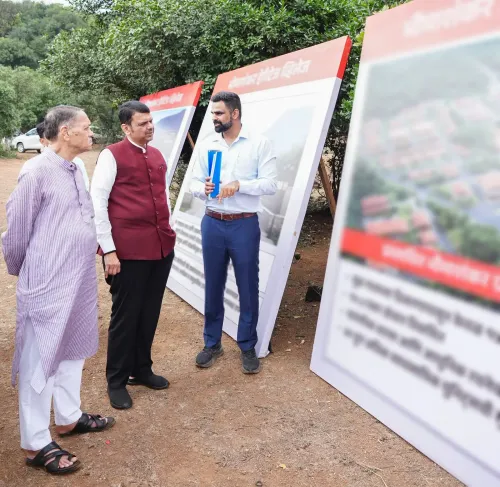
CM Fadnavis: Bhimashankar to be transformed, 90% work done before Kumbh

Synopsis
Chief Minister Devendra Fadnavis has announced a complete transformation of the Bhimashankar Jyotirlinga site in Pune district, with 90 per cent of work to be finished before the Kumbh Mela. A 'Heritage Wadi' village development is also planned to draw tourists to the precinct.
Key Takeaways
CM Devendra Fadnavis announced a full overhaul of Bhimashankar Tirthakshetra , one of India's twelve Jyotirlinga shrines, on 13 June 2026 .
90 per cent of the development work is targeted for completion before next year's Kumbh Mela .
A dedicated 'Bhimashankar Heritage Wadi' will be developed to attract tourists to the surrounding village.
The project follows Maharashtra's established pattern of infrastructure upgrades at Jyotirlinga sites, including earlier works at Trimbakeshwar and Grishneshwar .
The initiative aligns with the Union government's PRASAD scheme for pilgrimage site rejuvenation, extended to Maharashtra's Jyotirlinga circuit.
Key milestones to watch include tender awards, budget releases, and quarterly progress reports from the state tourism department.
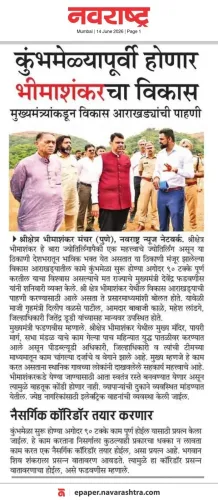
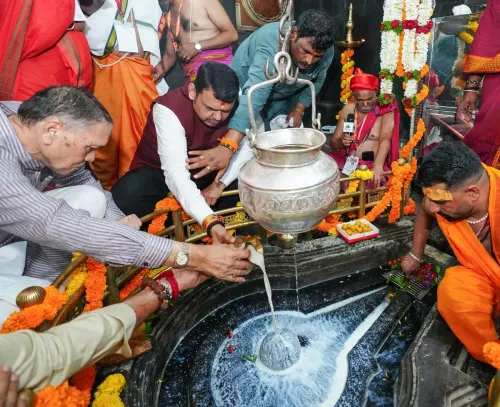
The Chief Minister's Office of Maharashtra on Saturday, 13 June 2026 shared that Chief Minister Devendra Fadnavis has announced a comprehensive transformation of the Bhimashankar Tirthakshetra in Pune district, with 90 per cent of the development work to be completed before next year's Kumbh Mela.
Context
Bhimashankar is one of India's twelve revered Jyotirlinga shrines and draws lakhs of pilgrims annually. The Chief Minister's announcement, shared via the official CMO handle, underlines the state government's intent to undertake a 'kāyāpālat' — a complete overhaul — of the site and its surrounding precinct ahead of a major pilgrimage season.
Fadnavis stated, in translation: 'भीमाशंकर तीर्थक्षेत्राचा कायापालट होणार' ('Bhimashankar Tirthakshetra will be completely transformed'), with the 90 per cent completion milestone targeted before the Kumbh Mela of the following year.
Policy Backdrop
The announcement is consistent with a broader Maharashtra government pattern of upgrading infrastructure at major religious sites. During Fadnavis's earlier tenure from 2014 to 2019, the state undertook road widening, amenity development, and crowd-management improvements at other Jyotirlinga sites including Trimbakeshwar and Grishneshwar.
The Union government's PRASAD scheme, launched in 2014-15 to rejuvenate pilgrimage sites nationally, was subsequently extended to Maharashtra's Jyotirlinga circuit, providing a policy and funding framework for such upgrades. Bhimashankar's inclusion in a state-led transformation drive fits this established lineage.
Bhimashankar Heritage Wadi
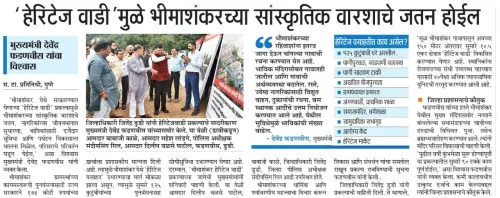
A centrepiece of the plan is the proposed 'Bhimashankar Heritage Wadi' — a heritage village development designed to attract tourists beyond the temple itself. Fadnavis stated: 'भीमाशंकर हेरिटेज वाडी पाहण्यासाठी पर्यटक येतील असा गावाचा विकास होणार' ('The village will be developed in such a way that tourists come to see the Bhimashankar Heritage Wadi').
The concept envisions the surrounding village as an integrated heritage experience, potentially encompassing traditional architecture, local crafts, and cultural programming — a model seen at other Maharashtra pilgrimage corridors such as Shirdi and Pandharpur.
Stakeholders and Impact
The primary beneficiaries of the project are expected to be local villagers in the Bhimashankar area, the broader pilgrimage and tourism sector of Pune district, and the lakhs of devotees who visit the Jyotirlinga each year. Improved infrastructure typically translates into better crowd management, enhanced safety, and increased economic activity for surrounding communities.
Maharashtra's religious tourism sector has seen consistent growth, and high-footfall festivals such as the Kumbh Mela serve as hard deadlines that historically accelerate project timelines and budget releases.
What's Next
Observers will watch for formal tender awards, budget allocations from the state tourism department, and quarterly progress disclosures on both the broader Tirthakshetra development and the Heritage Wadi project specifically. The 90 per cent completion target before the Kumbh Mela sets a concrete, time-bound benchmark against which the government's delivery will be measured.
If executed on schedule, the Bhimashankar project could serve as a template for similar heritage-tourism packages at other Jyotirlinga sites across the state, reinforcing Maharashtra's position as a leading destination for religious tourism in India.
Point of View
Tourism economics, and electoral optics — a combination Maharashtra governments have repeatedly leveraged at Jyotirlinga sites. By anchoring the deadline to the Kumbh Mela, the Chief Minister creates a visible accountability marker while tapping into the pilgrimage economy's proven capacity to generate local employment and state revenue. The 'Heritage Wadi' concept signals an evolution beyond mere infrastructure: it frames religious tourism as a cultural-heritage product, mirroring successful models at Varanasi and Ayodhya. Whether tender awards and budget flows follow at pace will determine if this remains a headline or becomes a genuine policy milestone.
NationPress
13 Sept 2026
Frequently Asked Questions
What is the Bhimashankar Tirthakshetra development project?
It is a state government initiative announced by CM Devendra Fadnavis to comprehensively upgrade the Bhimashankar Jyotirlinga site in Pune district, Maharashtra , targeting 90 per cent completion before the Kumbh Mela.
What is the Bhimashankar Heritage Wadi?
The Bhimashankar Heritage Wadi is a proposed heritage village development around the Jyotirlinga temple precinct, designed to attract tourists by showcasing traditional architecture and local culture alongside the pilgrimage experience.
When will the Bhimashankar development work be completed?
CM Fadnavis stated that 90 per cent of the work will be completed before the Kumbh Mela scheduled for the following year.
Is Bhimashankar covered under the PRASAD scheme?
Yes, the Union government's PRASAD scheme , launched in 2014-15 for pilgrimage site rejuvenation, was extended to Maharashtra's Jyotirlinga circuit, providing a policy framework for upgrades at sites including Bhimashankar.
Which other Maharashtra pilgrimage sites have seen similar development?
During Fadnavis's earlier tenure (2014-2019) , the state undertook infrastructure upgrades at Trimbakeshwar and Grishneshwar ; similar heritage packages have also been executed at Shirdi and Pandharpur .