Are India's Farmers Being Misled Over the US Trade Agreement?
Synopsis
In a bold move, Rahul Gandhi challenges the Modi government over the implications of the India-US trade deal with five critical questions. He raises concerns about the impact on Indian farmers, especially regarding GM crops and the safety of local agriculture. The questions he poses could reshape the conversation around trade agreements and their effects on India's farmers.
Key Takeaways
Rahul Gandhi challenges the Modi government on the trade deal.
Concerns over the impact on Indian farmers and GM crops.
Five critical questions demand governmental clarity.
The deal may compromise local agricultural protections.
Long-term implications for India's agricultural framework are at stake.
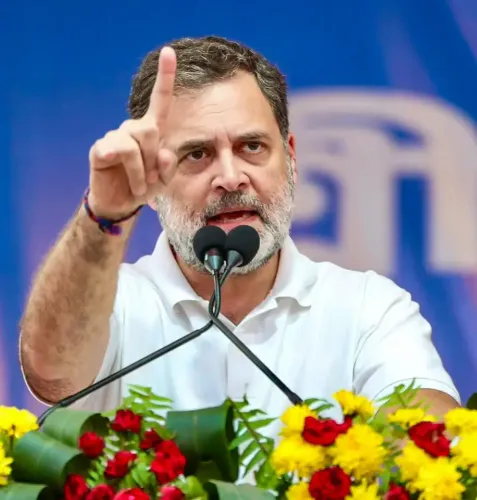
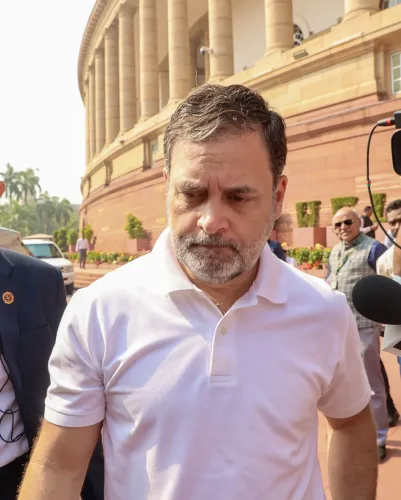
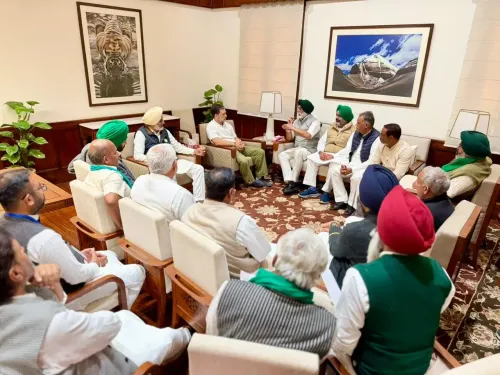
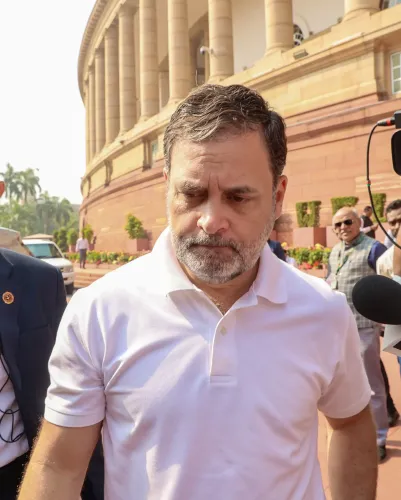
New Delhi, Feb 15 (NationPress) Intensifying criticism against the Modi administration regarding the India-US trade agreement, the Leader of Opposition (LoP) Rahul Gandhi on Sunday presented a series of inquiries about the controversial pact and demanded straightforward responses from Prime Minister Narendra Modi on five 'simple' questions.
The Congress MP utilized his social media platform to highlight five urgent concerns regarding the trade agreement that require government scrutiny and clarification.
Reaffirming that Indian farmers have been deceived by the current regime in the name of the US trade deal, he raised questions about the adverse impacts on GM (genetically modified) crops, soya farmers, and accused the Centre of dismantling the protections that farmers previously enjoyed.
“What does importing DDG truly signify? Does it imply that Indian cattle will consume distillers' grain sourced from GM American corn? Isn’t that likely to integrate our dairy sector with the US agricultural landscape?” Rahul queried.
His second and third inquiries addressed the implications for soya oil and pulses.
“If we permit imports of GM soya oil, what will be the fate of our soya farmers in Madhya Pradesh, Maharashtra, Rajasthan, and across the nation? How can they withstand another price upheaval?” he questioned.
Rahul further probed, “When you refer to 'additional products', what does that entail? Could it indicate pressure to gradually open up pulses and other sensitive crops to US imports?”
“What does the removal of 'non-trade barriers' entail? Will India be compelled to dilute its stance on GM crops, weaken procurement standards, or undermine MSP and bonuses in the future?” he questioned.
Insisting on the necessity to safeguard farmers from potential fallout, Rahul stated, “Once this door is ajar, how can we prevent it from widening annually? Will there be safeguards, or will more crops continually be placed on the negotiation table in each round?”
Reiterating his accusation of the Modi administration succumbing to US pressure, he emphasized, “This issue transcends the present. It concerns whether we are granting another nation a lasting hold on India’s agricultural framework.”
Point of View
It is crucial to recognize that the implications of trade agreements extend beyond immediate economic benefits. The potential impacts on local farmers and agricultural practices must be carefully considered. This debate highlights the importance of balancing international relations with domestic agricultural stability.
NationPress
27 Oct 2026
Frequently Asked Questions
What are the main concerns raised by Rahul Gandhi regarding the trade deal?
Rahul Gandhi questions the effects of the trade deal on GM crops, soya farmers, and the potential weakening of agricultural protections in India.
How does this trade deal impact Indian farmers?
The trade deal could expose Indian farmers to competition from US imports, impacting their livelihoods and market stability.
What specific questions did Rahul Gandhi pose to PM Modi?
He posed questions about the implications of importing DDG, GM soya oil, and the removal of non-trade barriers, among others.
What is meant by 'non-trade barriers'?
Non-trade barriers refer to regulations or policies that restrict trade, which could affect local procurement and support for farmers.
Why is it important to safeguard farmers' interests?
Protecting farmers ensures food security, sustains livelihoods, and maintains the integrity of local agricultural practices.