India's first EXIM shipping container rolls out for Maersk at Dadri
Synopsis
India rolled out its first domestically made EXIM shipping container for Maersk at Dadri — a milestone that took just 16 months from a PM-level nudge to execution. Backed by a ₹10,000 crore government scheme targeting a 10x capacity jump to 7.5 lakh TEUs, this is India's most credible bid yet to break China's near-total grip on global container manufacturing.
Key Takeaways
Sarbananda Sonowal unveiled India's first EXIM shipping container for A.P.
Moller–Maersk at Dadri, Uttar Pradesh on 3 July 2025 .
Maersk placed an order for 1,000 additional India-manufactured containers with DCM Shriram Group at the same event.
The container meets ISO and International Convention for Safe Containers (CSC) standards, qualifying it for global trade routes.
The rollout is backed by the ₹10,000 crore Container Manufacturing Promotion Scheme (CMPS) announced in Union Budget 2026 .
CMPS targets a 10x boost in annual manufacturing capacity, up to 7.5 lakh TEUs .
The milestone follows a February 2025 meeting between PM Modi and Maersk Chairman Robert Maersk Uggla .
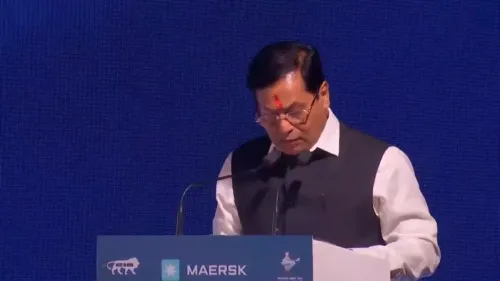
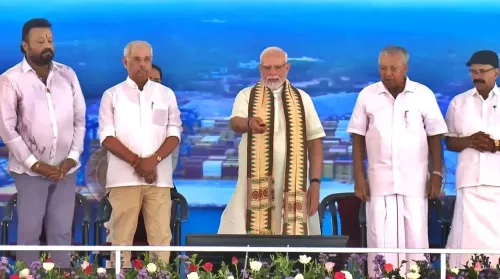
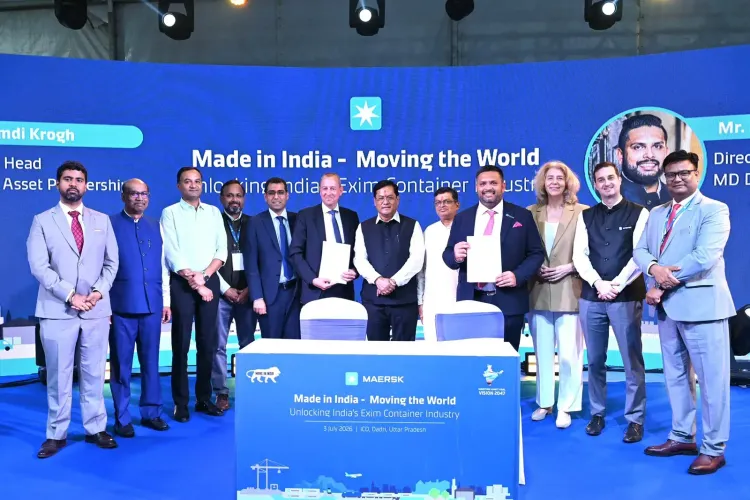
India crossed a significant maritime manufacturing threshold on 3 July 2025 as Union Minister of Ports, Shipping and Waterways Sarbananda Sonowal unveiled the country's first domestically produced export-import (EXIM) shipping container at the Maersk-CONCOR Inland Container Depot in Dadri, Uttar Pradesh. The container was manufactured for global shipping giant A.P. Moller–Maersk, marking what officials described as a defining moment in India's push for self-reliance in maritime infrastructure.
Key Developments at the Dadri Event
At the same ceremony, Maersk placed a fresh order for 1,000 additional India-manufactured shipping containers with the DCM Shriram Group, signalling the start of a long-term commercial partnership. According to an official statement, this is expected to strengthen India's position in the global maritime value chain.
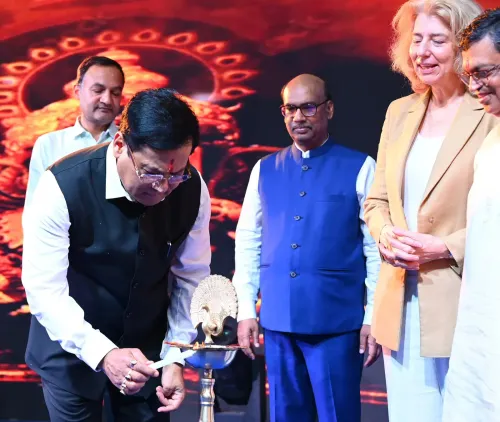
The event was attended by Ambassador of the Kingdom of the Netherlands Marisa Gerards, A.P. Moller Maersk Managing Director Thomas Theeuwes, senior officials from the Ministry of Ports, Shipping, and Waterways, and representatives of the DCM Shriram Group.
From a PM-Level Conversation to a Milestone in 16 Months
The rollout traces back to a meeting between Prime Minister Narendra Modi and Robert Maersk Uggla, Chairman of the Supervisory Board of A.P. Moller–Maersk, in February 2025. During that interaction, the Prime Minister reportedly encouraged the company to actively support world-class container manufacturing in India. According to the official statement, within 16 months of that conversation, the first internationally procured, India-manufactured EXIM container was ready for deployment.
'Under the visionary leadership of Prime Minister Narendra Modi, India is rapidly emerging as a trusted global manufacturing and maritime powerhouse,' Sonowal said. 'The unveiling of the first India-manufactured EXIM shipping container for a leading global shipping line is a defining milestone in our journey towards Atmanirbhar Bharat.'
Quality Standards and Global Compliance
The container has been produced in line with internationally accepted quality and safety benchmarks, including ISO specifications and the International Convention for Safe Containers (CSC), making it suitable for global deployment. This compliance is critical for any container entering international trade routes, and its achievement domestically represents a technical leap for Indian manufacturers.
The ₹10,000 Crore CMPS Framework
The rollout aligns with the government's Container Manufacturing Promotion Scheme (CMPS), announced in the Union Budget 2026 with a ₹10,000 crore outlay. The scheme aims to boost annual domestic manufacturing capacity by 10 times, targeting up to 7.5 lakh TEUs (twenty-foot equivalent units).
Sonowal elaborated that the CMPS framework is designed to provide 'capital assistance, operational incentives, research, testing and technology development,' with the broader goals of generating employment, encouraging technology transfer, and reinforcing India's supply-chain resilience. This comes amid a global push by major economies to reduce dependence on China, which currently dominates container manufacturing worldwide.
What Comes Next
The Maersk order for 1,000 containers is expected to serve as a commercial proof-of-concept for India's nascent container manufacturing industry. If the DCM Shriram Group fulfils the order to global standards, it could attract further orders from other international shipping lines. Industry observers will now watch whether the CMPS disbursements translate into the projected capacity ramp-up — and whether India can capture a meaningful share of a market long dominated by Chinese manufacturers.
Point of View
But the harder question is scale. China manufactures roughly 90% of the world's shipping containers — a dominance built over three decades of subsidised production, integrated steel supply chains, and port-linked demand. The CMPS scheme's 7.5 lakh TEU target, while ambitious, is a fraction of global annual output. The Maersk order of 1,000 units is a commercial signal, not a structural shift — yet. What will matter is whether the scheme's capital and operational incentives are disbursed on schedule, and whether Indian manufacturers can hit the cost-per-unit benchmarks that make Chinese containers so hard to displace. The 16-month turnaround from PM conversation to container rollout is impressive on execution; the next 16 months will test whether that pace can be sustained at volume.
NationPress
3 Jul 2026
Frequently Asked Questions
What is India's first EXIM shipping container and who made it?
It is the first export-import shipping container manufactured in India for international commercial use, produced for global shipping major A.P. Moller–Maersk. It was made by the DCM Shriram Group and unveiled at the Maersk-CONCOR Inland Container Depot in Dadri, Uttar Pradesh on 3 July 2025.
What is the Container Manufacturing Promotion Scheme (CMPS)?
The CMPS is a ₹10,000 crore government framework announced in the Union Budget 2026 to boost domestic container manufacturing. It aims to increase annual production capacity by 10 times, reaching up to 7.5 lakh TEUs, through capital assistance, operational incentives, and technology development support.
How many containers has Maersk ordered from India?
Maersk placed an order for 1,000 India-manufactured shipping containers with the DCM Shriram Group at the Dadri event on 3 July 2025. This is described as the start of a long-term commercial partnership.
Does the India-made container meet international quality standards?
Yes. The container complies with ISO specifications and the International Convention for Safe Containers (CSC), making it eligible for deployment on global shipping routes.
How does this connect to PM Modi's push for Atmanirbhar Bharat?
The rollout follows a February 2025 meeting between PM Modi and Maersk Chairman Robert Maersk Uggla, during which the Prime Minister encouraged the company to support container manufacturing in India. According to the official statement, the container was ready within 16 months of that interaction, and the project is part of the broader Atmanirbhar Bharat self-reliance initiative.