FM Sitharaman Links Welfare Schemes to Poverty Reduction

Synopsis
Finance Minister Nirmala Sitharaman argues that sanitation, water, cooking fuel, housing and healthcare schemes help protect families from poverty. Sharing an article on X, she presents basic services as a way to reduce household costs and cushion families against shocks.
Key Takeaways
Nirmala Sitharaman shared an article on poverty reduction on 23 November 2026.
She linked Swachh Bharat and Jal Jeevan Mission to sanitation and rural water access.
She also cited Ujjwala Yojana, PM Awas Yojana and Ayushman Bharat.
The minister argued that the programmes can reduce household spending and free time for work.
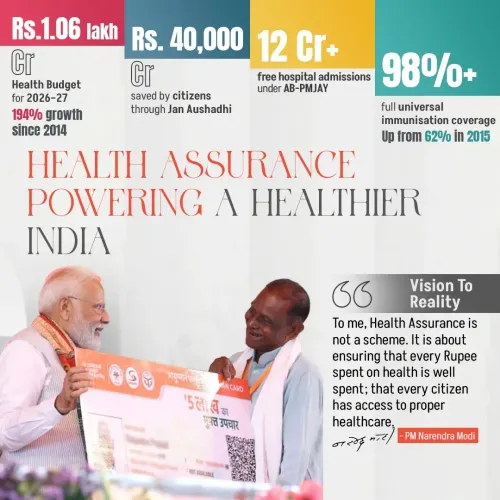
Ayushman Bharat includes up to Rs 5 lakh in annual coverage for eligible households for secondary and tertiary care.
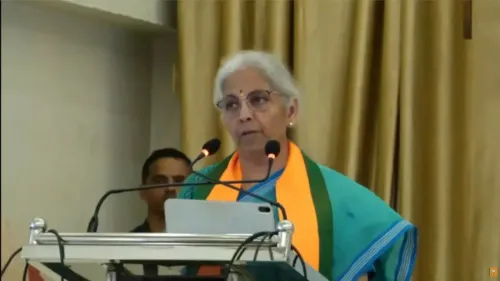
Access to toilets, tap water, cooking fuel and healthcare can help protect families from the shocks of poverty, Union Finance Minister Nirmala Sitharaman argued in a post on X on 23 November 2026. Sharing an article on poverty reduction in India, she brought five major welfare programmes into a single account of how basic services can ease pressure on household budgets.
From toilets and tap water to time saved
Sitharaman pointed to Swachh Bharat Mission and Jal Jeevan Mission as programmes addressing sanitation and rural drinking water. She argued that household tap connections spare women and girls long walks for water and reduce exposure to waterborne diseases.
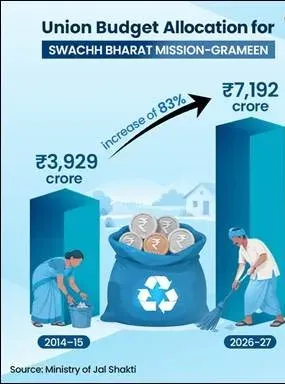
Launched in 2014, Swachh Bharat sought to expand sanitation coverage and eliminate open defecation. Jal Jeevan Mission, announced in 2019, aimed to provide functional household tap connections in rural areas.
Cooking fuel, homes and hospital bills
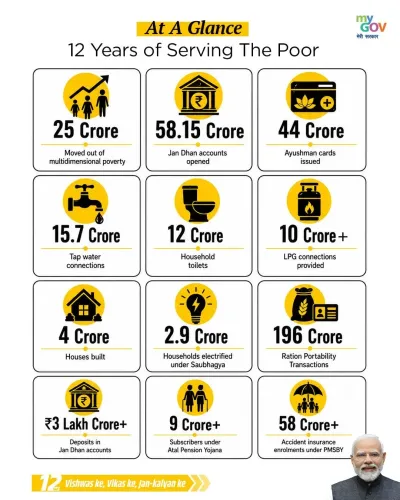
The minister also cited Pradhan Mantri Ujjwala Yojana, Pradhan Mantri Awas Yojana and Ayushman Bharat. She said they had supported cleaner kitchens, the security of pucca homes and financial protection against medical expenses, respectively.
Ujjwala, launched in 2016, provides LPG connections to eligible low-income households. The housing scheme began in 2015, while Ayushman Bharat, rolled out in 2018, includes health coverage of up to Rs 5 lakh a year for secondary and tertiary care for eligible households.
Sitharaman's case for protection against poverty
In the excerpt shared on X, Sitharaman described the programmes as working together as 'insurance against the shocks that once pushed families back into poverty'. She also argued that they lower household spending and free time for work.
The argument places access to basic services alongside income in the discussion of poverty reduction. Future multidimensional poverty data and scheme budgets will offer opportunities to examine how that approach develops.
Point of View
Alongside income support. The five programmes address different household costs and risks, from cooking fuel and housing to hospital care. Future multidimensional poverty data and budget allocations can help assess the direction of that approach without settling the effectiveness of each scheme on their own.
NationPress
23 Nov 2026
Frequently Asked Questions
What did Nirmala Sitharaman say about poverty reduction?
She argued that access to basic services through welfare schemes helps protect families from shocks that can push them into poverty. She also said the programmes lower household expenditure and free time for work.
Which welfare schemes did Sitharaman mention?
She cited Swachh Bharat Mission, Jal Jeevan Mission, Ujjwala Yojana, PM Awas Yojana and Ayushman Bharat.
What is the aim of Jal Jeevan Mission?
Jal Jeevan Mission aims to provide functional tap-water connections to rural households. It was announced in 2019.
How much health coverage does Ayushman Bharat provide?
Ayushman Bharat includes up to Rs 5 lakh in annual coverage for secondary and tertiary care for eligible households.
When was Swachh Bharat Mission launched?
Swachh Bharat Mission was launched in 2014 to expand sanitation coverage and eliminate open defecation.