Is Food Adulteration a Raging Health Crisis in India?
Synopsis
AAP MP Raghav Chadha has raised serious concerns about widespread food adulteration in India, which poses significant health risks, especially to vulnerable populations. His call for action emphasizes the need for better regulation and accountability in food safety standards.
Key Takeaways
Food adulteration is a serious health crisis Vulnerable populations are at higher risk Immediate action is needed to strengthen food safety regulations Awareness about food quality can help protect consumers Regulatory reforms can lead to safer food standards
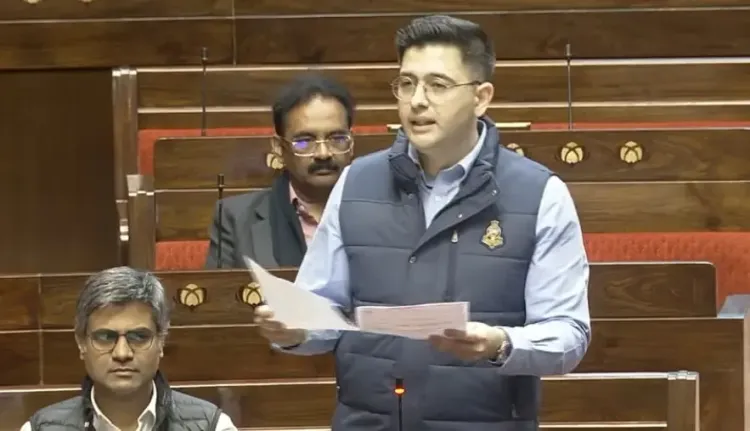
New Delhi, Feb 4 (NationPress) Aam Aadmi Party Rajya Sabha MP Raghav Chadha raised a significant alarm on Wednesday about the rampant issue of food adulteration in the nation, labeling it a serious health crisis that endangers vulnerable groups, especially children, the elderly, and pregnant women.
During the ongoing session in Parliament, Chadha accused corporations of marketing harmful products under deceptive claims of being nutritious and energy-enhancing.
He elaborated on how common household staples are tainted with hazardous substances. For instance, milk frequently contains urea, vegetables are treated with oxytocin to enhance freshness and growth rate, paneer is adulterated with starch and caustic soda, ice creams are mixed with detergent powder, fruit juices include synthetic flavors and artificial colors, edible oils are cut with machine oil, spices may contain brick powder and sawdust, tea is artificially colored, and poultry products are infused with anabolic steroids.
Even traditional sweets, typically made with pure ghee, are now often prepared using vegetable oil and vanaspati.
Chadha painting a vivid image of a mother unknowingly providing her child with milk tainted with urea and detergent, mistakenly believing it to be a source of calcium and protein.
He referenced research indicating that 71% of milk samples were found to contain urea, and 64% had neutralizers such as sodium bicarbonate. He observed that the volume of milk produced in the country does not match the sold quantities, revealing extensive dilution and adulteration.
The MP also pointed out that adulteration extends to medicines and vegetables, with oxytocin—a chemical associated with dizziness, headaches, heart failures, infertility, and cancer—being widely used. Between 2014-15 and 2025-26, he stated that adulteration was identified in 25% of tested samples, suggesting that one in every four items did not meet safety standards.
Chadha highlighted international consequences, noting that products from two leading Indian spice firms were banned in the UK and Europe due to cancer-causing pesticides, yet these same products remain freely available in India.
He lamented that products unfit even for pets abroad are consumed without hesitation here.
Underlining the human toll—diseases, hospital visits, and potential fatalities—Chadha called for immediate reforms.
He advocated for empowering the Food Safety and Standards Authority of India (FSSAI) with sufficient personnel and lab facilities, increasing financial penalties for offenders, implementing a public recall system to expose adulterated products, and prohibiting misleading health claims in advertisements.
Point of View
It is evident that food safety is a pressing concern that warrants immediate attention. The alarming statistics highlighted by MP Raghav Chadha reflect a broader issue of public health that affects every citizen. The call for reform in food safety regulations aligns with the nation's commitment to ensuring the health and well-being of its people.
NationPress
24 Sept 2026
Frequently Asked Questions
What is food adulteration?
Food adulteration refers to the practice of adding inferior or harmful substances to food products, compromising their quality and safety.
How does food adulteration affect health?
Consumption of adulterated food can lead to serious health issues, including poisoning, nutritional deficiencies, and long-term diseases.
What are common examples of food adulteration?
Common examples include milk with urea, vegetables treated with oxytocin, and spices mixed with sawdust or brick powder.
What actions are being proposed to combat food adulteration?
Proposals include strengthening the FSSAI, increasing penalties for offenders, and implementing a public recall system for adulterated products.
Why is food safety important?
Food safety is crucial for public health, ensuring that the food consumed is safe, nutritious, and free from harmful substances.