Gadkari: Cabinet clears ₹1,141-cr Postal Operations scheme
Synopsis
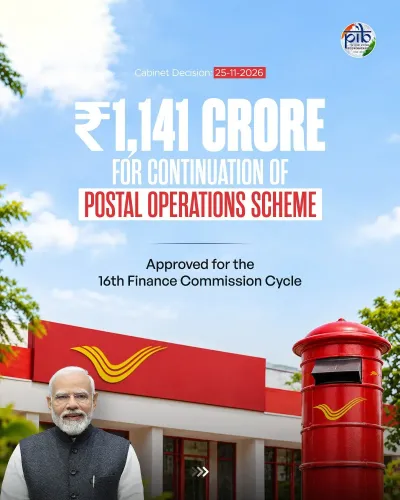
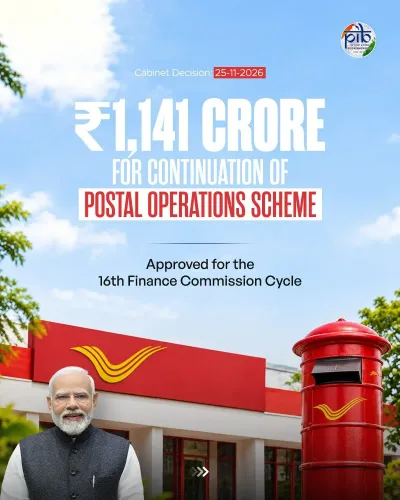
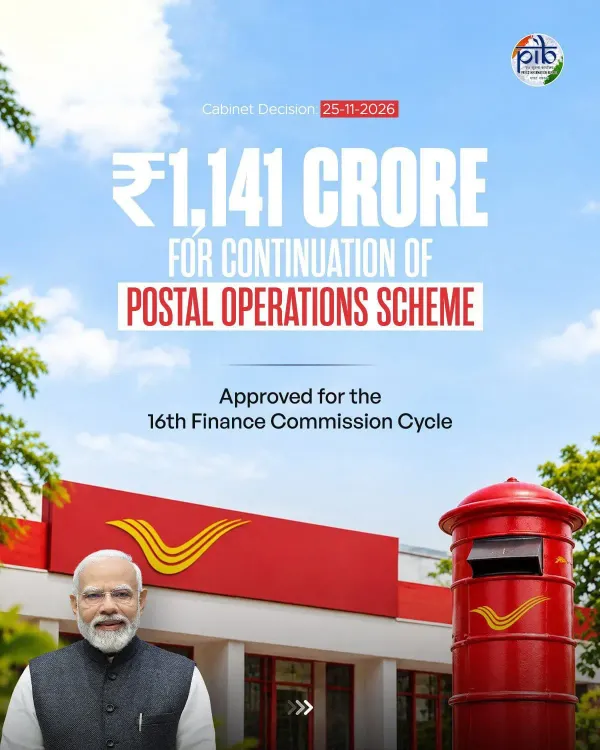
Nitin Gadkari said the Union Cabinet, chaired by PM Narendra Modi, approved continuing the Postal Operations scheme for FY 2026–27 to FY 2030–31 with a ₹1,141 crore outlay for postal modernisation and last-mile services.
Key Takeaways
Union Road Transport and Highways Minister Nitin Gadkari said on 25 November 2026 that the Union Cabinet, chaired by Prime Minister Narendra Modi , approved continuation of the Central Sector Scheme ‘Postal Operations’.
The scheme is aligned with the 16th Finance Commission cycle from FY 2026–27 to FY 2030–31 .
Gadkari stated the outlay is ₹1,141 crore .
Stated aims include modernising postal infrastructure, last-mile connectivity, logistics, e-commerce, digital services and financial inclusion.
The announcement was linked to Digital India , Atmanirbhar Bharat and Viksit Bharat .
The Department of Posts is the network the scheme is designed to upgrade; India Post Payments Bank has used that grid since 2018 .
Union Road Transport and Highways Minister Nitin Gadkari on Wednesday, 25 November 2026 announced that the Union Cabinet, chaired by Prime Minister Narendra Modi, has approved the continuation of the Central Sector Scheme ‘Postal Operations’ across the 16th Finance Commission cycle. The five-year stretch from FY 2026–27 to FY 2030–31 comes with an outlay of ₹1,141 crore, aimed at modernising postal infrastructure and tightening last-mile delivery.
In his post, Gadkari said the scheme seeks to modernise postal infrastructure, strengthen last-mile connectivity, enhance operational efficiency and expand logistics, e-commerce and digital service delivery. It will also, he wrote, promote financial inclusion and more accessible, customer-centric services across the country.
He tied the decision to Digital India, Atmanirbhar Bharat and Viksit Bharat, calling India’s postal network a vital pillar of inclusive growth and service delivery.
₹1,141 crore across FY 2026–31
The outlay of ₹1,141 crore is framed as a continuation, not a brand-new scheme. Central sector programmes are routinely recast to match Finance Commission award periods, and this one is locked to the 16th Finance Commission window that runs through FY 2030–31.
The Department of Posts remains the implementing spine. What the money is meant to buy, as stated in the announcement, is infrastructure modernisation, operational efficiency, and an expanded logistics and digital-services footprint.
Last-mile posts, e-commerce and Digital India
Digital India, launched in 2015, already treated postal outlets as delivery points for digital and financial services. India Post Payments Bank, rolled out in 2018, pushed banking and inclusion through the same grid. This cycle sits in that lineage: post offices as more than letter boxes — as last-mile counters for parcels, pensions and digital public services.
Rural citizens and the e-commerce sector have the most at stake. Last-mile connectivity still decides whether a package, a government benefit or a banking service actually arrives. Gadkari’s post puts customer-centric, accessible services at the centre of that pitch.
What the Department of Posts must now sequence
The next markers are practical, not rhetorical. Implementation guidelines and the fund-release calendar from the Department of Posts will surface with the FY 2026–27 budget cycle. Integration with India Post Payments Bank and e-commerce platforms will show whether the outlay translates into faster last-mile capacity.
Five years of funding will not reinvent India Post on paper. They will test whether the postal network can still be the country’s most trusted last-mile platform — in villages private logistics barely touch, and in the digital economy that now runs through them.
Point of View
Not just mail. Digital India in 2015 and India Post Payments Bank in 2018 already recast post offices as service counters in underserved areas. Aligning a central sector outlay with the 16th Finance Commission cycle is standard fiscal choreography. The live test is execution: whether the stated ₹1,141 crore over five years upgrades last-mile logistics or merely keeps the network running.
NationPress
25 Nov 2026
Frequently Asked Questions
What did Nitin Gadkari announce about the Postal Operations scheme?
Union Road Transport and Highways Minister Nitin Gadkari said the Union Cabinet, chaired by Prime Minister Narendra Modi, has approved continuation of the Central Sector Scheme Postal Operations during the 16th Finance Commission cycle from FY 2026–27 to FY 2030–31.
What is the outlay for the Postal Operations scheme?
Gadkari stated the outlay is ₹1,141 crore for FY 2026–27 to FY 2030–31. The figure is as announced in his post on the Cabinet decision.
What will the Postal Operations scheme fund?
According to the announcement, it aims to modernise postal infrastructure, strengthen last-mile connectivity, enhance operational efficiency and expand logistics, e-commerce and digital service delivery, while promoting financial inclusion and customer-centric services.
How is the Postal Operations scheme linked to Digital India?
Gadkari said the initiative reinforces Digital India, Atmanirbhar Bharat and Viksit Bharat by strengthening the postal network. Postal outlets have been used as digital and financial service points since Digital India launched in 2015, and India Post Payments Bank began in 2018.
Who will implement the Postal Operations scheme?
The Department of Posts is the central organisation responsible for India Post services and last-mile delivery that the scheme is designed to modernise. Detailed guidelines and fund-release schedules are expected around the FY 2026–27 budget cycle.