Gadkari: Cabinet clears ₹14,448 cr Ganga corridor in Varanasi
Synopsis
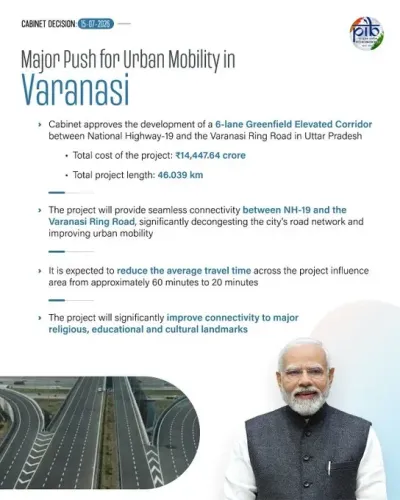
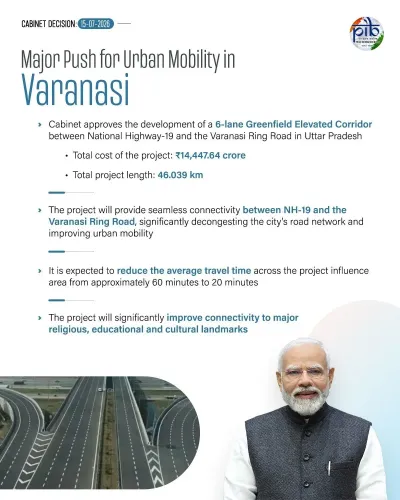
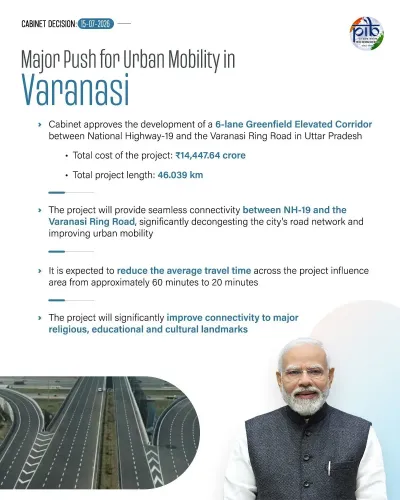
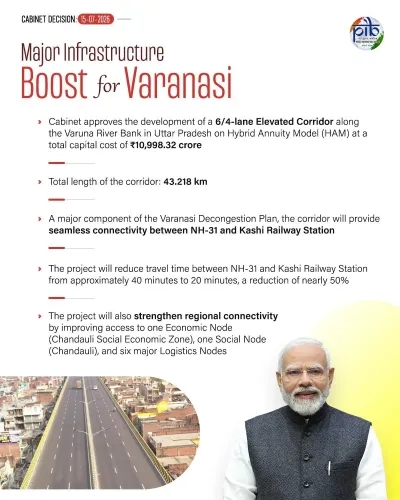
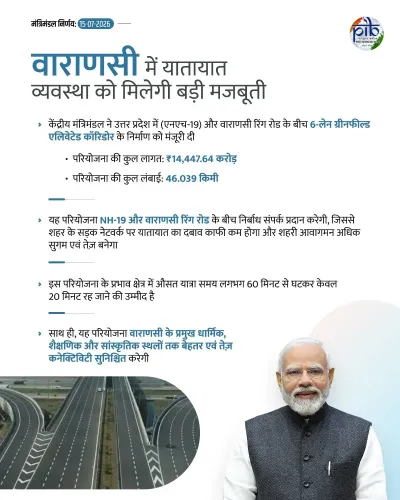
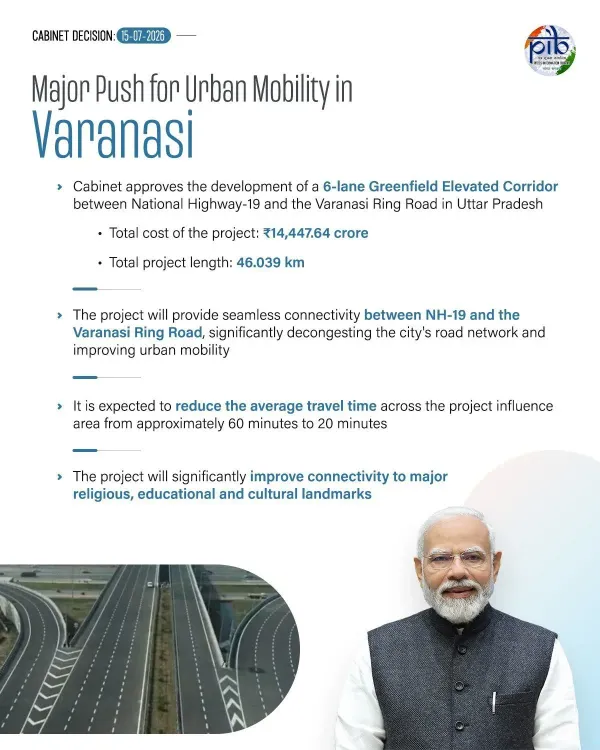
The Union Cabinet has approved a ₹14,447.64 crore, 46-km six-lane Ganga corridor in Varanasi under the Hybrid Annuity Model. The project includes a cable-stayed bridge, an extradosed foot-over-bridge, and is designed to cut city travel time from 60 to 20 minutes while boosting pilgrimage and multimodal connectivity.
Key Takeaways
The Union Cabinet approved a ₹14,447.64 crore corridor on 15 July 2026 linking NH-19 and the Varanasi Ring Road along the River Ganga .
The corridor spans 46.039 km and will be built under the Hybrid Annuity Model (HAM) .
Key structures include a six-lane elevated carriageway , a cable-stayed bridge , and an extradosed Foot Over Bridge-cum-Major Bridge .
Travel time across the project area will fall from 60 to 20 minutes ; the NH-19–Kashi Railway Station leg will drop from 50 to 25 minutes .
The project targets congestion relief on NH-19 , the BHU–Ramnagar Corridor and NH-35 , while supporting tourism, pilgrimage and multimodal connectivity.
Design speeds are 80–100 km/h , with benefits including lower vehicle operating costs and reduced emissions.
Union Road Transport and Highways Minister Nitin Gadkari announced on Wednesday, 15 July 2026 that the Union Cabinet, chaired by Prime Minister Narendra Modi, has approved a ₹14,447.64 crore link corridor spanning 46.039 km that will connect NH-19 and the Varanasi Ring Road with riverbank access along the River Ganga. The project is expected to cut travel time across the project area from 60 minutes to 20 minutes and halve the journey between NH-19 and Kashi Railway Station from 50 to 25 minutes.
Context
Gadkari described the approval as 'a game-changing Ganga corridor set to redefine connectivity and mobility in Varanasi.' The corridor will be built under the Hybrid Annuity Model (HAM), a public-private partnership structure the central government has deployed widely since 2016 to share construction and traffic risk between the state and private developers. The project features a six-lane elevated carriageway, an iconic cable-stayed bridge, an extradosed Foot Over Bridge-cum-Major Bridge, ramps, loops, link roads and service roads, and is designed for speeds of 80–100 km/h.
Policy Backdrop
Varanasi — the parliamentary constituency of Prime Minister Modi — has been a focal point of central infrastructure investment over the past decade. The Bharatmala Pariyojana Phase-I, approved in 2015 to develop 34,800 km of national highways and corridors, included ring-road and connector projects around major cities, of which Varanasi was an early priority. Earlier sanctions under Bharatmala covered segments of the Varanasi Ring Road and NH-19 connectors aimed at decongesting the city and improving access to railway stations and the riverfront ghats.
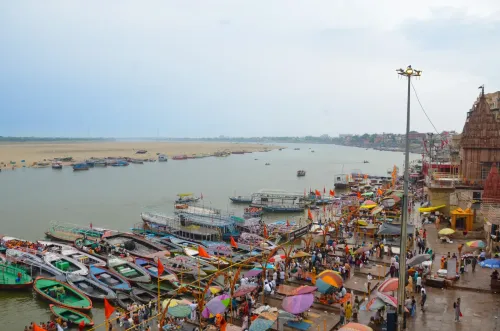
The Ministry of Road Transport and Highways has increasingly paired such highway projects with multimodal objectives — linking road infrastructure to rail heads and inland waterway terminals. The Ganga corridor aligns with that approach, explicitly targeting improved access to the Kashi Railway Station and the river's pilgrimage and tourism ecosystem, which also falls under the Namami Gange programme's broader riverfront development mandate.
Stakeholders and Impact
The Ministry's announcement lists several direct benefits: easing congestion on NH-19, the BHU–Ramnagar Corridor and NH-35; improved road safety; lower vehicle operating costs; and reduced emissions. Pilgrims visiting Varanasi's ghats, tourists, and daily commuters stand to gain most immediately from the reduced travel times. Local businesses along the corridor and the city's hospitality sector are also expected to benefit from smoother freight and passenger movement.
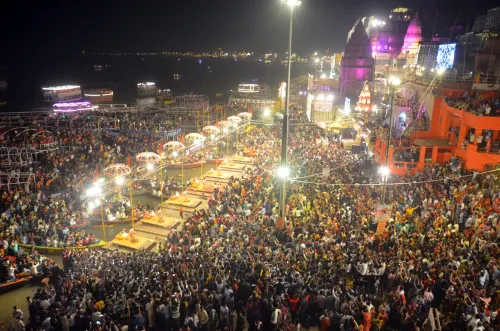
The project's multimodal connectivity dimension — linking national highways to the railway station and the Ganga riverbank — is significant for the tens of thousands of pilgrims who arrive by train and need onward access to the ghats. The extradosed bridge over the Ganga would also serve as a pedestrian and vehicular crossing, potentially reducing pressure on existing city-centre bridges.
What's Next
The immediate milestones will be land acquisition, finalisation of the HAM contract, and integration with proposed multimodal terminal and inland waterway projects on the Ganga at Varanasi. Construction timelines and the award of the private concession agreement have not yet been announced. If executed on schedule, the corridor would represent one of the largest single urban-highway investments in Uttar Pradesh and a significant addition to Varanasi's infrastructure profile ahead of continued growth in religious tourism.
Point of View
HAM-financed corridors to simultaneously address urban congestion and boost religious tourism — with Varanasi, the Prime Minister's own constituency, consistently at the front of that queue. The ₹14,447.64 crore price tag makes it one of the largest single urban-highway outlays in Uttar Pradesh, signalling that infrastructure spending in the city is scaling up rather than plateauing ahead of the next electoral cycle. The explicit multimodal framing — linking highways to the railway station and the riverbank — reflects the Ministry's broader pivot toward integrated mobility rather than standalone road projects. How quickly land acquisition proceeds and the HAM contract is awarded will determine whether this corridor becomes a template for other pilgrimage cities or remains a high-profile announcement pending execution.
NationPress
15 Jul 2026
Frequently Asked Questions
What is the Varanasi Ganga corridor project approved in July 2026?
The Varanasi Ganga corridor is a 46.039-km link connecting NH-19 and the Varanasi Ring Road with riverbank access along the Ganga , approved by the Union Cabinet on 15 July 2026 at a cost of ₹14,447.64 crore . It includes a six-lane elevated carriageway, a cable-stayed bridge, and an extradosed foot-over-bridge.
How much will the Varanasi Ganga corridor cost and who will build it?
The project is budgeted at ₹14,447.64 crore and will be executed under the Hybrid Annuity Model (HAM) , a public-private partnership framework in which the government and a private developer share construction and traffic risk. The private concession contract has not yet been awarded.
How will the Ganga corridor reduce travel time in Varanasi?
The corridor is designed for speeds of 80–100 km/h and will cut travel time across the project area from 60 minutes to 20 minutes . The journey from NH-19 to Kashi Railway Station specifically will be halved, from 50 to 25 minutes .
What roads will the Varanasi Ganga corridor decongest?
The project aims to ease congestion on NH-19 , the BHU–Ramnagar Corridor , and NH-35 , which are currently among the most heavily trafficked routes in and around Varanasi .
What is the Hybrid Annuity Model used for the Varanasi corridor?
The Hybrid Annuity Model (HAM) is a highway procurement framework adopted by the Ministry of Road Transport and Highways from 2016 onward. Under HAM, the government pays a portion of project cost during construction and the remainder in annuity instalments, reducing upfront capital risk for private developers while keeping public control over the asset.