Gadkari: Cabinet clears NSAP with ₹53,428 cr, eases disability norms
Synopsis
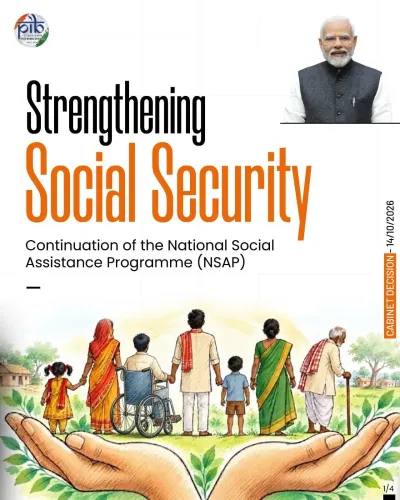
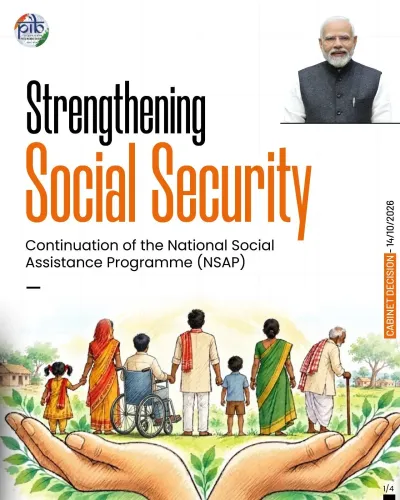
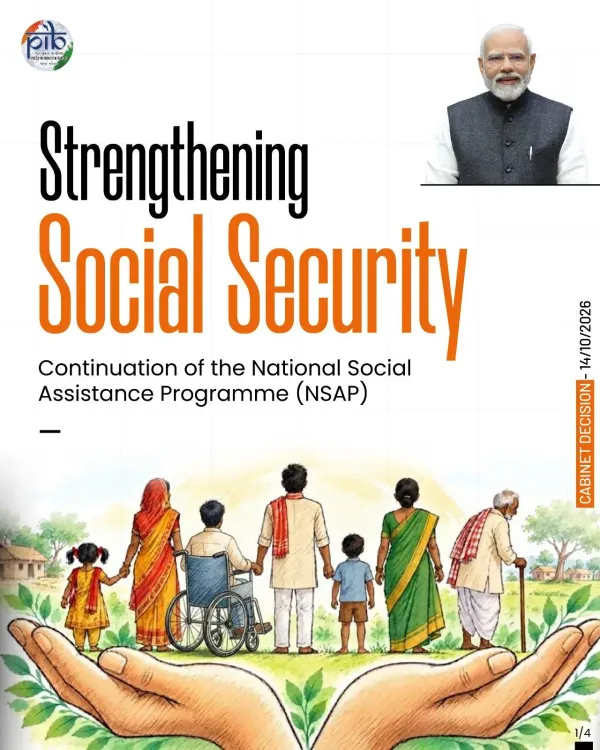
The Union Cabinet has approved a ₹53,428 crore renewal of NSAP for 2026-31, cutting the disability pension threshold from 80% to 40% and removing the minimum age bar — making eligible persons entitled to benefits from birth.
Key Takeaways
Union Cabinet chaired by PM Narendra Modi approved continuation of the National Social Assistance Programme on October 14, 2026 .
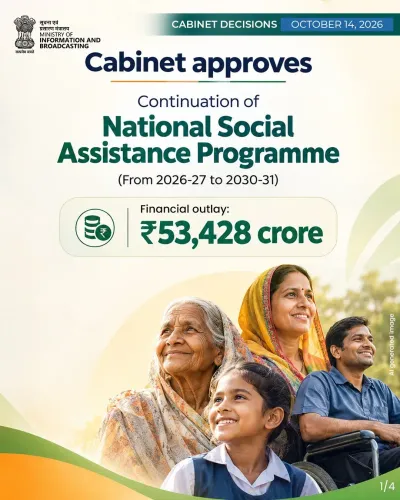
Total outlay approved: ₹53,428 crore covering five fiscal years from 2026–27 to 2030–31 .
Disability pension threshold lowered from 80% to 40% , expanding the eligible population significantly.
Minimum age requirement for disability pension removed — eligible persons qualify from birth .
NSAP was originally launched in August 1995 and is a fully centrally funded scheme administered through state governments.
State-level rollout of revised norms is the next critical step for translating policy into disbursements.
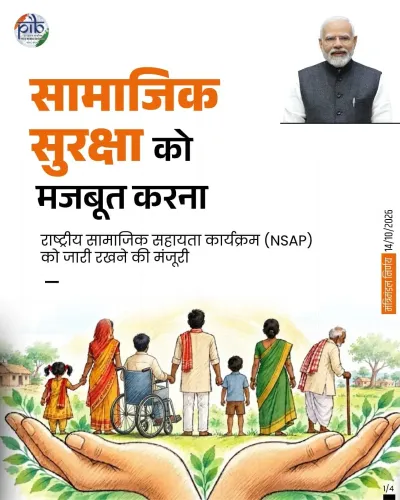
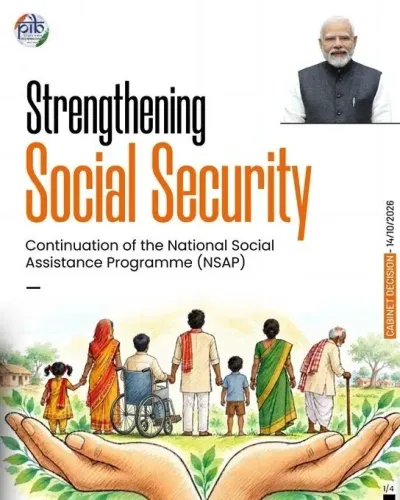
A single Cabinet decision, chaired by Prime Minister Narendra Modi on Wednesday, October 14, 2026, will reshape the social-security lives of millions — by cutting the disability threshold for pension eligibility in half and removing the minimum age floor entirely. Union Road Transport and Highways Minister Nitin Gadkari announced that the Union Cabinet has approved the continuation of the National Social Assistance Programme (NSAP) with a total outlay of ₹53,428 crore for the five-year period 2026–27 to 2030–31.
What changed for persons with disabilities
The headline reform is stark in its arithmetic. The benchmark disability threshold for pension eligibility has been slashed from 80% to 40% — meaning a far larger population of persons with disabilities now qualifies for support. Even more consequential: the minimum age requirement has been scrapped altogether, making eligible persons entitled to benefits from birth. These two changes together could add a significant cohort of beneficiaries who were previously locked out by a combination of severity and age criteria.
NSAP's three-decade arc and the ₹53,428 crore commitment
The National Social Assistance Programme was launched in August 1995 as a fully centrally funded scheme providing social pensions to the elderly, widows, and persons with disabilities, administered through state governments. Over its thirty-year life, the scheme has been renewed in five-year cycles, with successive governments adjusting outlays and eligibility norms to broaden coverage. The ₹53,428 crore approved on Wednesday represents the programme's budget for the next five fiscal years, anchoring it firmly into India's social-sector architecture through 2030–31.
The scale signals intent. Gadkari described the reforms as 'progressive' steps that will 'expand social security coverage, ease eligibility norms and bring more beneficiaries under the pension framework.' The next phase of scrutiny falls on state governments, which serve as the implementation pipeline — the speed and fidelity of their rollout will determine how quickly revised norms translate into actual pension disbursements on the ground.
Who benefits, and from when
The disability-norm overhaul is the sharpest departure from the previous framework. Under the old rules, a person with a less than 80% disability was simply ineligible, regardless of how debilitating their condition was in practical terms. The move to 40% aligns more closely with international definitions of significant disability and with India's Rights of Persons with Disabilities Act benchmarks. The simultaneous removal of the age floor is equally significant: children with qualifying disabilities will no longer have to wait until a specified age to access pension support. Implementation is expected from 2026–27 onwards.
Thirty-one years after it was conceived, NSAP is being recalibrated for a broader India — and the test now is whether that recalibration reaches the families who need it most before the next five-year clock runs out.
Point of View
Moving India closer to the disability definitions codified in its own Rights of Persons with Disabilities Act. Politically, the announcement lands as a welfare signal ahead of a cycle where the government is keen to demonstrate inclusive growth beyond infrastructure headlines. The real governance test, however, is implementation: NSAP's delivery runs through state machinery, and historic gaps between central approval and ground-level disbursement have blunted past expansions. Watching whether revised norms translate into actual pension reach by mid-2027 will be the measure of this commitment's substance.
NationPress
14 Oct 2026
Frequently Asked Questions
What is the National Social Assistance Programme (NSAP)?
NSAP is a centrally sponsored scheme launched in August 1995 that provides social pensions to elderly persons, widows, and persons with disabilities in India, administered through state governments.
What is the new disability threshold for NSAP pension eligibility?
The Cabinet has reduced the disability benchmark from 80% to 40%, meaning persons with a 40% or more disability now qualify for the pension — a significant expansion of the eligible pool.
Has the minimum age for disability pension under NSAP been removed?
Yes. The Cabinet decision removes the minimum age requirement entirely, making eligible persons with disabilities entitled to pension benefits from birth.
What is the total budget approved for NSAP from 2026 to 2031?
The Union Cabinet has approved a total outlay of ₹53,428 crore for NSAP covering the five-year period from 2026–27 to 2030–31.
When will the new NSAP disability norms come into effect?
The revised eligibility norms are expected to be implemented from the financial year 2026–27, subject to state-level rollout of the updated framework.