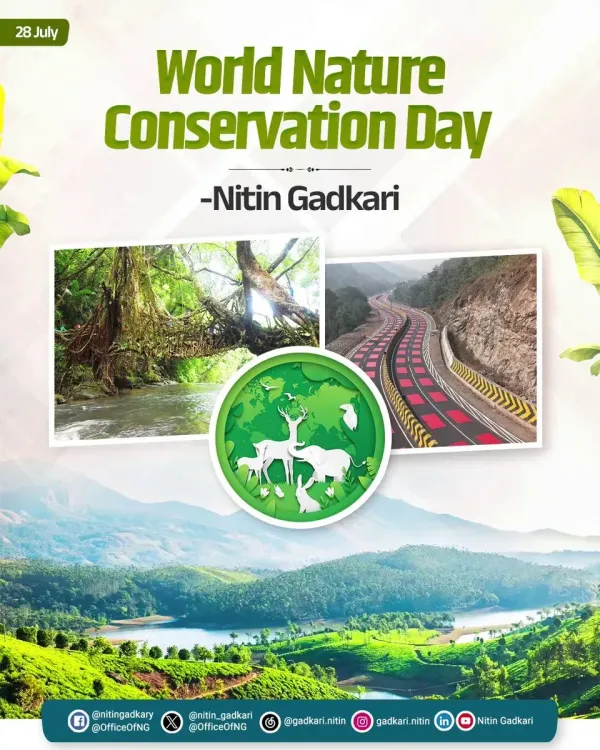
Gadkari calls for collective action on World Nature Conservation Day
Synopsis
On World Nature Conservation Day, 28 July 2026, Union Minister Nitin Gadkari called nature 'our shared responsibility' and urged Indians to protect forests, rivers, wildlife, and biodiversity through conscious choices — aligning his ministry's Green Highways mandate with India's broader climate commitments.
Key Takeaways
Nitin Gadkari marked World Nature Conservation Day (28 July 2026) with a public pledge for collective conservation action.
The minister called nature 'our shared responsibility' and urged protection of forests, rivers, wildlife, and biodiversity .
MoRTH's Green Highways Policy (2015) mandates eco-friendly construction and tree plantations along national highway corridors.
India committed to a net-zero target by 2070 at COP26 (2021) , with forest and tree cover expansion as a key pillar.
The messaging connects to ongoing Bharatmala highway phases, where environmental clearance conditions require compensatory afforestation.
Progress on plantation targets and wildlife corridors in upcoming MoRTH project guidelines will be the practical test of these commitments.
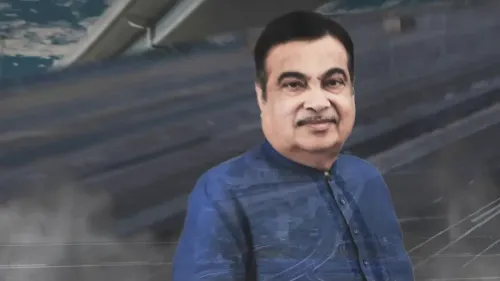
Union Road Transport and Highways Minister Nitin Gadkari on Tuesday, 28 July 2026, marked World Nature Conservation Day with a call for collective responsibility to protect India's forests, rivers, wildlife, and biodiversity. The minister's message, shared on his official X account, urged citizens to make conscious choices toward a greener and more sustainable future.
Context
World Nature Conservation Day, observed annually on 28 July, is a global reminder of the need to protect natural resources and ecosystems. Gadkari's post stated: 'Nature is not just our inheritance — it is our shared responsibility,' framing conservation as both a personal and collective obligation. The message called for pledges to protect forests, rivers, wildlife, and biodiversity 'through conscious choices and collective action.'
The minister's invocation of intergenerational responsibility — 'a greener, healthier, and more sustainable future for generations to come' — echoes language embedded in India's national climate commitments and aligns with the ministry's own environmental mandates within infrastructure development.
Policy Backdrop
The Ministry of Road Transport and Highways (MoRTH), which Gadkari leads, has a direct stake in environmental conservation through the Green Highways (Plantation, Transplantation, Beautification and Maintenance) Policy, launched in 2015. The policy mandates tree plantations and eco-friendly construction practices along national highway corridors, integrating conservation goals into large-scale infrastructure projects.
India's broader climate architecture — including the National Action Plan on Climate Change and its missions on biodiversity and sustainable development — has set the framework within which such ministerial messaging sits. At COP26 in 2021, India announced a net-zero target by 2070 and committed to expanding forest and tree cover, targets that road-sector policies are expected to support through compensatory afforestation and wildlife corridor provisions in highway alignments.
Amendments to the Forest Conservation Act in recent years have sought to balance accelerated infrastructure delivery with ecological safeguards — a tension that sits at the heart of MoRTH's operational mandate.
Stakeholders and Impact
The message resonates with a wide range of stakeholders: highway developers are subject to environmental clearance conditions that require green cover restoration; local communities living along national highway corridors are directly affected by plantation and biodiversity initiatives; and environmental NGOs have long monitored the gap between policy commitments and on-ground implementation in road projects.
Conservation advocates note that infrastructure ministries publicly aligning with global environmental days can reinforce accountability, particularly when accompanied by measurable plantation and wildlife-corridor targets under programmes such as Bharatmala — India's flagship national highway construction initiative.
What's Next
Attention will turn to progress reports on green highway plantation targets under ongoing Bharatmala phases and any new environmental guidelines MoRTH may issue for upcoming project tenders. The ministry's ability to translate conservation messaging into verifiable outcomes — tree-cover additions, wildlife crossings, and reduced forest-land diversion — will determine how substantively this observance shapes policy action beyond the symbolic moment.
Point of View
Particularly as Bharatmala's land-acquisition footprint draws scrutiny from ecologists. The invocation of intergenerational responsibility also tracks India's COP commitments, giving the statement diplomatic as well as domestic utility. Whether the rhetoric translates into tighter green norms for upcoming highway tenders will be the sharper measure of its significance.
NationPress
28 Jul 2026
Frequently Asked Questions
What did Nitin Gadkari say on World Nature Conservation Day 2026?
Gadkari posted that 'nature is not just our inheritance — it is our shared responsibility,' calling on citizens to protect forests, rivers, wildlife, and biodiversity through conscious choices and collective action to build a sustainable future for coming generations.
When is World Nature Conservation Day observed?
World Nature Conservation Day is observed every year on 28 July . It focuses on raising awareness about the protection of forests, rivers, wildlife, and biodiversity globally.
What is the Green Highways Policy and how does it relate to conservation?
The Green Highways (Plantation, Transplantation, Beautification and Maintenance) Policy , launched in 2015 by MoRTH, mandates tree plantations and eco-friendly construction along national highway corridors, directly linking road infrastructure expansion with conservation goals.
What is India's net-zero target and how does it connect to forest cover?
India announced a net-zero emissions target by 2070 at COP26 in 2021 , alongside a commitment to expand forest and tree cover. Road sector policies, including compensatory afforestation requirements, are part of the mechanism to meet these targets.
What is Bharatmala and why does it matter for environment policy?
Bharatmala is India's flagship national highway construction programme. Because it involves large-scale land acquisition and forest-land diversion, environmental clearance conditions — including wildlife corridors and plantation mandates — are a key test of how conservation commitments are implemented in practice.